Julian Nagelsmann Criticized for Harsh Treatment of Deniz Undav After Ghana Friendly Win
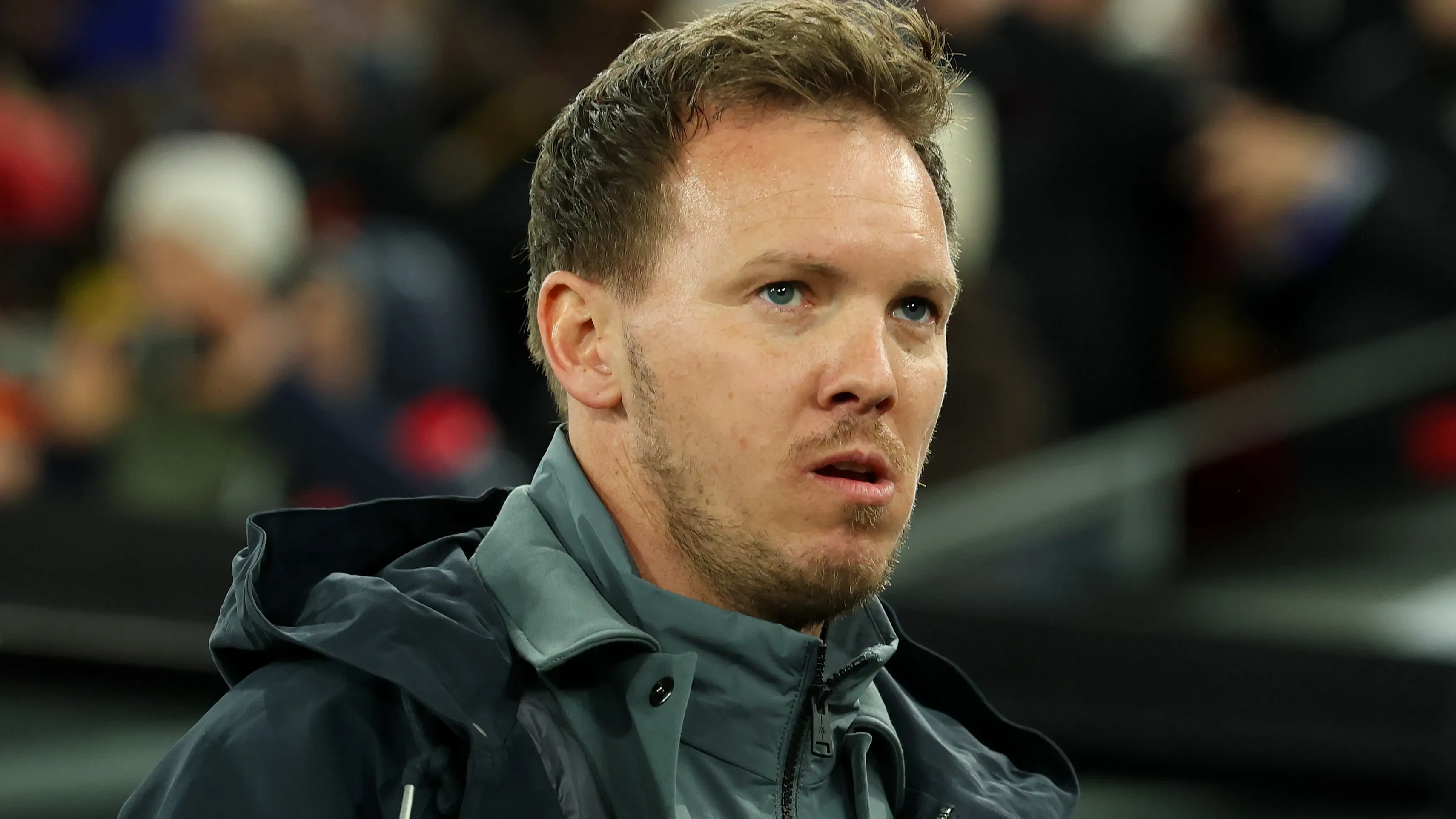
Julian Nagelsmann’s handling of Deniz Undav during the recent German national‑team duties has ignited a heated debate among former internationals and fans alike.
Following Germany’s 2‑1 friendly victory over Ghana in March, the 38‑year‑old coach publicly criticised the VfB Stuttgart striker for his fitness and tactical impact.
“If he’d been running around for 70 minutes beforehand, I don’t know if he’d have scored it like that,” Nagelsmann said, referring to Undav’s late winner in the match.
He added that the summer heat of 42 °C made a “quite a long run” difficult for the forward after a heavy workload.
In the same interview, Nagelsmann suggested that Undav’s desire for a starting place was creating “unnecessary pressure” on the player.
He stated, “From that perspective, it’s fine by me as soon as he starts scoring fewer goals. If he can cope with that himself, he’s welcome to do so.”
The comments sparked immediate backlash from former German internationals, most notably former Borussia Dortmund goalkeeper Roman Weidenfeller.
Weidenfeller told Sky’s “Triple – der Hagedorn‑Fussballtalk” that Nagelsmann’s initial firm stance followed by a public apology “undermined himself”.
He further argued that “he’s not strengthening himself by doing that; he’s actually weakening himself.”
Oliver Kahn, also present on the programme, questioned why the coach chose to reflect on his leadership style in a televised setting.
Kahn suggested that a private phone call would have sufficed, noting that “word would get out eventually” without the need for a public display.
After the criticism, Nagelsmann appeared on MagentaTV’s “Bestbesetzung” where he issued an apology, admitting his remarks were “far too harsh for public consumption.”
He credited his wife Lena for helping him reach the decision to apologize, indicating a personal dimension to his reevaluation.
According to Nagelsmann, he “apologised to Deniz the very next day,” and the striker accepted the apology, according to the coach’s statements.
Despite the reconciliation, Nagelsmann continues to view Undav as a “challenger” and a “super‑sub” who can play a valuable role off the bench.
He emphasized that “things can always change,” leaving the door open for a potential shift in Undav’s national‑team status.
Undav remains a first‑team regular for VfB Stuttgart, where his contributions have been vital to the club’s attacking output.
In 40 Bundesliga appearances this season, Undav has recorded 23 goals and 13 assists, making him the most prolific German forward in the league.
His contract with Stuttgart runs until 2027, but reports suggest the 29‑year‑old is holding out for a record‑breaking salary extension.
Since the international break, Undav has not added to his goal tally for Germany, going scoreless in matches against Borussia Dortmund and Hamburger SV.
He missed several clear‑cut chances, including a penalty in the 4‑0 victory over Hamburg, raising questions about his finishing form.
The following table summarises Undav’s club and national‑team statistics to date.
| Competition | Appearances | Goals / Assists |
|---|---|---|
| Bundesliga (Stuttgart) | 40 | 23 G / 13 A |
| Germany (Senior) | 7 | 0 G / 4 A |
Undav’s national‑team record shows seven caps, all lasting over 90 minutes, with no goals but four assists.
His lack of goals contrasts sharply with his club form, where he has been a constant threat in the final third.
Analysts note that Undav’s playing style—characterised by intelligent movement, quick release, and aerial ability—translates well to the Bundesliga’s tactical demands.
However, the German national team’s system under Nagelsmann often requires a higher defensive work rate, which may have influenced the coach’s comments.
Stuttgart’s tactical setup under head coach Sebastian Hoeneß frequently employs a 4‑2‑3‑1 formation, allowing Undav to operate as the focal point of attack.
In this role, he benefits from support from wingers and a deep‑lying midfielder who supplies through balls, maximizing his poaching instincts.
By contrast, Germany’s recent friendlies have seen a more fluid 3‑4‑3 system, demanding forwards to contribute to pressing and transitional phases.
Undav’s adaptation to this system remains a point of discussion among pundits, especially after the missed penalty against Hamburg.
The broader implications of Nagelsmann’s handling of Undav extend to squad selection ahead of the 2026 World Cup.
Germany’s forward line, featuring the likes of Leroy Sane, Kai Havertz, and Timo Werner, is already competitive, and a public dispute could affect team harmony.
Former internationals argue that internal disagreements should be managed discreetly to preserve the squad’s unity.
Weidenfeller’s criticism reflects a concern that the coach’s public reversal may set a precedent for handling future player‑coach conflicts.
Kahn’s remarks underline the importance of maintaining a professional image, especially as the national team prepares for high‑stakes qualifiers.
Stuttgart’s management remains supportive of Undav, emphasizing his importance to the club’s ambitions both domestically and in European competition.
Club officials have indicated that retaining Undav is a priority, and negotiations for a new contract are reportedly underway.
The player’s market value has risen sharply this season, placing him among the top‑valued German forwards in Europe.
Should Undav secure a contract extension, Stuttgart would likely benefit from both his on‑field contributions and the stability he provides to the squad.
From a tactical perspective, Nagelsmann’s willingness to label Undav a “super‑sub” suggests a strategic plan to utilise his impact off the bench.
This approach mirrors successful examples in international football where impact substitutes change the course of matches.
Nevertheless, the lack of goals in recent internationals raises questions about whether Undav can deliver the same impact without a starting role.
The German Football Association (DFB) has not released an official statement regarding the controversy, maintaining a neutral stance.
As the next set of friendlies approaches, Undav’s performance at the club level will likely determine his future involvement with the national team.
Fans and analysts will be watching closely to see if Nagelsmann adjusts his selection policy based on Undav’s form and fitness.
In the meantime, Undav continues to train with Stuttgart, focusing on maintaining his scoring rhythm ahead of the upcoming Bundesliga fixtures.
The situation serves as a reminder of the delicate balance coaches must strike between public communication and internal team management.
Both Nagelsmann and Undav now have the opportunity to move forward, with the former aiming to refine his leadership approach and the latter seeking to reaffirm his status as a top striker.