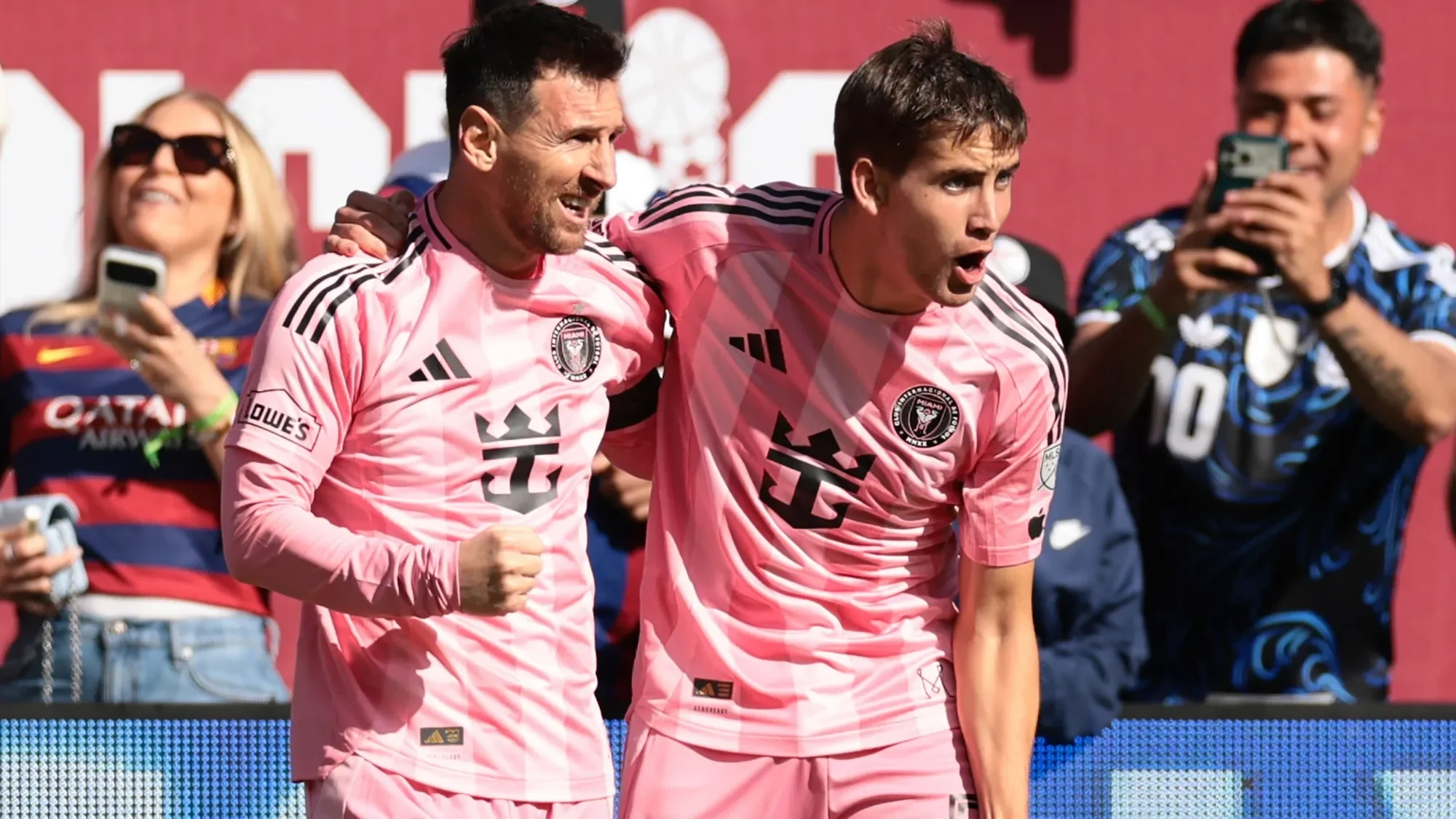
Messi Scores Twice as Inter Miami Beats Colorado Rapids 3‑2 in Denver, Dashing Rapids’ 30th‑Anniversary Celebration
Inter Miami entered Empower Field on Saturday with a clear objective: to secure a win that would halt a two‑match losing streak and cement Lionel Messi’s reputation in the high‑altitude environment of Denver.
The match also marked the Colorado Rapids’ 30th anniversary, celebrating the club’s inaugural MLS fixture with a crowd of 75,983, the second‑largest attendance in league history.
From the opening whistle, the atmosphere was electric, as fans of both sides anticipated a showdown between the newly crowned MLS powerhouse and a Rapids side eager to showcase its growth since its 1996 debut.
Guillermo Hoyos, promoted to manager after Javier Mascherano’s abrupt departure, fielded a side that blended experience with youthful vigor, hoping to exploit the home‑field advantage of the mile‑high stadium.
Inter Miami, under the new tactical direction of Hoyos, started with a high‑pressing formation designed to force turnovers and feed Messi, whose recent performances have justified his eight‑time Ballon d’Or status.
The first breakthrough arrived in the 17th minute when a questionable foul by Josh Atencio on Yannick Bright was reviewed by VAR, confirming the penalty.
Messi stepped up and slotted the spot‑kick past Rapids goalkeeper Zack Steffen, giving the visiting side an early 1‑0 lead and igniting the Miami contingent in the stands.
Just five minutes later, Messi demonstrated his play‑making instincts, collecting a loose ball near the Colorado half‑line and delivering a precise cross to German Berterame, whose header doubled the advantage.
Colorado responded before halftime, with Rafa Navarro displaying speed and composure as he navigated five defenders and finished past Dayne St Clair to make it 2‑1.
Six minutes after Navarro’s strike, Darren Yapi capitalized on space in the box, slotting home his own goal and restoring parity at the break.
The second half began with both coaches adjusting their tactics; Hoyos encouraged a more direct approach, while Colorado’s coach emphasized exploiting the thin air that often hampers visiting teams.
Messi, however, remained the focal point, using his dribbling ability to draw defenders and create openings for his teammates.
In the 78th minute, Messi received the ball with four defenders converging, evaded Lucas Herrington and Josh Atencio with a swift turn, and fired a low shot that slipped under the goalkeeper for the decisive 3‑2 win.
The goal was later highlighted by league analysts as the “goal of the weekend,” exemplifying Messi’s ability to produce moments of brilliance under pressure.
Inter Miami’s victory not only ended their recent slump but also provided a morale boost ahead of the congested spring schedule, where the club aims to solidify a top‑four finish.
Colorado, despite the loss, displayed resilience, and the performance of young forwards Navarro and Yapi underscored the club’s ongoing development pipeline.
In the post‑match press conference, Hoyos praised Messi’s influence while acknowledging the defensive lapses that allowed the Rapids to equalise twice.
He also highlighted the importance of maintaining intensity in the latter stages of matches, especially when playing at altitude where fatigue can set in quickly.
Messi’s individual rating of 10/10 reflects his all‑round impact: a penalty, a goal, an assist, and relentless pressure that kept the Rapids on the back foot throughout most of the game.
Rodrigo De Paul earned an 8/10 for his midfield dominance, winning back possession and delivering accurate long balls, a testament to his role as the engine of Miami’s transition play.
Yannick Bright’s 6/10 rating was marred by a red card in the 87th minute, a decision that could have altered the match’s dynamics had it not been for Messi’s late winner.
Goalkeeper Dayne St Clair received a 5/10, his seventh appearance for Miami, and struggled to adapt to the possession‑based system, conceding two goals that many observers felt were preventable.
Defender Gonzalo Luján also earned a 5/10, being substituted after the second Rapids goal due to his difficulty handling Colorado’s rapid attacks.
Midfielder Micael’s 5/10 rating reflects eight defensive contributions but also a costly dribble loss and a yellow card that highlighted his aggressive approach.
Maximiliano Falcon and Facundo Mura each posted 5/10, showing solidity in ground duels yet failing to curb the Rapids’ forward momentum.
On the attacking front, Telasco Segovia’s 6/10 indicated a quiet performance, while German Berterame’s 8/10 signaled a resurgence after a slow start to the season, contributing two goals in his last two outings.
Mateo Silvetti’s 7/10 recognized his pace and work rate over 70 minutes, adding depth to Miami’s forward line.
Substitutes Daniel Pinter and Noah Allen each received 6/10, providing energy in the final stages without significantly altering the outcome.
Guillermo Hoyos’ 7/10 reflects a respectable debut, balancing a proactive attacking philosophy with the challenges presented by Denver’s altitude.
Colorado’s goalkeeper Zack Steffen, though not rated in the source, made several key saves, yet the penalty and Messi’s late strike proved decisive.
The match statistics underline the intensity of the encounter, with both teams generating numerous chances in a tightly contested battle.
| Team | Goals | Shots on Target |
|---|---|---|
| Inter Miami | 3 | 7 |
| Colorado Rapids | 2 | 6 |
Possession favored Inter Miami, who maintained 58% of the ball, allowing them to control the tempo and create the majority of scoring opportunities.
| Player | Rating | Key Contribution |
|---|---|---|
| Lionel Messi | 10/10 | 1 goal, 1 assist, 1 penalty |
| Rodrigo De Paul | 8/10 | 4/5 long balls, midfield control |
| German Berterame | 8/10 | 2 goals, key aerial threat |
In the broader MLS context, Inter Miami’s win propels them closer to the playoff picture, while the Rapids remain mid‑table, needing to convert their occasional bursts of quality into consistent results.
The match also highlighted the growing significance of altitude in MLS scheduling, as teams traveling west of the Mississippi often face physiological challenges that can affect performance in the latter stages of games.
Colorado’s ability to equalise twice demonstrates their tactical flexibility and the effectiveness of their young attacking core, which could be pivotal as they approach the final stretch of the regular season.
For Inter Miami, the performance reaffirms the strategic investment in high‑profile talent and experienced midfielders, a model that other expansion clubs may seek to emulate.
Messi’s involvement continues to elevate the league’s global profile, attracting viewership and sponsorships that contribute to MLS’s long‑term growth objectives.
Looking ahead, Inter Miami will travel to face the New York Red Bulls, a fixture that will test their defensive cohesion after conceding two goals in Denver.
The Rapids, meanwhile, host the Portland Timbers next, a match that offers an opportunity to capitalize on the confidence gained from their resilient display against a star‑laden opponent.
Both clubs will likely assess their squad depth, especially in the defensive line, where the Rapids exposed vulnerabilities that could be addressed in the upcoming transfer window.
Overall, the encounter delivered a compelling narrative of celebration, rivalry, and individual brilliance, encapsulating the evolving competitiveness of Major League Soccer.