Arsenal Penalty Overturned: Arteta Furious, Simeone Protest
The Champions League semi‑final first leg at the Metropolitano turned into a study in officiating drama when referee Danny Makkelie awarded Arsenal a penalty in the 78th minute, only to cancel it after a prolonged VAR review.
The decision sparked immediate protest from Atletico Madrid players and staff, and the ensuing controversy has dominated post‑match analysis across the football world.
Arsenal entered the final ten minutes holding a 1‑0 lead after Viktor Gyökeres converted a first‑half spot‑kick, a lead that felt secure despite Atletico’s relentless pressure.
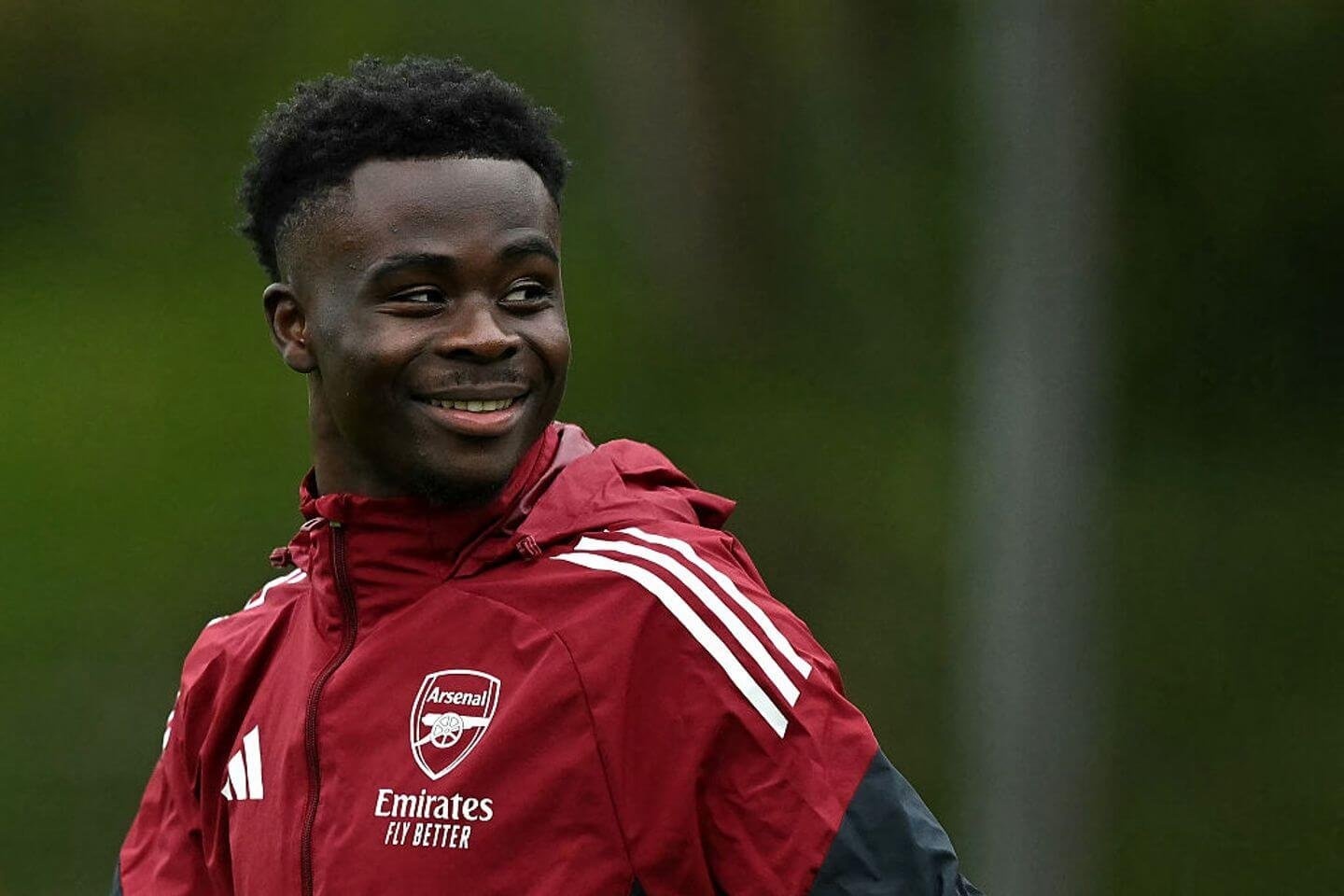
Leandro Trossard and Declan Rice combined in a swift passing sequence that released substitute Bukayo Saka on the right, who then delivered a square ball to Eberechi Eze just inside the penalty area.
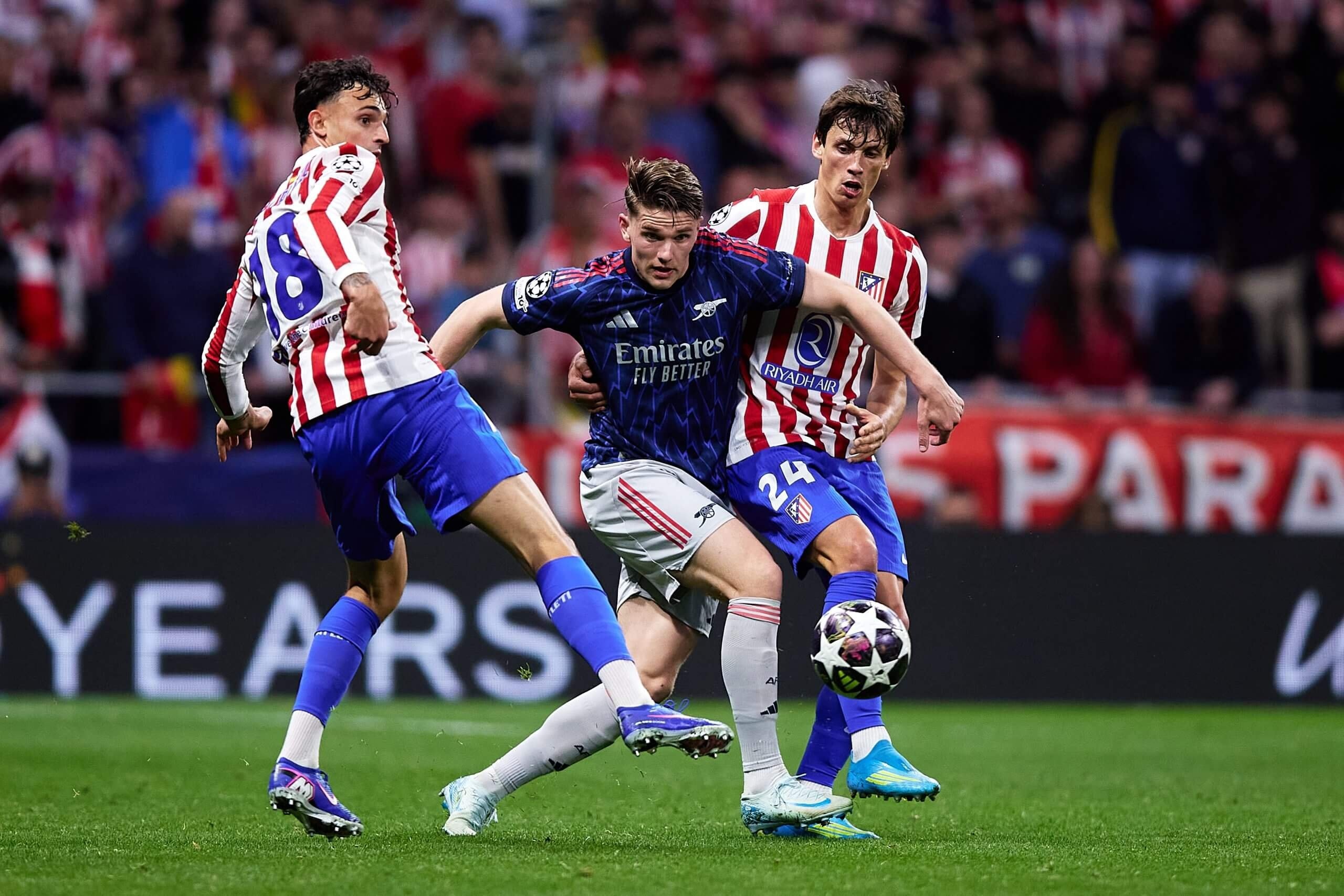
Eze attempted to flick the ball around his marker with his right foot as David Hancko lunged to make contact, leading to a collision that saw Eze’s boot nudged past Hancko’s outstretched leg.
The ball’s trajectory suggested Eze had reached it first, a view confirmed by multiple replays showing his right boot moving the ball before Hancko’s right foot struck Eze’s right boot.
Hancko’s subsequent contact with Eze’s boot caused the England international to fall, prompting Makkelie to point to the spot after a brief assessment.
Hancko reacted angrily, receiving a yellow card for dissent, while teammates Marc Pubill, Koke, Jan Oblak and Johnny Cardoso also approached the referee to complain.
Atletico manager Diego Simeone made repeated VAR gestures from the touchline, intensifying the atmosphere as the referee consulted VAR official Dennis Higler.
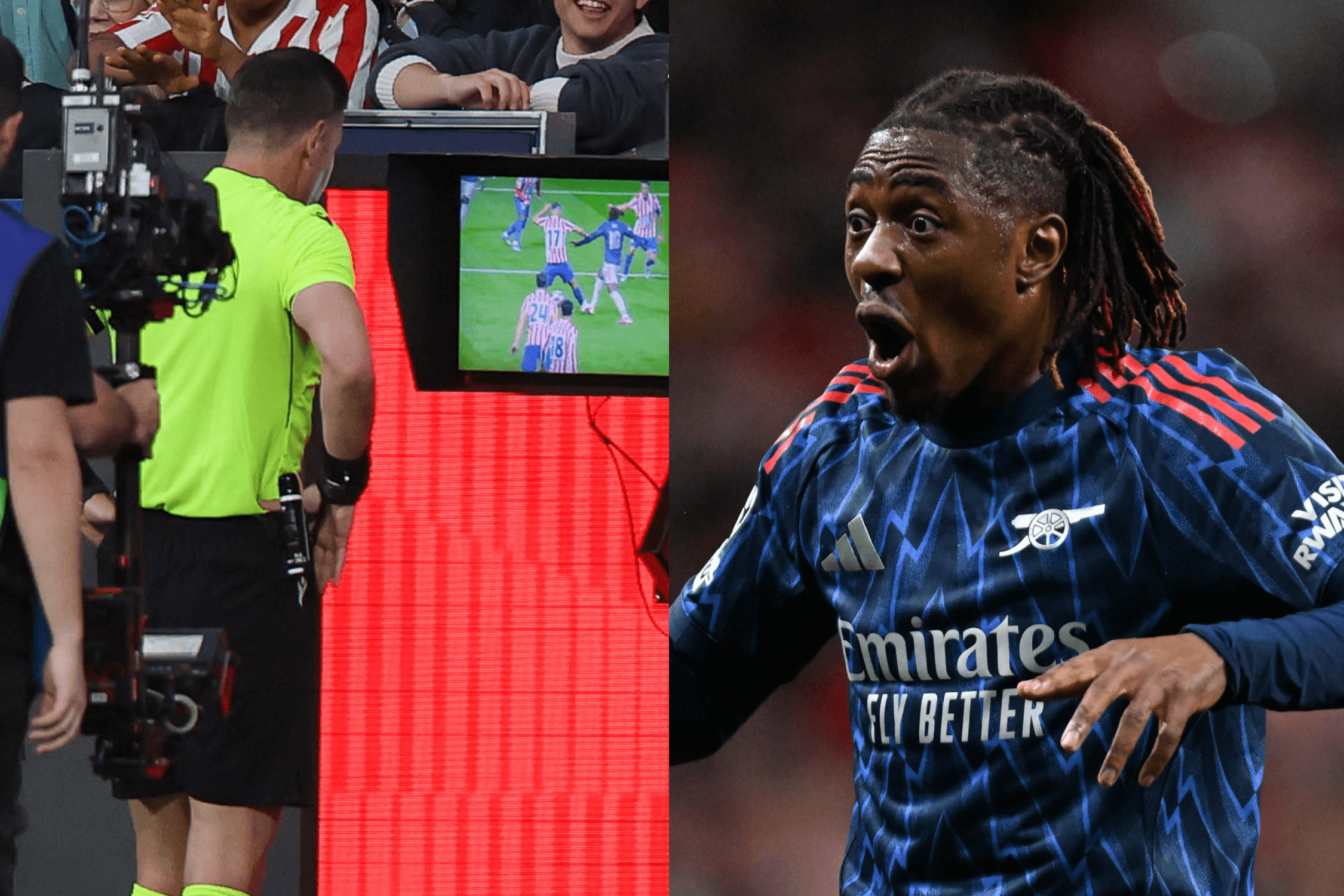
After reviewing thirteen replays from two camera angles at the side‑of‑pitch monitor, Makkelie reversed his original decision, cancelling the penalty three minutes and twenty seconds later.
The reversal left Eze looking incredulous, while Simeone continued to demand that the Arsenal player be booked for simulation, positioning himself within five metres of the Dutch official.
The match concluded with a 1‑1 draw, the penalty controversy becoming the dominant narrative in post‑match commentary and analysis.
Arsenal manager Mikel Arteta expressed his displeasure, describing himself as “extremely disappointed and annoyed” during his interview with TNT Sports.
Artetta argued the contact was clear and that overturning a decision after thirteen viewings was “completely unacceptable” at this level of competition.
Former Liverpool and England midfielder Steven Gerrard, speaking on TNT Sports, questioned whether the incident met the threshold for an on‑field review, calling the overturn “harsh on Arsenal”.
Former Arsenal defender Martin Keown criticised Simeone’s touchline conduct, suggesting the manager’s theatrics and crowd influence pressured Makkelie into changing his call.
Former Arsenal forward Ian Wright echoed Keown’s sentiment on social media, predicting that Simeone would “buckle” under the pressure.
Simeone later defended his actions, stating that the first‑half penalty awarded to Arsenal was questionable and praising VAR for identifying a Ben White handball that led to Julian Alvarez’s equaliser.
He summed up his view of VAR’s role, noting that it sometimes “gives to you, sometimes it takes away”, reflecting the mixed outcomes of technology in the game.
Former Premier League referee Graham Scott, now a columnist for Veezstream, provided a detailed breakdown of the incident, describing the foul as “soft” rather than a clear‑cut “stonewall”.
Scott argued that while Hancko made contact, the minimal nature of the touch and Eze’s subsequent reaction made the penalty decision marginal.
He highlighted UEFA’s evolving VAR policy, which now permits referees to review borderline penalties, contrasting it with the Premier League’s stricter “incontrovertible evidence” standard.
Scott also dismissed the notion that Simeone’s antics directly influenced Makkelie, asserting that top officials are trained to ignore external pressure while focusing on the monitor.
He suggested that relocating the VAR monitor away from the technical areas could further reduce the potential for external influence on referees.
From a tactical standpoint, Arsenal’s reliance on quick transitions through Trossard, Rice and Saka has been a hallmark of Mikel Arteta’s approach this season.
Eze’s movement into the box reflected his role as a creative forward, tasked with exploiting spaces created by Arsenal’s fluid midfield play.
Atletico’s defensive structure, anchored by Hancko’s aggressive pressing, aims to disrupt Arsenal’s rhythm but occasionally leads to mistimed challenges.
The match’s statistical profile underscores the balanced nature of the encounter, with both sides registering similar possession and shot counts.
| Statistic | Arsenal | Atletico Madrid |
|---|---|---|
| Possession (%) | 52 | 48 |
| Shots (on target) | 12 (5) | 11 (4) |
| Fouls committed | 14 | 16 |
| Yellow cards | 2 | 3 |
Arsenal’s five on‑target attempts included Gyökeres’s successful penalty and a chance from Saka that forced a save from Jan Oblak.
Atletico’s four on‑target shots featured a striking effort from Álvaro Morata that was comfortably handled by Aaron Ramsdale.
The disciplinary record saw Hancko booked for dissent, while Simeone’s proximity to the referee raised questions about appropriate conduct.
Both managers will now reflect on the tie’s implications, with the aggregate score poised at 1‑1 heading into the second leg in London.
Arsenal’s campaign this season has been defined by a strong defensive foundation, conceding just 28 goals in 32 Premier League matches.
Atletico, meanwhile, have demonstrated resilience in European competition, reaching the semi‑finals after dispatching Juventus in the quarter‑finals.
The overturned penalty could have altered the tie’s trajectory, potentially giving Arsenal a two‑goal cushion heading into the return fixture.
Conversely, the decision preserved Atletico’s chance to level the aggregate, keeping their hopes alive for a decisive second leg.
The incident adds to a growing list of high‑profile VAR controversies in recent Champions League history, reigniting debates over its implementation.
UEFA officials have yet to issue a formal statement regarding the specific process that led to the cancellation of the penalty.
Nonetheless, the episode underscores the fine line referees walk when balancing real‑time judgment with technological assistance.
For Arsenal supporters, the controversy may fuel frustration but also reinforce belief in their team’s capacity to overcome adversity.
Atletico fans, meanwhile, view the outcome as a vindication of Simeone’s relentless advocacy for his players.
Both clubs will now focus on preparation, with Artetta emphasizing the need to maintain composure and tactical discipline.
Simeone reiterated his commitment to aggressive pressing and exploiting set‑piece opportunities as key elements for the upcoming leg.
The broader football community will continue to scrutinise referee training, VAR protocols, and the influence of managerial behaviour on officiating.
As the Champions League progresses, the Arsenal‑Atletico semi‑final serves as a reminder that split‑second decisions can shape the destiny of elite clubs.