Rojo Gets Lengthy Ban for Hitting Player and Insulting Referee
Marcos Rojo's latest disciplinary incident has sent shockwaves through Argentine football, with the former Manchester United defender receiving a four-match ban following a violent altercation during Racing Club's match against River Plate.
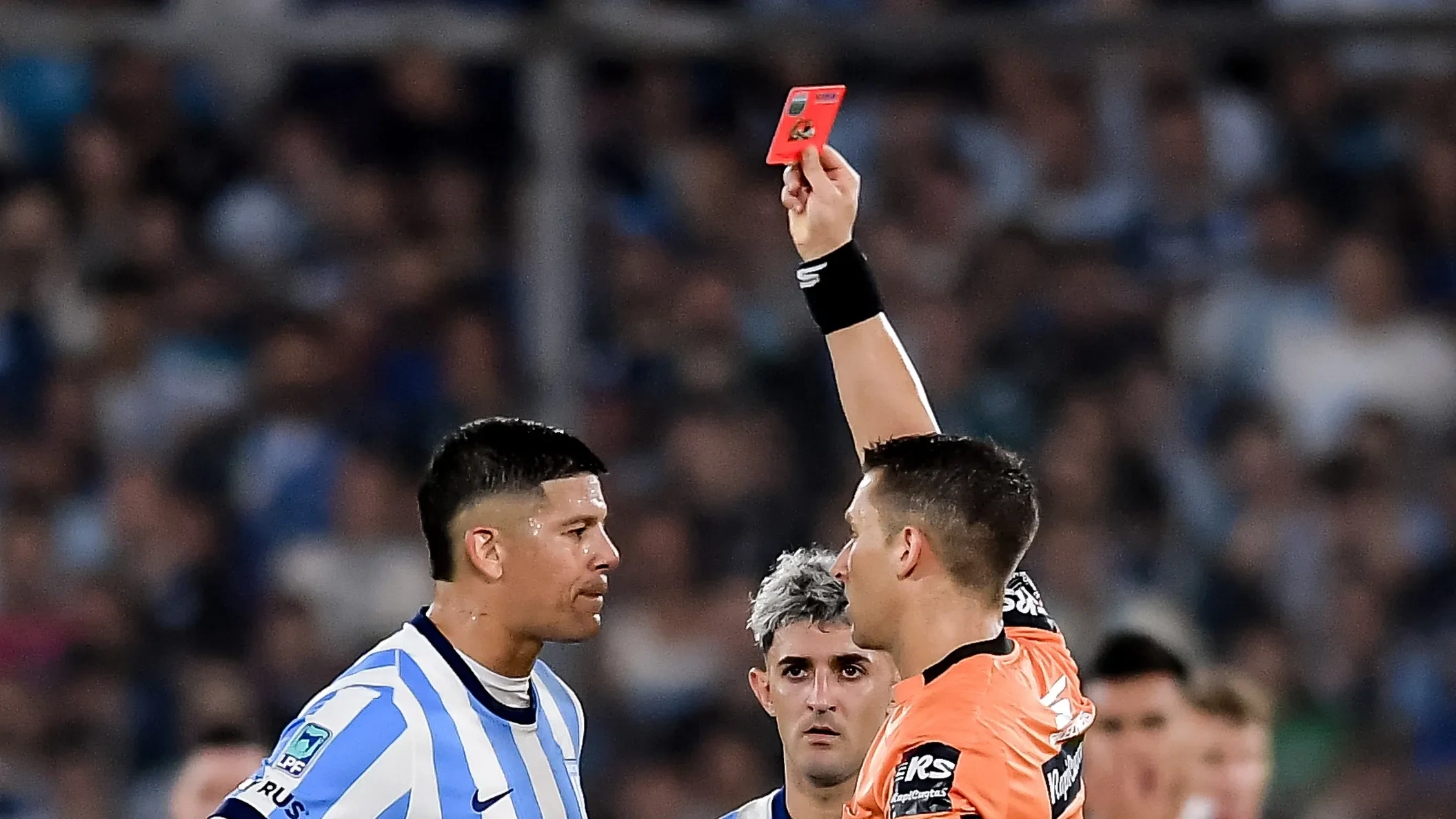
The 36-year-old centre-back was shown a straight red card after striking River Plate's Lucas Martinez Quarta in the face, an incident that has reignited concerns about his temperament as his career enters its twilight years.
The match, which ended in a 2-0 victory for River Plate, descended into chaos following Rojo's dismissal, with the veteran defender refusing to leave the pitch quietly.
According to the official match report, Rojo's reaction to being sent off was as concerning as the violent conduct itself.
Rather than accepting the referee's decision and departing the field of play, the former Argentina international launched into a furious tirade, confronting the match official and directing insults toward him before eventually making his way to the dressing room.
This behavior has resulted in the four-match suspension, which represents a significant setback for Racing Club as they navigate the latter stages of the Liga Profesional season.
The disciplinary action against Rojo comes as no surprise to those who have followed his career closely, as the defender has developed a reputation for volatility throughout his professional journey.
Since joining Racing Club as a free agent from Boca Juniors in August 2025, he has already been sent off twice in just 15 appearances, demonstrating a concerning pattern of disciplinary issues.
This latest dismissal marks his 13th red card throughout his official professional career, a statistic that raises serious questions about his ability to control his emotions on the pitch.
Rojo's disciplinary record stands in stark contrast to his time at Manchester United, where he managed to avoid being sent off despite his fiery reputation.
The Argentine joined the English giants for €20 million in 2014 and went on to make 122 appearances, scoring two goals and providing four assists during his tenure at Old Trafford.
His time at United was relatively successful, with the defender helping the club secure the FA Cup, League Cup, and Europa League during his six-year spell in the Premier League.
The contrast between Rojo's disciplinary record at Manchester United and his subsequent career in Argentina is particularly striking.
During his time with the Red Devils, he managed to channel his aggressive playing style effectively without crossing the line into violent conduct or dissent that would result in dismissal.
However, since returning to South American football with Estudiantes in 2021, followed by spells at Boca Juniors and now Racing Club, his disciplinary issues have resurfaced with alarming frequency.
Rojo's transfer history reflects the typical trajectory of a South American player who achieves success in European football before returning to his homeland.
After leaving Manchester United permanently for Boca Juniors in February 2021 for €6 million, he has bounced between Argentine clubs, with each move seemingly bringing more disciplinary problems.
His current contract with Racing Club is set to expire in June, and this latest suspension could significantly impact his market value and attractiveness to potential suitors.
The incident against River Plate highlights the intense rivalry and high-stakes nature of Argentine football, where emotions often run high and disciplinary issues are commonplace.
However, Rojo's behavior appears to transcend the normal intensity of these encounters, suggesting deeper issues with emotional control and professional conduct.
At 36 years of age, with his contract expiring in just a few months, this latest controversy could mark a significant turning point in his career.
Racing Club now faces the challenge of navigating the remainder of the season without one of their most experienced defenders. Rojo's absence will be particularly felt given his leadership qualities and extensive top-level experience, having played in World Cups and major European competitions.
The club's coaching staff will need to find ways to compensate for his loss while also addressing the underlying issues that have led to his repeated disciplinary problems.
The four-match ban represents more than just a temporary absence from the pitch for Rojo; it could potentially signal the beginning of the end for his professional career.
At his age, with a history of disciplinary issues and now facing another lengthy suspension, clubs may be reluctant to take a chance on him, especially given the negative publicity and potential disruption his presence could bring to a dressing room.
Rojo's situation raises broader questions about the management of experienced players who struggle with discipline as they age.
While his technical abilities and game-reading skills remain valuable assets, his inability to control his emotions on the pitch has become a significant liability.
This case serves as a reminder that even the most talented players must maintain professional conduct to remain valuable contributors to their teams.
The impact of Rojo's suspension extends beyond Racing Club, potentially affecting the competitive balance of the Liga Profesional as teams jockey for position in the final stages of the season.
His absence could prove particularly costly if Racing Club is involved in a tight race for continental qualification or fighting against relegation, depending on their current standing in the league table.
As Rojo approaches the end of his contract with Racing Club, he faces a critical juncture in his career. The combination of his age, disciplinary record, and this latest suspension will likely limit his options for future employment, potentially forcing him to consider retirement or accepting a significantly reduced role at a lower level of competition.
His legacy, once defined by his successful spell at Manchester United, now risks being overshadowed by his disciplinary issues in Argentine football.
The football community will be watching closely to see how Rojo responds to this latest setback. Will he use this period of suspension to reflect on his behavior and make necessary adjustments, or will he continue down the path that has led to 13 red cards throughout his career?
The answer to this question could determine whether he has any meaningful football left to offer or if his professional playing days are indeed drawing to a close.
Rojo's case also serves as a cautionary tale for young players about the importance of maintaining discipline throughout their careers. Even players with world-class talent and extensive experience at the highest levels of the game can find their careers derailed by repeated disciplinary issues.
His journey from Manchester United to Racing Club, marked by increasing disciplinary problems, illustrates how quickly a player's reputation and career prospects can deteriorate when they fail to maintain professional standards on the pitch.
As the football world reflects on Rojo's latest incident, attention will inevitably turn to the broader issue of player discipline in Argentine football.
While passion and intensity are celebrated aspects of the game in South America, there must be a balance between emotional expression and professional conduct.
Rojo's case highlights the need for continued education and support for players in managing their emotions and maintaining discipline, regardless of their experience or status within the game.