Kyle Busch Vows to “Make Denny Hamlin’s Life Hell” After Podcast Criticism Over Winless Streak
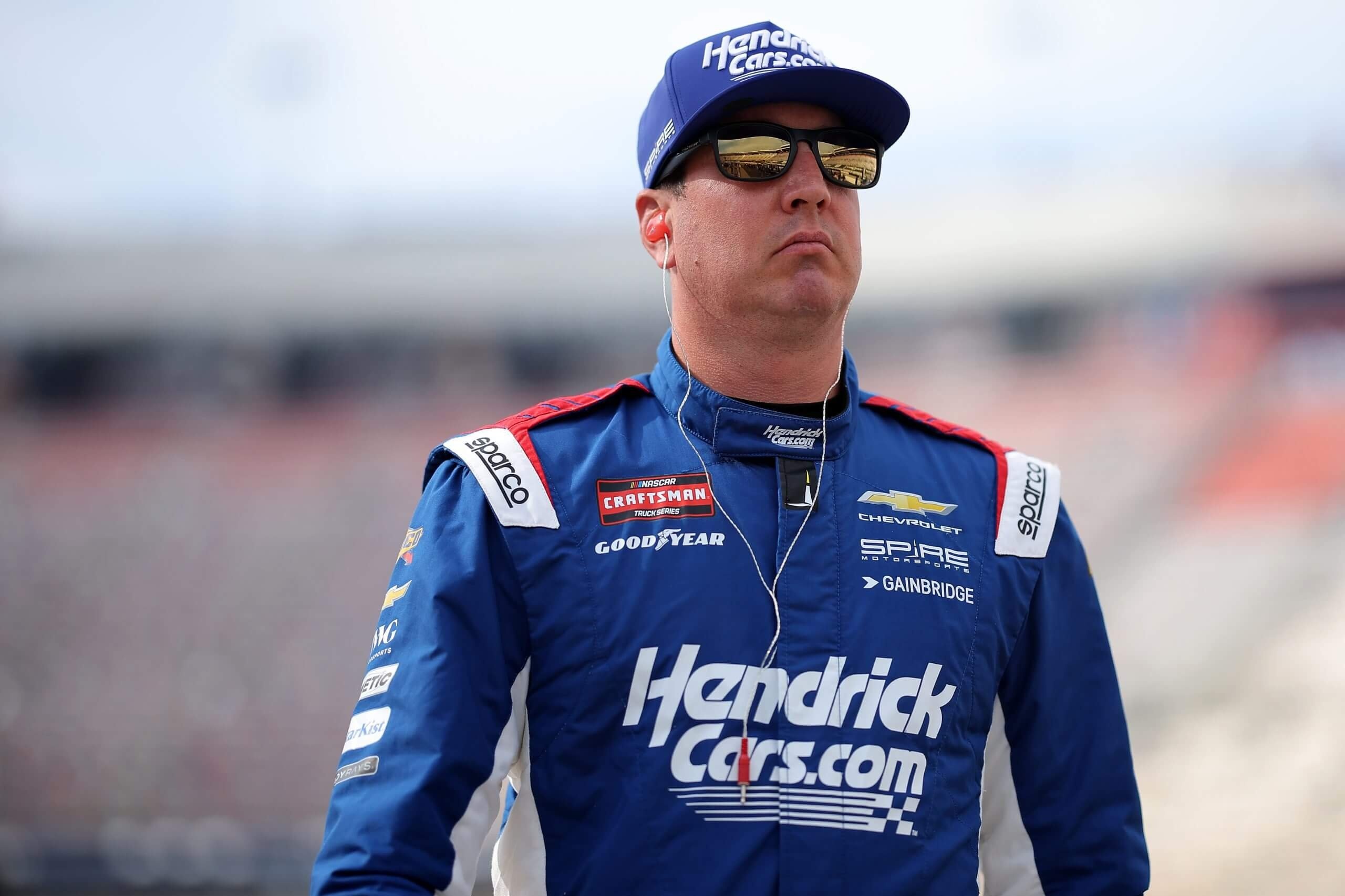
Kyle Busch responded to former teammate Denny Hamlin’s podcast comments during a media brief at Kansas Speedway, stating he could “make his life hell” if Hamlin continued to criticize him.
Busch’s remarks came after Hamlin delivered a 12‑minute segment on his weekly “Actions Detrimental” podcast, offering a candid assessment of Busch’s performance since his 2022 move to Richard Childress Racing.
Hamlin opened the discussion by acknowledging Busch’s talent, saying, “I can’t hold the guy’s helmet talent‑wise,” before noting the driver’s five‑year struggle to win.
The former Joe Gibbs Racing teammate warned fans that expecting Busch to return to frequent victory lane appearances would be unrealistic, given his winless stretch approaching three full seasons.
Hamlin compared Busch’s recent results to those of his RCR teammate Austin Dillon, pointing out that the two drivers are separated by only seven points in the Cup Series standings and share an identical average finish of 22nd.
He challenged Busch to outperform Dillon, emphasizing that a Hall‑of‑Fame driver should be able to “carry it better” than a teammate who has recorded six Cup wins.
Busch, when asked by Veezstream about the swirling conversation after a poor run at Bristol, countered that Hamlin’s criticism was off base and offered to swap cars with him “any day of the week, anytime.”
The driver also expressed a desire to see Hamlin prove he could “carry it better” than Busch, turning Hamlin’s own challenge back on the former teammate.
Busch’s tenure with Joe Gibbs Racing ended in 2022 when sponsorship failed to materialize, prompting his move to RCR where he captured three victories within his first four months.
Since that early success, Busch has not won a Cup race, marking a potential third consecutive winless season as the 2026 campaign progresses.
Many analysts have cited the Next Gen car, introduced in 2022, as a possible factor in Busch’s recent difficulties, suggesting the new platform may not suit his driving style.
Hamlin, however, argued that Busch had adapted to previous car generations and that the Next Gen’s handling feels similar to the Gen 6 model, implying the issue lies elsewhere.
He added that something “just isn’t registering” for Busch, noting that the Gen 6 cars he drove at JGR in his final years with the team were also not “good,” though he did not believe age had turned the “light switch” off for the 40‑year‑old driver.
Busch’s career achievements remain impressive: 63 Cup Series victories place him ninth on the all‑time list, just ahead of Hamlin, and he holds the record for most wins across NASCAR’s three top national series.
At 40, Busch is approaching his 41st birthday next month, an age that historically does not preclude success in NASCAR, as several drivers have peaked in their mid‑40s.
Hamlin, now 45, continues to be a front‑runner this season, regularly contending for wins and maintaining a higher points position than Busch.
The two drivers’ divergent trajectories have sparked debate about the impact of team resources, car performance, and driver adaptation on results.
RCR’s current performance has been described as “not good right now,” a sentiment echoed by Hamlin, who suggested the team’s overall competitiveness may be limiting Busch’s ability to showcase his talent.
Despite the criticism, Busch remains under contract with RCR, and his free‑agent status adds complexity to any potential team change, especially after previous instances of strained relationships with prospective sponsors.
Hamlin’s podcast concluded with a reflection on the sport’s reality, expressing disappointment in seeing a “polarizing and popular and talented” driver like Busch struggling under current circumstances.
He questioned whether Busch’s feedback might be steering the team in the wrong direction, citing the driver’s hands‑on approach to technical discussions such as “bar load overnight.”
Hamlin emphasized that while drivers should provide input, they must avoid dictating engineering changes, a balance he feels Busch may be tipping.
In response to Busch’s claim of making Hamlin’s life difficult, Hamlin posted on X, noting his uncertainty about how to proceed after being labeled as having “bashed” the fellow competitor.
He described his position as walking a “tight rope,” illustrating the delicate nature of public commentary among high‑profile drivers.
Both drivers have significant histories within NASCAR, with Busch’s early career highlighted by back‑to‑back championships in the Cup Series (2015, 2019) and Hamlin’s consistent presence in the playoffs over the past decade.
The rivalry underscores broader themes in the sport, including the pressures of expectation on elite drivers and the impact of media platforms like podcasts on driver relationships.
Below is a summary of recent performance metrics for Kyle Busch and Denny Hamlin as of the Kansas Speedway weekend.
| Driver | Points Gap to Leader | Average Finish (Season) |
|---|---|---|
| Kyle Busch | +236 | 22nd |
| Denny Hamlin | +112 | 15th |
The table reflects that Busch trails the points leader by 236 points, while Hamlin sits 112 points back, illustrating the disparity in their current championship pursuits.
Busch’s average finish of 22nd aligns with Hamlin’s observation that he and Dillon are performing at a similar level, reinforcing the call for improvement.
Hamlin’s 15th‑place average indicates a more consistent presence near the front of the pack, supporting his status as a season contender.
Both drivers have expressed willingness to discuss the issues publicly, a rarity in a sport that traditionally manages disputes behind closed doors.
The exchange may influence team dynamics at RCR, as crew chiefs and engineers weigh driver feedback against performance data when setting up the Next Gen car.
RCR’s technical staff has previously highlighted the challenges of extracting optimal performance from the Next Gen platform, citing aerodynamic sensitivities and suspension tuning as key areas.
Busch’s experience with various chassis setups over his career could prove valuable if the team seeks to refine its approach, provided the driver’s input aligns with engineering objectives.
Hamlin’s perspective, drawn from his tenure at Joe Gibbs Racing—a team that has historically excelled with the Next Gen car—offers a contrasting viewpoint on adaptation and driver expectations.
The public nature of this dialogue may set a precedent for future driver‑team communications, potentially encouraging more transparent discussions about performance hurdles.
Fans and analysts will be watching the upcoming AdventHealth 400 at Kansas closely, anticipating whether Busch can translate his frustration into on‑track results against a strong Hamlin field.
Should Busch manage to finish ahead of Hamlin, it could serve as a tangible rebuttal to the podcast critique and shift the narrative surrounding his current form.
Conversely, a continued pattern of lower finishes may reinforce Hamlin’s assessment and deepen the scrutiny on Busch’s place within the sport’s elite.
The broader NASCAR community remains attentive to how this personal rivalry may affect the competitive balance, especially as teams evaluate driver market value ahead of the offseason.
With the season entering its final stretch, the stakes for both drivers are heightened, as every point and finish will influence contract negotiations and potential team changes.
Ultimately, the exchange between Busch and Hamlin highlights the evolving relationship between driver performance, media commentary, and the business aspects of modern NASCAR.