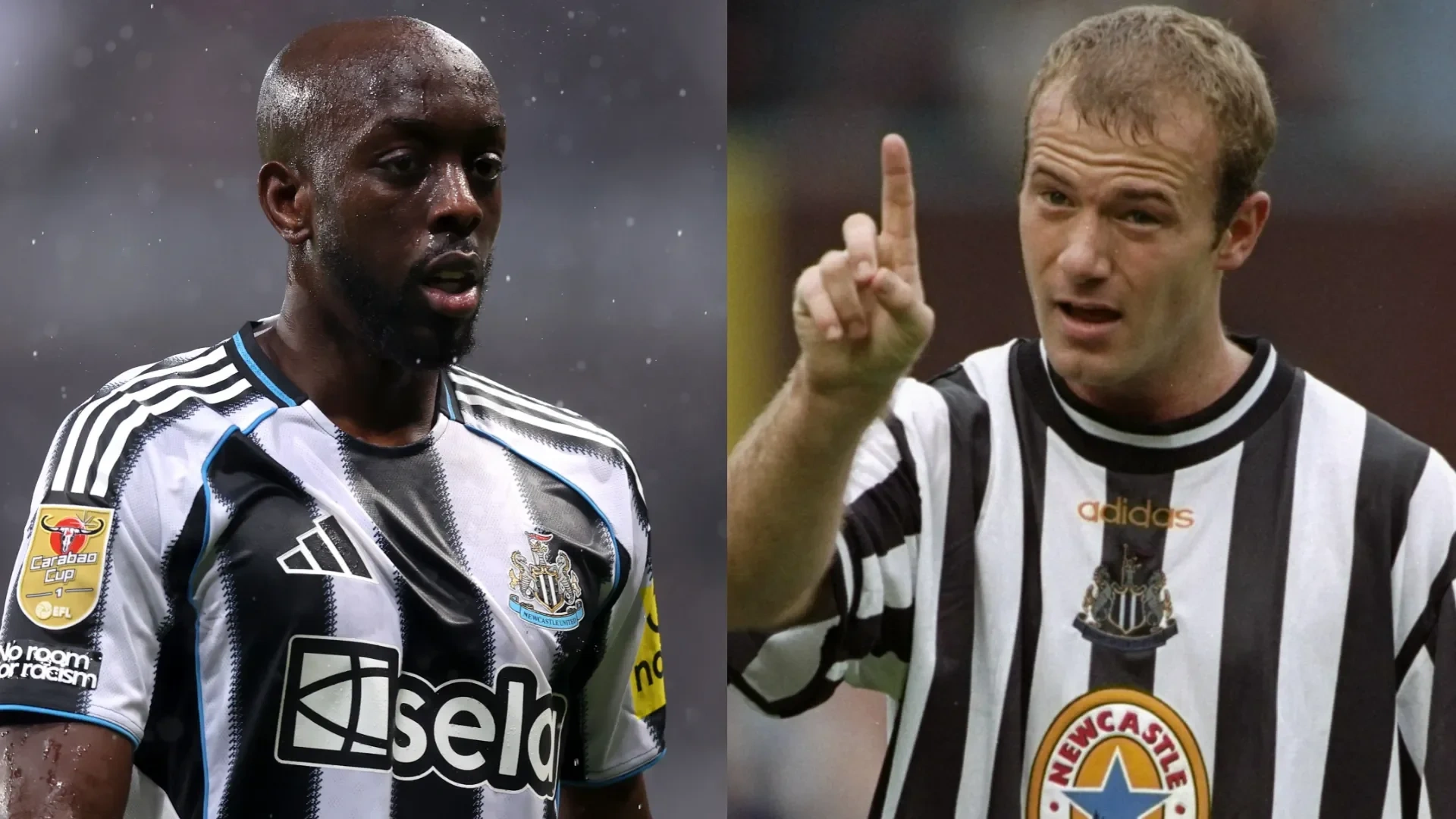
Yoane Wissa's £55m Newcastle Transfer: Worth the Iconic No 9?
Yoane Wissa arrived at Newcastle United in the summer of 2025 for a reported £55 million fee, a sum that placed significant expectation on the 29‑year‑old Congolese international.
His transfer was marked by the decision to adopt the club’s iconic No 9 shirt, a number historically worn by Alan Shearer, Malcolm Macdonald and Jackie Milburn.
Wissa had previously worn the No 11 jersey at Brentford, where he finished the 2024‑25 Premier League campaign with 19 league goals.
The move to St James’ Park was intended to provide Newcastle with a proven goal‑scorer capable of leading a front line that had struggled for consistency in recent seasons.
However, an injury sustained while on international duty with DR Congo in September 2025 delayed his debut by three months.
The knee injury required a lengthy rehabilitation period, meaning Wissa’s first competitive appearance for the Magpies did not come until 6 December 2025.
Since his debut, Wissa has featured in 24 matches across all competitions, registering three goals during that span.
Only one of those goals was scored in the Premier League, a stark contrast to his previous season’s output in the top flight.
Newcastle’s tactical setup under Eddie Howe traditionally favours a single‑striker system, limiting the opportunities for a forward accustomed to Brentford’s two‑striker formation.
Analysts have noted that Wissa’s style of play, which includes intelligent runs behind the defence and a strong work‑rate, may require adjustments to fit Howe’s preferred 4‑2‑3‑1 shape.
Paul‑Jose M’Poku, a fellow Congolese international and current Baller League UK star, commented on Wissa’s situation to Veezstream.
M’Poku stated that Newcastle clearly understood the qualities they were purchasing and that Wissa possesses the ability to succeed in the Premier League.
He also highlighted that the injuries Wissa suffered have hampered his adaptation period, a factor that can affect any player moving to a new league.
M’Poku questioned whether Newcastle would employ Wissa in the same manner as Brentford, where he often operated alongside a partner striker.
The Magpies typically line up with a lone centre‑forward, meaning Wissa must adapt to a role that demands greater hold‑up play and involvement in link‑up actions.
Despite the challenges, M’Poku expressed confidence that Wissa will “bounce back and show his worth” once fully fit and settled.
The discussion around the No 9 shirt also touched on the psychological pressure associated with wearing a number linked to club legends.
M’Poku argued that Wissa did not shy away from the legacy of Shearer, noting that the legend’s achievements remain untouchable regardless of who dons the shirt.
Newcastle’s recent history includes a series of high‑profile signings that have struggled to meet expectations, adding to the scrutiny on Wissa’s performance.
The club finished the 2024‑25 season in 12th place, prompting a restructuring of the attacking department ahead of the 2025‑26 campaign.
Wissa signed a four‑year contract upon his arrival, indicating the club’s long‑term commitment to his development and integration.
As the 2025‑26 Premier League season draws to a close, Newcastle have four matches remaining, with a crucial encounter against Brighton scheduled for Saturday.
The outcome of these final fixtures will significantly influence the Magpies’ final league standing and could provide Wissa with a platform to demonstrate his capabilities.
Below is a statistical comparison of Wissa’s goal output at Brentford versus his first season at Newcastle.
| Season | Club | Premier League Goals |
|---|---|---|
| 2024‑25 | Brentford | 19 |
| 2025‑26 | Newcastle United | 1 |
The stark reduction in goal tally underscores the impact of injury and tactical adjustments on Wissa’s productivity.
Beyond raw numbers, Wissa’s contribution in terms of pressing, link‑up play and creating space for teammates remains a point of analysis for Newcastle’s coaching staff.
Howe’s training sessions have reportedly focused on integrating Wissa into a more central role, emphasizing his ability to hold up the ball and involve midfield runners.
In addition to first‑team duties, Wissa has been involved in community initiatives and has participated in six‑a‑side events organized by Baller League at the Copper Box Arena.
These appearances reflect his willingness to engage with fans and maintain match fitness during periods of limited first‑team action.
The broader implications of Wissa’s performance extend to Newcastle’s transfer strategy, as the club evaluates the efficacy of large‑scale investments in proven Premier League talent.
Should Wissa regain his scoring form, it could validate the club’s approach of targeting established forwards rather than developing younger prospects.
Conversely, a continued dip in output may prompt a reassessment of scouting and integration processes for future acquisitions.
Newcastle’s fan base remains divided, with some supporters expressing patience given the circumstances, while others call for immediate impact from high‑profile signings.
Social media sentiment analysis shows a mixture of optimism and frustration, reflecting the dual expectations placed on Wissa as both a marquee signing and a symbol of the club’s ambitions.
Looking ahead, the remaining fixtures present an opportunity for Wissa to secure a decisive goal that could shift momentum in Newcastle’s final league push.
A victory against Brighton would not only bolster the team’s points tally but also provide a confidence boost for the striker ahead of the season’s climax.
In the context of Newcastle’s historical reliance on a single prolific striker, Wissa’s success or failure will be measured against the legacy of Alan Shearer’s goal‑scoring records.
Shearer remains the Premier League’s all‑time top scorer with 260 goals, a benchmark that continues to shape the expectations for any player wearing the No 9 shirt.
Wissa’s career trajectory, including his international experience with DR Congo, adds a layer of depth to his profile as a forward capable of performing on multiple stages.
His performances in African Cup of Nations qualifiers have demonstrated resilience and adaptability, traits that could translate to the rigours of English football.
Ultimately, the question of whether Wissa should have avoided the No 9 shirt is intertwined with the broader narrative of player identity, club heritage and the pressures of modern football economics.
As the season concludes, analysts, supporters and the player himself will evaluate the decision based on tangible outcomes rather than abstract symbolism.