Matt Crocker’s Impact on U.S. Soccer: Rehiring Gregg Berhalter, Hiring Emma Hayes & Mauricio Pochettino, Building the Bl
Matt Crocker arrived at U.S. Soccer in April 2023 with a mandate to shape the federation’s senior and youth programmes ahead of the 2026 World Cup, which the United States will co‑host.
His initial priority was the senior men’s national team, where he oversaw a worldwide search that culminated in the re‑appointment of Gregg Berhalter as head coach in June 2023.
Crocker described the process as rigorous, involving multiple interview rounds, data analysis and competency testing to ensure the chosen candidate matched the federation’s long‑term vision.
Berhalter’s second tenure was intended to build on his previous cycle and to deliver a competitive squad for the 2026 tournament.
The partnership between Crocker and Berhalter lasted just over a year before the United States exited the 2024 Copa América, prompting a reassessment of the coaching direction.
In response, Crocker turned to another high‑profile appointment, securing Argentine‑Spanish manager Mauricio Pochettino to lead the USMNT into the World Cup year.
Pochettino’s arrival marked the most visible component of Crocker’s legacy, reflecting the ambition to place a globally recognised tactician at the helm of the nation’s flagship team.
While the on‑field results of Pochettino’s tenure remain to be seen, the hire demonstrated Crocker’s willingness to make bold, headline‑grabbing decisions.
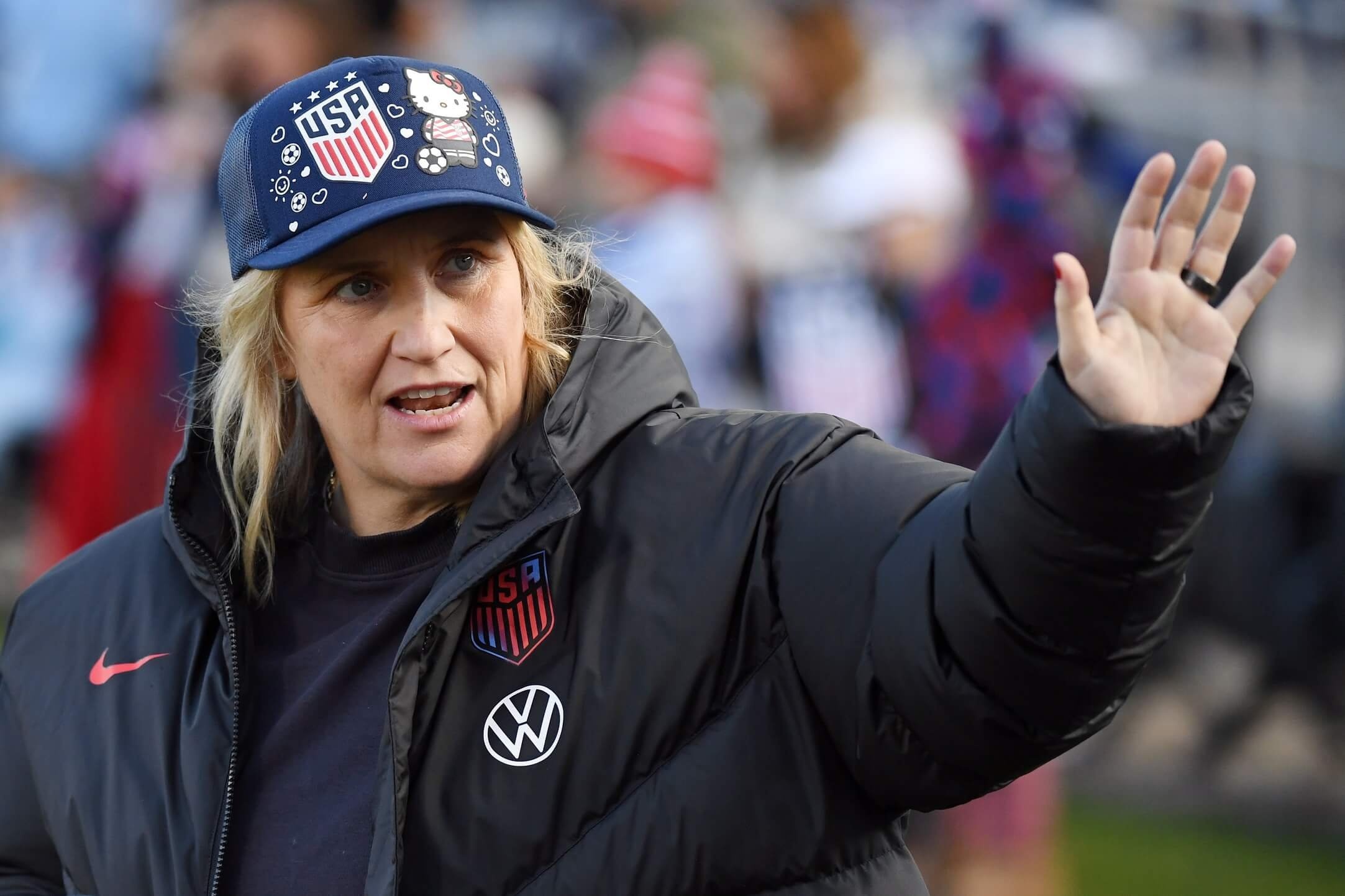
Parallel to the men’s side, Crocker executed a landmark appointment for the women’s national team, bringing in Emma Hayes in the fall of 2023.
Hayes, previously successful in the English Women’s Super League, was praised for her coaching acumen, player‑centred approach and ability to galvanise staff and athletes.
Under Hayes, the USWNT captured an Olympic gold medal, restoring confidence after a disappointing early exit from the 2023 Women’s World Cup.
Hayes’ impact extended beyond trophies; her personality and humor positioned her as an effective ambassador for the sport across the United States.
Crocker’s influence also reached the federation’s infrastructure, most notably the Arthur M. Blank National Training Center, slated to open in May 2026.
The training complex consolidates the men’s, women’s and youth national teams under one roof, a concept shaped by Crocker’s tours of elite facilities worldwide.
Approximately 1,600 individuals contributed to the centre’s construction, including specialists in turf, architecture and former national‑team players.
Crocker’s guiding philosophy for the centre was encapsulated in his quote, “How do we make sure that every minute is a masterclass?”
Beyond bricks and mortar, Crocker championed a comprehensive pathway model known as “The U.S. Way,” focusing on talent identification, coaching education and stakeholder collaboration.
Talent ID camps introduced during his tenure expanded the youth national‑team pool, improving scouting depth across the country’s diverse regions.
Coaching education received heightened emphasis, with resources allocated to develop licences and curricula aligned with international best practices.
Relationships forged with MLS clubs, college programmes and grassroots organisations aimed to create a seamless pipeline from youth academies to senior squads.
The table below summarises the senior men’s national team’s competitive record under Berhalter’s second stint prior to the coaching change.
| Competition | Matches Played | Result |
|---|---|---|
| 2024 Copa América | 3 | Group‑stage exit |
| Friendlies (2023‑24) | 6 | 4 wins, 2 losses |
While the record reflects a mixed performance, Crocker maintained that the primary objective was to solidify a playing philosophy suitable for the 2026 World Cup.
On the women’s side, the USWNT’s 2024 Olympic triumph under Hayes added a major accolade to the federation’s trophy cabinet during Crocker’s tenure.
Hayes’ tactical approach emphasized high‑pressing, fluid attacking transitions and a deep bench, allowing rotation without compromising quality.
Key players such as Alex Morgan, Megan Rapinoe and emerging talent Trinity Rodman thrived within Hayes’ system, contributing to the gold‑medal run.
Crocker’s departure in early 2026 to join the Saudi Arabian Football Federation coincides with the final preparation phase for the World Cup, leaving several initiatives unfinished.
The new training centre will officially open after his exit, meaning he will not experience its operational impact firsthand.
Similarly, the full integration of “The U.S. Way” pathways will continue under his successor, with youth national‑team structures already realigned toward a unified curriculum.
Critics note that a sporting director’s influence on senior‑team results is limited compared to club environments, where player contracts and transfers are directly controlled.
Nevertheless, Crocker’s role in shaping the strategic environment—coach appointments, infrastructure, and development frameworks—constitutes a measurable contribution.
His decision to replace Berhalter with Pochettino was driven by the need for a fresh tactical identity and a coach capable of delivering results on home soil.
Pochettino’s previous successes in the Premier League and Ligue 1 provided a proven track record of implementing high‑intensity, possession‑based systems.
Early training sessions under Pochettino focused on compact defensive lines, coordinated pressing triggers, and rapid ball circulation, aligning with the federation’s long‑term style goals.
Player profiles such as Christian Pulisic, Tyler Wright and Gio Reynolds were central to the tactical blueprint, with emphasis on versatility and technical proficiency.
Hayes’ immediate impact on the women’s side also underscores Crocker’s ability to identify coaches who can translate philosophy into results across gender lines.
The broader implications of Crocker’s tenure extend to U.S. Soccer’s commercial appeal, with high‑profile hires generating increased media attention and sponsorship interest.
Internationally, the federation’s strategic moves signalled a commitment to compete with traditional powerhouses, positioning the United States as a serious contender for 2026.
While the ultimate success of these initiatives will be judged after the World Cup, Crocker’s three‑year blueprint laid foundational elements for sustained growth.
In summary, Matt Crocker’s period as sporting director encompassed decisive coaching appointments, the delivery of a state‑of‑the‑art training facility, and the establishment of a cohesive development pathway.
His departure precedes the culmination of many projects, leaving the federation to assess the tangible outcomes of his strategic vision.