Travis Green Keeps Ottawa Senators Playoff Hope Alive, Praised by Jacques Martin in Ring‑of‑Honour Speech
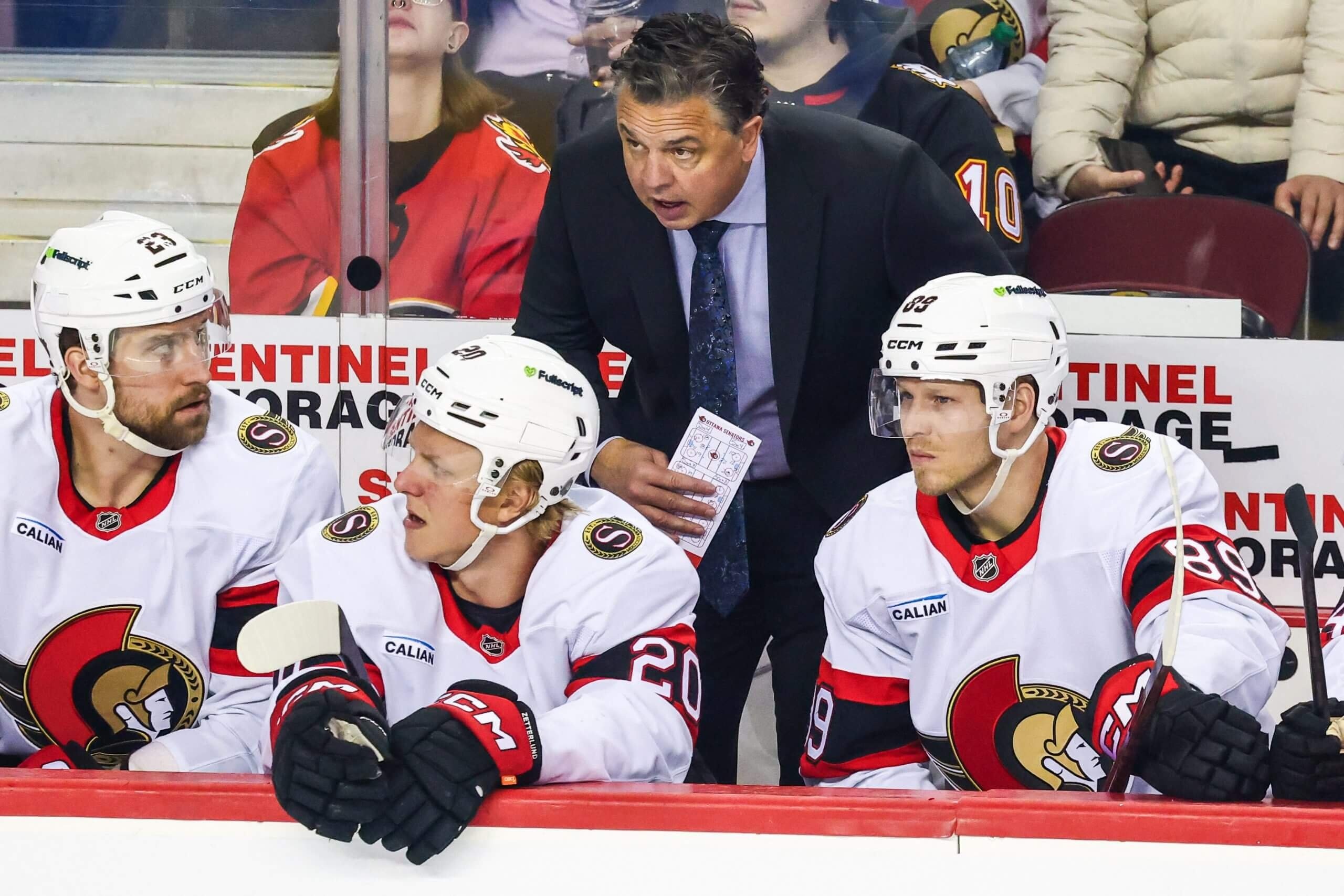
When Jacques Martin was inducted into the Ottawa Senators’ Ring of Honour at the Canadian Tire Centre in January, he deliberately highlighted head coach Travis Green and his staff, turning the ceremony into an unmistakable vote of confidence from the organization.
That endorsement came just weeks after general manager Steve Staios publicly backed Green, reinforcing a message that the franchise intended to stay the course despite a season that, at the time, appeared to be slipping toward disappointment.
Green entered the second half of the campaign with his name circulating in the coach‑of‑the‑year conversation, yet the Senators were still mired in a slump that left them outside the playoff picture while they coped with Linus Ullmark’s prolonged absence.
The team’s underlying metrics told a different story from the win‑loss column; Ottawa was out‑shooting opponents at a 5‑on‑5 level and creating high‑quality chances, but porous goaltending and a league‑worst penalty kill undermined those advantages.
Even the power play, usually a catalyst for a mid‑season surge, was inconsistent, allowing opponents to capitalize when Ottawa’s offense stalled, prompting some fans to demand changes to Green’s coaching staff.
Despite the criticism, Martin praised the staff’s dedication, stating he had never seen a group so committed to detail, and asserted that the organization—from ownership to players—was unified in its desire to win.
Martin’s confidence was echoed in French before he switched back to English, emphasizing that the Senators were “closer than people think” to a championship, a sentiment that would be tested the very next night.
Ottawa fell 4‑1 to the Carolina Hurricanes, deepening the sense of despair, but rebounded immediately with a dominant victory over the Vegas Golden Knights, during which Green delivered his now‑famous “white noise” speech.
That address marked the beginning of a 21‑6‑4 run that vaulted the Sens into a playoff berth and secured a first‑round matchup against the Hurricanes, a series that begins Saturday.
Defenceman Jake Sanderson later credited Green’s belief in the squad, noting that the coach consistently entered the locker room with a brave face even when injuries and frustration threatened morale.
Sanderson explained that Green’s unwavering confidence helped the players maintain belief during a stretch where the team’s playoff odds in January had dipped below 20 percent.
When asked about his composure during the roller‑coaster season, Green likened himself to a duck, keeping calm while his legs paddled furiously beneath the surface, a metaphor he used to describe his leadership style.
During his first offseason, Green spent extensive time meeting individually with players, laying the groundwork for a two‑way system that emphasized aggressive forechecking, cycling in the offensive zone, and protecting the middle of the ice.
By November, Ottawa faced a critical juncture: a poor stretch threatened to derail the season, and captain Brady Tkachuk’s leadership was questioned, prompting Green to publicly defend the captain and privately urge the team to let go of past failures.
Green’s message was clear: the past should not dictate the present, and his refusal to dwell on the franchise’s near‑decade‑long playoff drought set a new tone for the locker room.
Late‑November through early December saw the Senators win only three of ten games, with five‑on‑five scoring drying up, while injuries to Tkachuk (thumb) and Thomas Chabot (upper‑body) compounded the woes.
Nevertheless, Green’s faith never wavered; the team responded with four straight victories, a stretch in which Sanderson recalled Green telling the players, “Boys, we’re going to make it.”
Green’s approach balances positive reinforcement with tough love, pushing players to refine drills in practice and hold themselves accountable in video sessions, a method praised by forward Nick Cousins for its adaptability.
“He comes up with a new message every day,” Cousins said, adding that Green knows exactly which “buttons” to press, whether that means a calm pep talk or an intense, vocal correction.
Center Shane Pinto highlighted Green’s “white noise” philosophy, explaining that the coach teaches the squad to ignore external chatter and stay focused on performance, a mindset that has kept the team even‑keeled.
The Senators have become one of the league’s stingiest defensive units, tied for second‑fewest shots allowed per game (24.4) with the Golden Knights, and trailing only Carolina (23.9) in that metric.
| Team | Shots Against per Game | Penalty Kill % |
|---|---|---|
| Ottawa Senators | 24.4 | 78.2 |
| Carolina Hurricanes | 23.9 | 80.1 |
| Vegas Golden Knights | 24.4 | 79.5 |
Despite the improvement in shot suppression, Ottawa’s penalty kill remains a weakness, ranking near the bottom of the league and highlighting an area where Green’s staff continues to focus its efforts.
Underlying statistics such as expected goals percentage have aligned with the team’s resurgence, indicating that the recent winning streak is not merely a product of luck but reflects genuine performance gains.
Green’s belief in his group has become a rallying point as the Sens prepare for a potential deep playoff run, with the coach emphasizing that the team’s progress since January showcases their collective belief, camaraderie, and commitment to winning.
“We’re here to win,” Green asserted, underscoring that the ultimate goal remains a Stanley Cup, a statement that encapsulates the transformation from a mid‑season crisis to a confident playoff contender.