Mircea Lucescu, Romanian Football Legend, Dies at 80 After Heart Attack
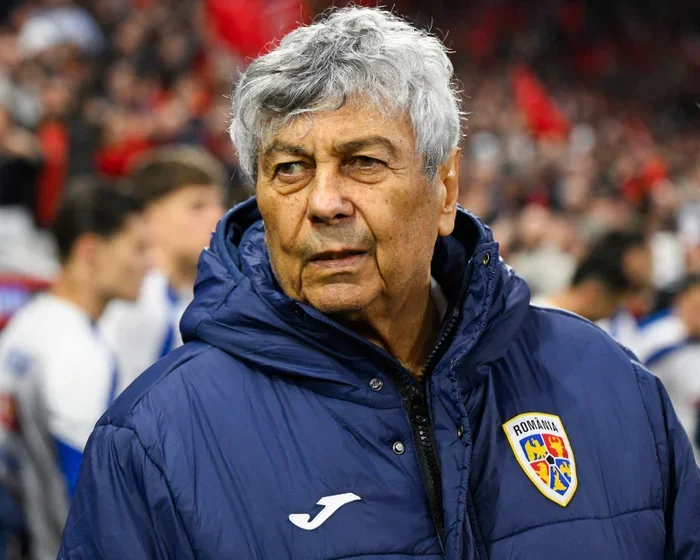
Mircea Lucescu, a towering figure in Romanian football, died at the age of 80 after suffering a heart attack, the Bucharest University Emergency Hospital confirmed on Tuesday.
The former national team captain was rushed to the hospital on Friday morning after the reported cardiac event, and his death was announced shortly thereafter.
Lucescu’s legacy spans more than five decades, encompassing a distinguished playing career, an unprecedented coaching record, and a status as a national symbol for generations of Romanians.
As a player, he earned 64 caps for Romania and captained the side at the 1970 FIFA World Cup in Mexico, showcasing defensive solidity and leadership on the international stage.
His first managerial appointment with Romania began in 1981, and he guided the national team to its inaugural European Championship appearance in 1984, topping a qualifying group that included Italy, Sweden and Czechoslovakia.
The 1984 Euros qualification remains a milestone in Romanian football history, marking the country’s emergence on the continental stage after decades of limited success.
Lucescu’s club coaching journey took him across Italy, Turkey, Ukraine and Russia, where he amassed a remarkable collection of trophies and introduced tactical innovations that influenced each league.
In Italy he managed Pisa, Brescia, Reggiana and Inter, winning the Serie B title with Brescia in the 1991‑92 season, a triumph built around a core of Romanian players famously dubbed “Brescia Romeno.”
The “Brescia Romeno” side featured Gheorghe Hagi alongside three other Romanians, illustrating Lucescu’s early commitment to integrating his compatriots into foreign squads.
His Turkish success began with Galatasaray, where he captured the UEFA Super Cup in 2000 and secured the Süper Lig title in the 2001‑02 campaign.
The following season he switched to rivals Beşiktaş, delivering another league championship and confirming his reputation as a master of adapting to different club cultures.
Lucescu’s most enduring club tenure unfolded at Shakhtar Donetsk, which he joined in May 2004 and led for twelve years, a period that produced eight domestic titles and a historic UEFA Cup victory in 2009.
The UEFA Cup win represented the first major European trophy for a Ukrainian club, underscoring Lucescu’s ability to forge winning teams beyond traditional powerhouses.
After leaving Shakhtar, he took charge of Zenit Saint Petersburg, later returned to Ukraine to manage Dynamo Kyiv, and also served as head coach of the Turkish national team, adding further depth to his international résumé.
In September 2023 Lucescu returned to the Romanian national team for a second spell, aiming to guide the squad through the 2026 World Cup qualification process after a 38‑year hiatus.
His final tenure ended abruptly when he stepped down on Thursday following a health incident during a training session, just three days after Romania’s 1‑0 playoff defeat to Turkey that eliminated the team from World Cup contention.
In a March interview with The Guardian, Lucescu acknowledged his deteriorating health but insisted on remaining at the helm, stating that he could not abandon his duty to Romanian football.
He emphasized that his motivation was never financial or trophy‑driven, but rooted in gratitude for what Romanian football had given him throughout his life.
Shakhtar Donetsk posted a tribute on X, declaring, “Thank you for everything, Mister. Your name is forever written into the history of world football,” reflecting the deep respect he earned at the club.
Galatasaray also issued a statement, extending condolences to Lucescu’s family, loved ones and the broader football community, and affirming that his memory would endure.
| Role | Years Active | Trophies Won |
|---|---|---|
| Romania (Player) | 1966‑1979 | 64 caps, 1970 World Cup captain |
| Romania (Coach) | 1981‑1986, 2023‑2024 | Euro 1984 qualification |
| Shakhtar Donetsk | 2004‑2016 | 8 domestic titles, 2009 UEFA Cup |
Lucescu’s tactical approach combined disciplined defensive organization with fluid attacking transitions, a philosophy evident in the 2009 UEFA Cup campaign where Shakhtar employed quick counter‑attacks exploiting the pace of players like Fernandinho and Willian.
His ability to adapt formations—from a traditional 4‑4‑2 at Brescia to a versatile 4‑2‑3‑1 at Shakhtar—demonstrated a keen understanding of player strengths and opponent weaknesses.
Throughout his career, Lucescu mentored numerous players who later became stars, including Hagi, who credited Lucescu’s guidance for his development during their time at Brescia.
The Romanian football federation described Lucescu as “the first to qualify the national team for a European Championship, in 1984,” highlighting his pioneering role in the country’s football evolution.
His death arrives at a time when Romanian football is searching for a new identity, and his absence will be felt across the coaching ranks, youth academies, and among fans who grew up watching his teams.
Lucescu’s influence extends beyond trophies; he cultivated a professional mindset within Romanian clubs, encouraging modern training methods and scouting networks that persist today.
Future Romanian coaches often cite his career as a blueprint for achieving success both domestically and abroad, emphasizing the importance of tactical flexibility and player development.
The football community worldwide has responded with an outpouring of tributes, underscoring his status as a global figure whose impact transcended national borders.
In summary, Mircea Lucescu’s death marks the end of an era defined by relentless ambition, tactical ingenuity, and a deep commitment to the sport that shaped his nation’s football heritage.