Netflix "Untold: Jail Blazers" Documentary Explores Portland Trail Blazers Legacy, Legal Drama, and Player Growth
The Netflix documentary “Untold: Jail Blazers,” which premiered on Tuesday, revisits the Portland Trail Blazers of the late 1990s and early 2000s, a roster that combined championship‑level talent with a series of off‑court incidents that earned the franchise a lasting, controversial nickname.
During that era the Blazers were a legitimate title contender, reaching the 2000 Western Conference Finals and challenging the Los Angeles Lakers in a seven‑game series that ended in an 89‑84 loss at the Staples Center.
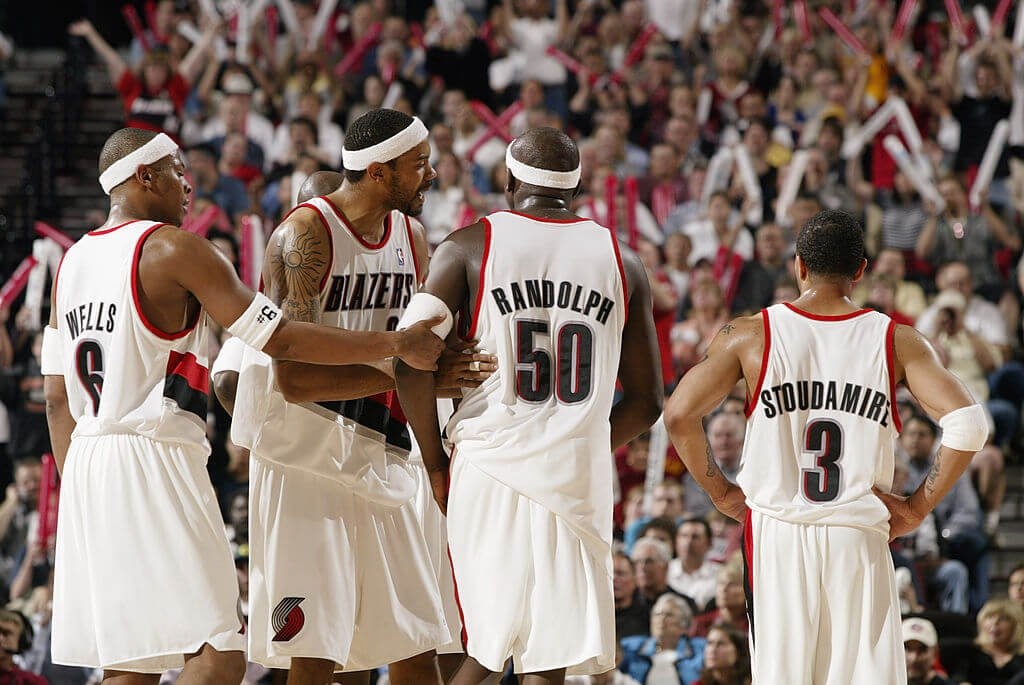
The film centers on three of the team’s most prominent players—Rasheed Wallace, Damon Stoudamire and Bonzi Wells—alongside former general manager Bob Whitt “Trader Bob” Whitsitt, whose aggressive roster‑building philosophy helped assemble the talent but also invited legal trouble.
Whitsitt explained in the documentary that his willingness to acquire players with “problematic backgrounds” stemmed from a belief that “you have to be innovative” and to “think young” in order to keep the Blazers competitive in a post‑Jordan NBA.
The resulting roster was a volatile mix: Wallace, a dominant interior presence, set the NBA single‑season record with 41 technical fouls in 2000‑01, while Stoudamire, the 1995‑96 Rookie of the Year, faced multiple marijuana‑related arrests that led to a 2003 suspension.
Wells, a prolific scorer, endured media scrutiny that suggested he “hated the Portland fans,” a narrative he later rejected, emphasizing his community work and the unfair nature of the criticism.
Legal incidents extended beyond the three focal players. Shawn Kemp, acquired in a 2000 trade, entered a drug‑rehab program for cocaine use during the 2000‑01 season, a period in which Portland lost ten of its final thirteen games.
Ruben Patterson was required to register as a sex offender in 2001 after an attempted‑rape charge, further deepening the franchise’s negative public perception.
The documentary highlights a December 2001 incident in which Wallace and Stoudamire were passengers in a vehicle stopped for speeding in Seattle and subsequently cited for marijuana possession, underscoring the pattern of legal entanglements.
Stoudamire’s legal woes also included a 2002 ruling that police had illegally entered his Lake Oswego home, citing an alarm as justification, and a separate claim that he was pulled over three times in one day by local officers.
Despite the controversy, the players and staff assert that their community contributions were substantial, with Stoudamire noting that “we did a lot of positive work in the community” and that the “Jail Blazers” label often eclipsed those efforts.
Stoudamire described the moniker as “a mark on the city” that carried a “racial undertone,” suggesting that the nickname was both disrespectful and disproportionate to the team’s on‑court achievements.
The cultural backdrop of the era featured a shift from formal suits to hip‑hop‑inspired fashion, as seen on shows like “MTV Cribs,” and a growing acceptance of flashy jewelry, trends that the Blazers both embodied and amplified.
These cultural changes preceded the NBA’s 2005 dress‑code policy, which sought to curb the “flashy” style that had become synonymous with many teams, including Portland.
On the court, the Blazers’ 2000 playoff run remains a benchmark of their competitive peak. After erasing a 3‑1 deficit against the Lakers, they held a 16‑point lead late in the third quarter of Game 7 before ultimately falling short.
| Series | Games Won | Games Lost |
|---|---|---|
| 2000 Western Conference Finals (Portland vs. Lakers) | 3 | 4 |
The Lakers proceeded to defeat the Indiana Pacers in the NBA Finals, while the Blazers were swept by the same Lakers in the first round of the following two seasons, illustrating a rapid decline from contender to early‑exit team.
Whitsitt’s trade strategy, which earned him the nickname “Trader Bob,” involved moving key pieces in an effort to maintain a championship window, but many of those moves disrupted team chemistry and contributed to the franchise’s fragmentation.
In the documentary, Stoudamire reflects that the team “didn’t need to fix anything; it wasn’t broke,” attributing the downturn to “bad breaks” and the difficulty of integrating new players rather than off‑court distractions.
The film also explores the long‑term personal growth of the central figures. After rehabilitating from a 2003 marijuana arrest, Stoudamire entered a treatment program, studied addiction, and later worked with former NBA player John Lucas to mentor athletes facing similar challenges.
Stoudamire’s post‑playing career includes head‑coaching stints at Pacific (2016‑21) and Georgia Tech (2023‑26), followed by an assistant role at LSU, where he leverages his personal experiences to connect with players.
Wells transitioned into coaching as well, serving as an assistant under Stoudamire and later as head coach at Division II LeMoyne‑Owen College, a historically Black institution in Memphis, where he emphasizes relatability and trust with young athletes.
Wells describes his “superpower” as the ability to channel negative energy into positive development, a skill he attributes to the unfair scrutiny he endured during his Blazers tenure.
The documentary underscores that the “Jail Blazers” label persists more than two decades later, reflecting both the franchise’s on‑court talent and its off‑court controversies, and prompting discussion about how media narratives shape public perception.
At the time, the lack of social‑media platforms limited players’ ability to tell their own stories, allowing the media narrative to dominate and often simplify complex personal circumstances.
Marijuana stigma has also evolved; the NBA ceased cannabis testing before the 2020 bubble and removed it from the collective bargaining agreement, a stark contrast to the early‑2000s environment that saw multiple arrests.
Whitsitt acknowledges that the moniker endured because “you can’t have a moniker with a bad team,” suggesting that the nickname became a self‑fulfilling label that reinforced negative perceptions.
Wells hopes viewers will recognize the players’ community involvement, stating, “We were good dudes, community dudes, family dudes,” and urging a broader understanding beyond the scandal‑focused narrative.
Stoudamire adds a similar sentiment, emphasizing his desire for the documentary to showcase the “human interest” aspect of their lives rather than just the sensational headlines.
Overall, “Untold: Jail Blazers” provides a comprehensive look at a pivotal NBA era, blending tactical analysis of a high‑performing yet tumultuous roster with personal testimonies that reveal the lasting impact of cultural, legal, and media forces on the sport.