Vitesse Fans Ejected Mid‑Match at Utrecht’s Keuken Kampioen Divisie Game After Stewards Block Entry
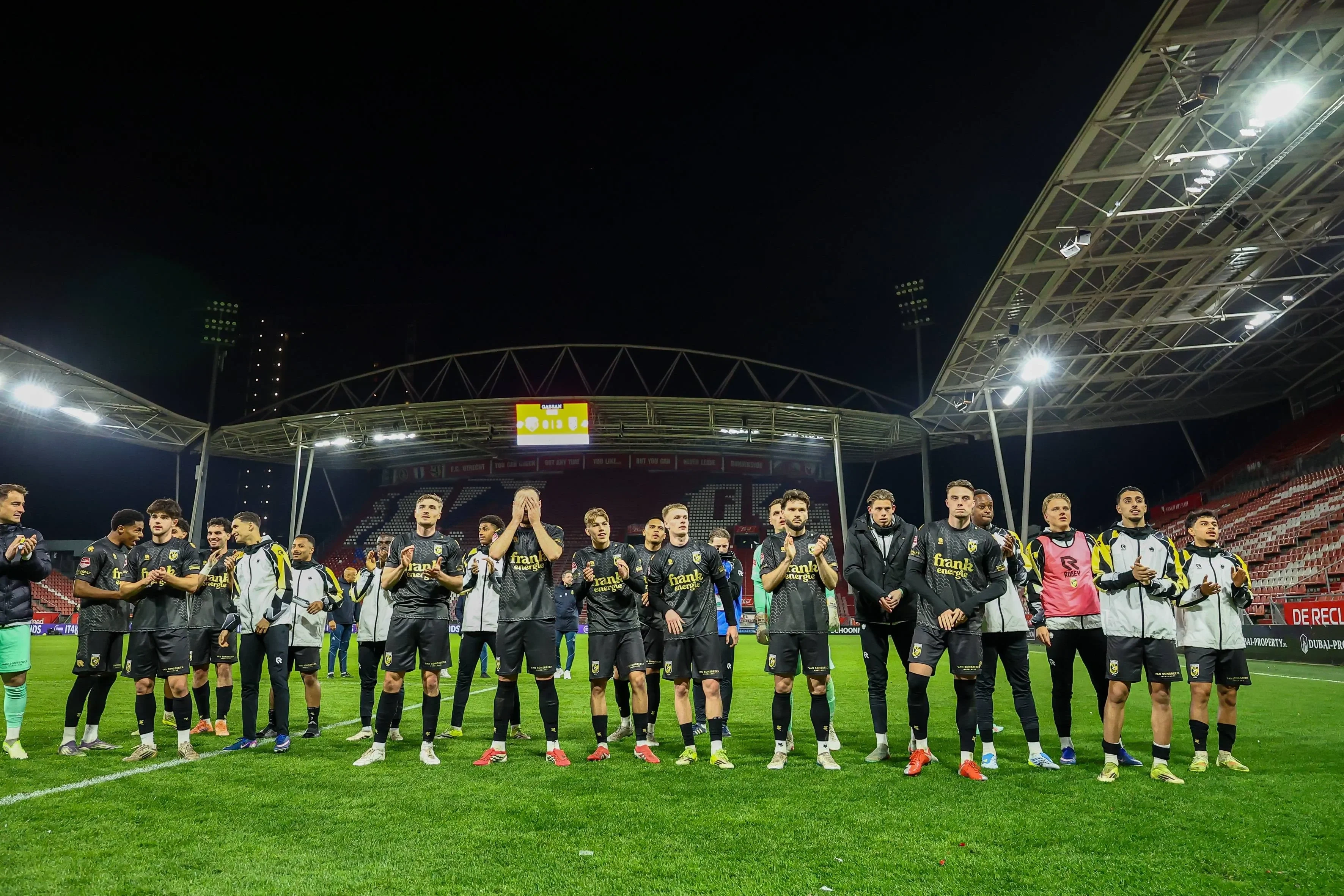
The Eerste Divisie encounter between Jong FC Utrecht and Vitesse on Monday, 14 April 2026, was halted by an unprecedented incident involving the removal of a group of Vitesse supporters from Stadion Galgenwaard. The match, part of the Keuken Kampioen Divisie schedule, proceeded under normal conditions until just before the halftime break when stewards intervened in the home stand where the away fans were seated.
Stadion Galgenwaard, home to Jong FC Utrecht, is known for modest attendance figures, particularly for reserve‑team fixtures that often attract limited local support. On the day in question, the stadium was sparsely populated, a factor that contributed to the visibility of the Vitesse supporters who had taken seats in the home section.
According to eyewitness accounts, the Vitesse fans drew attention by responding to a request from fellow away supporters to stand up, thereby signaling their allegiance in a section traditionally reserved for the home crowd. The home supporters complied, creating a brief but noticeable display of solidarity that was captured by other spectators.
Shortly after this interaction, stadium stewards approached the group of Vitesse fans and ordered them to vacate the home stand. The stewards initially offered two options: to leave the stadium entirely or to relocate to the designated away section.
One Vitesse supporter described the initial approach as seemingly courteous, noting that the steward presented the two alternatives in a calm manner. The fan recalled being told that moving to the away section was the preferred solution, and that leaving the venue was not mandatory.
However, the promised relocation did not materialize. As the half‑time interval progressed, the Vitesse fans were instead herded into two lines, where officials photographed their faces and identification documents. This procedure added a layer of formality that heightened the tension among the supporters.
After the documentation process, the stewards abruptly instructed the group to exit the stadium altogether, effectively removing them from the match environment. The decision was met with vocal disapproval from the remaining away supporters already situated in the away stand, who responded with whistles and chants of “shame on you.”
The incident sparked a flurry of reactions on social media, with one fan posting on X that even the police seemed to be “riding our success,” a sarcastic comment underscoring the perceived injustice of being displaced from an otherwise empty stadium.
From a tactical perspective, both teams entered the match with distinct objectives. Jong FC Utrecht, as a development side, focuses on nurturing young talent and implementing a high‑pressing, possession‑oriented style designed to transition players to the senior squad. Vitesse, a club with recent promotion ambitions, typically employs a balanced 4‑3‑3 formation that emphasizes wing play and quick counter‑attacks.
At the time of the incident, Jong FC Utrecht had fielded a lineup featuring several academy graduates, including midfielder Luuk de Vries, who had been averaging 1.8 key passes per game in the season. Vitesse’s starting eleven included forward Marco van der Meer, whose goal‑scoring rate stood at 0.42 goals per match.
The match statistics up to the halftime interruption reflected a closely contested game. Jong FC Utrecht held 55% possession, while Vitesse managed 45%. Both sides recorded a comparable number of shots on target, with Jong FC Utrecht registering three and Vitesse two.
| Team | Possession | Shots on Target |
|---|---|---|
| Jong FC Utrecht | 55% | 3 |
| Vitesse | 45% | 2 |
Both teams had also recorded a similar number of fouls, with Jong FC Utrecht committing four and Vitesse five, indicating a relatively disciplined encounter despite the off‑field disruption. The disciplinary records for the match showed no yellow cards issued before the halftime break.
Historically, Jong FC Utrecht has served as a springboard for talent within the Utrecht football system, often competing in the Eerste Divisie with the primary aim of player development rather than league placement. Their typical season finish hovers around the lower mid‑table, reflecting the developmental focus.
Vitesse, on the other hand, has a more competitive pedigree, having oscillated between the Eredivisie and Eerste Divisie over the past decade. Their recent campaigns have seen them target promotion, and they entered the 2025‑26 season with a squad assembled to challenge for the top positions.
The broader implications of the incident extend beyond the immediate match. The removal of away supporters raises questions about stadium security protocols and the treatment of traveling fans in Dutch lower‑division venues, where capacity and crowd management differ markedly from larger arenas.
Club officials from both sides have been urged to comment on the matter. Jong FC Utrecht’s management has historically emphasized a family‑friendly atmosphere and adherence to KNVB regulations, while Vitesse’s hierarchy has previously advocated for the rights of their supporters to attend away fixtures without undue restriction.
In the aftermath, the KNVB (Royal Dutch Football Association) is expected to review the actions of the stadium stewards to determine compliance with existing guidelines governing fan segregation and safety. Any disciplinary measures could influence future policies regarding the allocation of seats to away fans in low‑attendance matches.
The incident also highlights the logistical challenges faced by clubs in the Eerste Divisie when balancing fan engagement with operational constraints. Stadion Galgenwaard’s relatively low attendance for reserve matches often leads to empty sections, which can complicate decisions about where to seat traveling supporters.
From a fan experience standpoint, the abrupt removal disrupted the emotional investment of the Vitesse supporters, many of whom traveled to support the first team’s reserve side. The incident underscores the importance of clear communication from club officials and stewards to avoid misunderstandings that can exacerbate tensions.
Looking ahead, both teams are scheduled to play further matches in the coming weeks. Jong FC Utrecht will face FC Eindhoven on 18 April 2026, while Vitesse is set to travel to MVV Maastricht on the same day. The outcomes of these fixtures could be influenced by the morale and focus of the squads after the unusual halftime interruption.
In the upcoming Jong FC Utrecht versus FC Eindhoven match, the home side will likely continue to prioritize youth development, with an emphasis on maintaining possession and pressing high up the pitch. FC Eindhoven, traditionally a competitive side in the Eerste Divisie, will aim to exploit any defensive lapses with swift transitions.
Vitesse’s clash with MVV Maastricht will be a test of their resilience after the Galgenwaard incident. The team will seek to reinforce their attacking rhythm, leveraging the speed of wingers such as Joris van den Broek, who has contributed two assists in the last five games.
The incident at Stadion Galgenwaard serves as a reminder that football matches are not only about on‑field performance but also about the management of spectators and the preservation of a fair, inclusive environment. Ensuring that supporters can enjoy the game without arbitrary displacement is essential for maintaining the integrity of the sport.
As the season progresses, clubs, league officials, and fan groups will be watching closely to see how the situation is resolved and whether any procedural changes are implemented. The handling of this case may set a precedent for future encounters involving mixed‑section seating in the Eerste Divisie.