Referee Serdar Gözübüyük Defends Controversial Decision After NEC‑Feyenoord Draw
Serdar Gözübüyük, the Dutch Eredivisie referee who officiated the NEC Nijmegen versus Feyenoord match on 12 April 2026, removed his Instagram presence a day after the fixture concluded. The decision to set his account to private was announced publicly through a brief statement on the platform, confirming that the change was made in response to the intense scrutiny following the match.
The encounter ended in a 1‑1 draw, with both sides sharing points in a tightly contested fixture that held significant implications for the mid‑table battle in the 2025‑26 Eredivisie season. NEC, managed by Joop van den Berg, sought to solidify a recent run of form, while Feyenoord, under the stewardship of Arne Slot, aimed to maintain pressure on the league leaders, Ajax.
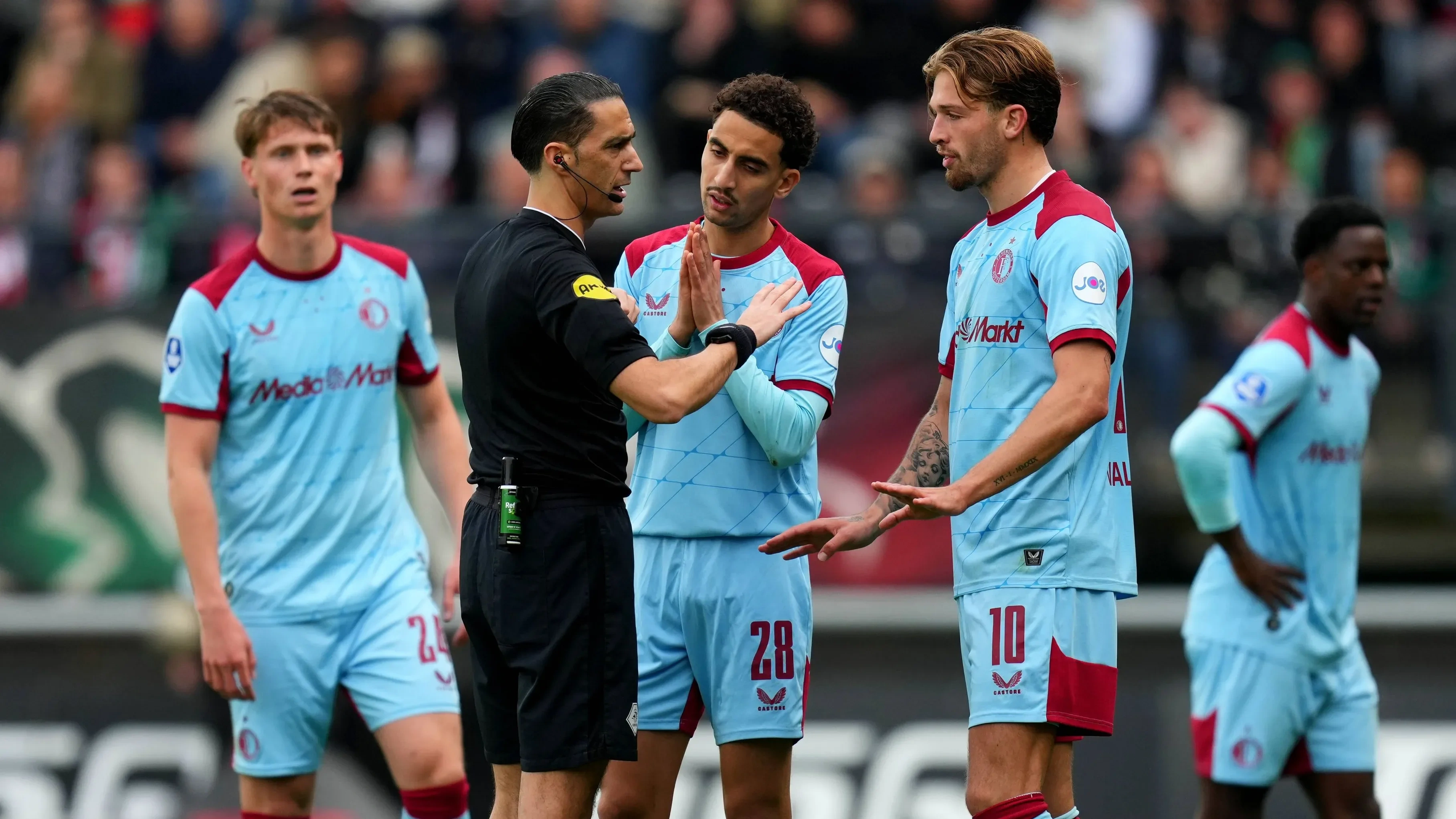
The controversy erupted in the 68th minute when NEC defender Philippe Sandler executed a challenge on Feyenoord striker Ayase Ueda, who had broken through the defensive line and was poised to face goalkeeper Gonzalo Crettaz one‑on‑one. The incident prompted an immediate VAR review, during which Gözübüyük initially reached for his pocket before producing a yellow card.
Many observers, including former Dutch international Robin van Persie, argued that the severity of the foul warranted a straight red card. Van Persie, who was seated in the stands, was heard exclaiming, “What is he doing?! That’s a player who’s broken through, isn’t it?! Unbelievable!” as the referee’s decision was announced.
Feyenoord’s reaction extended beyond the stadium, with several players taking to social media to voice their displeasure. Forward Gonçalo Borges posted a video of the incident accompanied by the caption, “Unbelievable… With VAR involved and still making the wrong decision.”
Mid‑fielder Jordan Lotomba echoed the sentiment, writing, “In what world is this not a red card?” The collective outcry highlighted a growing frustration within the Feyenoord camp regarding perceived inconsistencies in officiating standards.
Defender Luciano Valente was among the most vocal critics, stating, “The way I saw it, it’s a real disgrace. We’ve had plenty of moments like this during the season… It’s a straight red card, plain and simple.” His comment underscored the belief that the decision directly altered the tactical balance of the match.
Gözübüyük defended his ruling, explaining that after reviewing the footage, he concluded that Ueda had come too close to Crettaz, thereby negating a clear goal‑scoring opportunity. He emphasized that the criteria for a red card under Law 12 require a denial of an obvious goal‑scoring chance, which he determined was not met.
The match statistics reveal the narrow margin of the contest. Both teams registered 12 shots, with NEC achieving five on target compared to Feyenoord’s four. Possession was evenly split, with each side holding the ball for 48% and 52% respectively.
| Statistic | NEC Nijmegen | Feyenoord |
|---|---|---|
| Shots (total) | 12 | 12 |
| Shots on target | 5 | 4 |
| Possession (%) | 48 | 52 |
| Fouls committed | 14 | 13 |
| Yellow cards | 2 | 3 |
NEC’s tactical setup, featuring a 4‑3‑3 formation, relied on quick transitions through the wings, with winger Joris van Laarhoven providing width and pace. The team’s defensive discipline was evident in the low number of clear‑cut chances conceded before the Sandler incident.
Feyenoord, operating in a 4‑2‑3‑1 system, sought to dominate midfield through the creative partnership of Orkun Kökçü and Steven Berghuis. Ayase Ueda’s movement off the ball was a key element of their attacking strategy, making the challenge on him a pivotal moment in the game.
Both clubs entered the match with differing objectives. NEC, positioned 11th in the league table, aimed to accumulate points to avoid a relegation battle, while Feyenoord, sitting in 4th place, targeted a top‑three finish to secure Champions League qualification.
The aftermath of the match saw the KNVB receive multiple formal complaints from Feyenoord regarding the referee’s performance. The Dutch football association confirmed that the complaints would be reviewed in accordance with its disciplinary procedures.
Gözübüyük’s decision to privatize his Instagram account has been interpreted by some analysts as an attempt to shield himself from further online harassment. The referee has previously maintained a low‑profile digital presence, focusing on his officiating responsibilities.
In the broader context of Eredivisie officiating, the incident adds to ongoing debates about VAR’s impact on decision‑making speed and accuracy. The league has been experimenting with shortened review windows to reduce interruptions, yet the NEC‑Feyenoord case illustrates lingering challenges.
Feyenoord’s next fixture is scheduled against FC Groningen on 25 April 2026, where the team will look to rebound from the draw and address the psychological effect of the controversy. Manager Arne Slot has emphasized the need to stay focused on performance rather than external factors.
NEC will travel to AZ Alkmaar for a KNVB Cup tie on 20 April 2026, a match that could provide a morale boost if they secure a victory. The club’s coaching staff has highlighted the importance of maintaining defensive solidity, a principle reinforced by the recent refereeing episode.
Both clubs have expressed confidence in their season objectives despite the incident. NEC’s captain, Joris van der Heijden, stated, “We will learn from every game and keep pushing forward.”
Feyenoord’s captain, Orkun Kökçü, added, “Our focus remains on the league and cup; we will not let one decision define us.”
The incident also reignited discussions among former referees about the consistency of yellow versus red card thresholds for denying goal‑scoring opportunities. Experts note that the interpretation of “clear goal‑scoring chance” can vary, influencing outcomes in high‑stakes matches.
As the Eredivisie season approaches its climax, the NEC‑Feyenoord match will likely be referenced in future analyses of officiating trends and their impact on league standings. The decision by Gözübüyük to limit his social media exposure may set a precedent for other officials facing similar public pressure.