Bernardo Silva to Man United? Ex‑midfielder Says It Won’t Happen
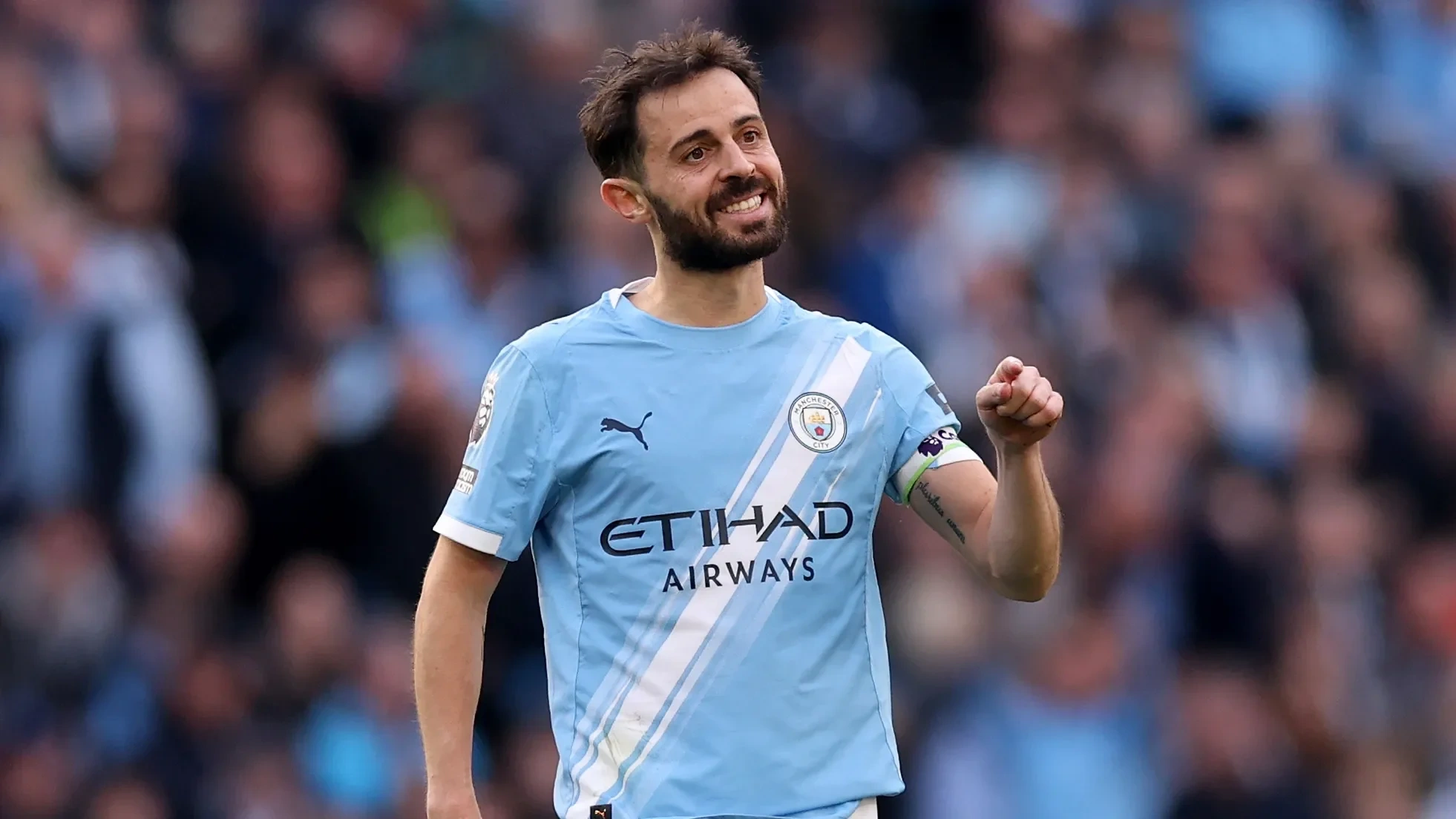
Bernardo Silva’s contract with Manchester City expires at the end of June 2026, making him a free agent for the first time since joining the club in 2017.
His impending departure has ignited widespread speculation across Europe, yet former Manchester United midfielder Nicky Butt has categorically dismissed any chance of a transfer to Old Trafford.
Speaking to Paddy Power, Butt praised Silva’s technical ability and character while emphasizing the “too much respect” the Portuguese international holds for City.
He argued that this respect, combined with tactical incompatibility, ensures a “Carlos Tevez‑style” switch will never materialise.
Silva has amassed an impressive trophy haul under Pep Guardiola, including five Premier League titles, three FA Cups and a UEFA Champions League triumph.
These achievements have cemented his status as one of the Premier League’s most decorated midfielders of his generation.
Butt highlighted that Silva’s loyalty to the blue half of the city outweighs any potential financial incentive offered by United.
He added that the player’s desire to protect his legacy at the Etihad would prevent a move that could be perceived as a betrayal.
In tactical terms, Silva operates primarily as an inverted left‑winger or central attacking midfielder, thriving in Guardiola’s positional‑play system.
Manchester United currently employ a 4‑2‑3‑1 formation where Bruno Fernandes occupies the central attacking role, leaving little room for a direct replacement.
Butt noted that integrating Silva alongside Fernandes would create redundancy, stating “you can’t play them both in the same team, can you?”
He also suggested that Silva’s style, which relies on quick interchanges and spatial awareness, may not align with United’s more direct, physical approach.
Silva’s career statistics underline his consistency, featuring 378 Premier League appearances for City, during which he recorded 61 goals and 85 assists.
His passing accuracy of 87 % and average of 2.3 key passes per game further illustrate his creative influence.
These numbers are presented in the table below for reference.
| Competition | Appearances | Goals / Assists |
|---|---|---|
| Premier League | 378 | 61 / 85 |
| Champions League | 84 | 12 / 19 |
| Domestic Cups | 112 | 15 / 22 |
Beyond club success, Silva has earned 71 caps for Portugal, contributing 13 goals and participating in two World Cups.
His international experience adds further weight to his reputation as a world‑class midfielder.
Butt, a member of United’s Class of ’92, recalled the club’s earlier missed opportunity with John Stones, another player who chose City over United.
He explained that United had engaged Stones before his 2016 transfer, but the defender ultimately became a cornerstone of Guardiola’s backline.
The Stones anecdote serves as a reminder of United’s historical challenges in securing City talent.
It also illustrates the broader pattern of cross‑city transfers being rare due to deep-rooted rivalries.
Silva’s potential destinations this summer have been linked to La Liga giants Barcelona and Real Madrid.
Both clubs have expressed interest in acquiring a versatile playmaker capable of operating in tight spaces.
Barcelona’s current tactical setup under Xavi emphasizes possession and intricate passing, which aligns well with Silva’s skill set.
Real Madrid, on the other hand, could utilize him as a left‑flank creative outlet within Carlo Ancelotti’s 4‑3‑3 system.
Silva’s agent confirmed that discussions with Spanish clubs are ongoing, but no formal offers have been disclosed.
Manchester City, meanwhile, have begun planning for his departure by scouting potential replacements.
Emerging talents such as Phil Foden and Jeremy Doku are expected to assume greater responsibility in the midfield.
City’s recruitment focus appears to be shifting toward younger, high‑potential players rather than established stars.
This strategic pivot reflects Guardiola’s long‑term vision of maintaining a squad capable of sustained success.
For United, the priority lies in identifying a midfielder who complements rather than competes with Bruno Fernandes.
Options under consideration include seasoned Premier League veterans and promising foreign signings who can adapt to Erik ten Hag’s system.
The financial implications of a free‑transfer signing like Silva would be significant, potentially freeing up wage budget for other targets.
However, Butt’s comments suggest that United’s interest is more theoretical than genuine.
Silva’s respect for Manchester City extends beyond the pitch, encompassing the club’s culture and fanbase.
He has frequently spoken about his gratitude for the support received at the Etihad Stadium.
Such emotional ties often influence player decisions, particularly when considering moves to rival clubs.
In addition to loyalty, Silva’s personal ambition appears focused on competing for European titles.
Both Barcelona and Real Madrid regularly feature in the Champions League knockout stages, aligning with his objectives.
The broader implications of Silva’s free agency highlight the evolving nature of player movement in modern football.
While financial power remains a key driver, personal values and tactical fit are increasingly decisive factors.
Silva’s case underscores how a player’s legacy and relationship with a club can outweigh monetary considerations.
As the summer transfer window approaches, clubs across Europe will continue to monitor his status closely.
For now, the consensus among insiders, including Nicky Butt, is that a move to Manchester United is highly unlikely.