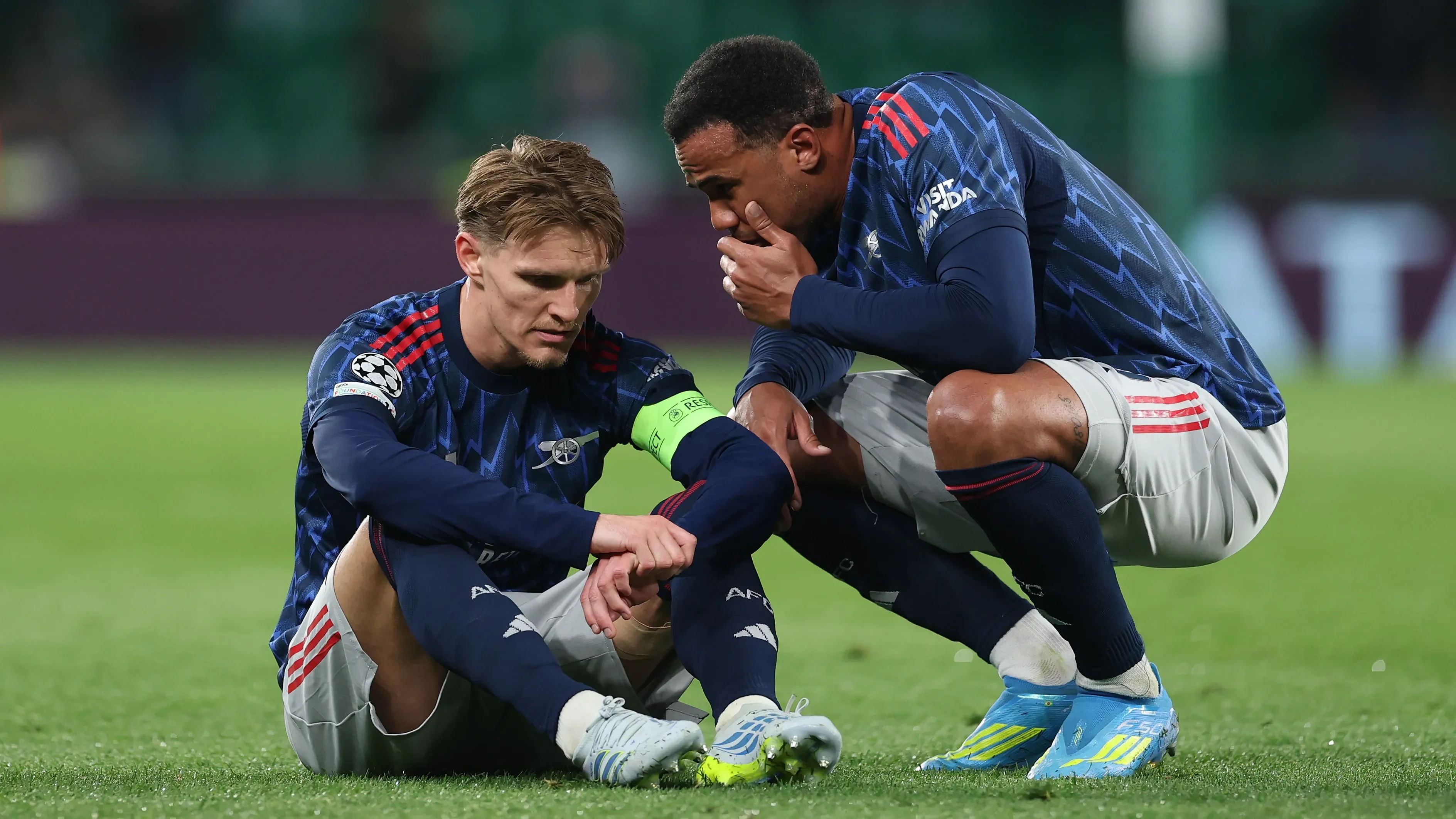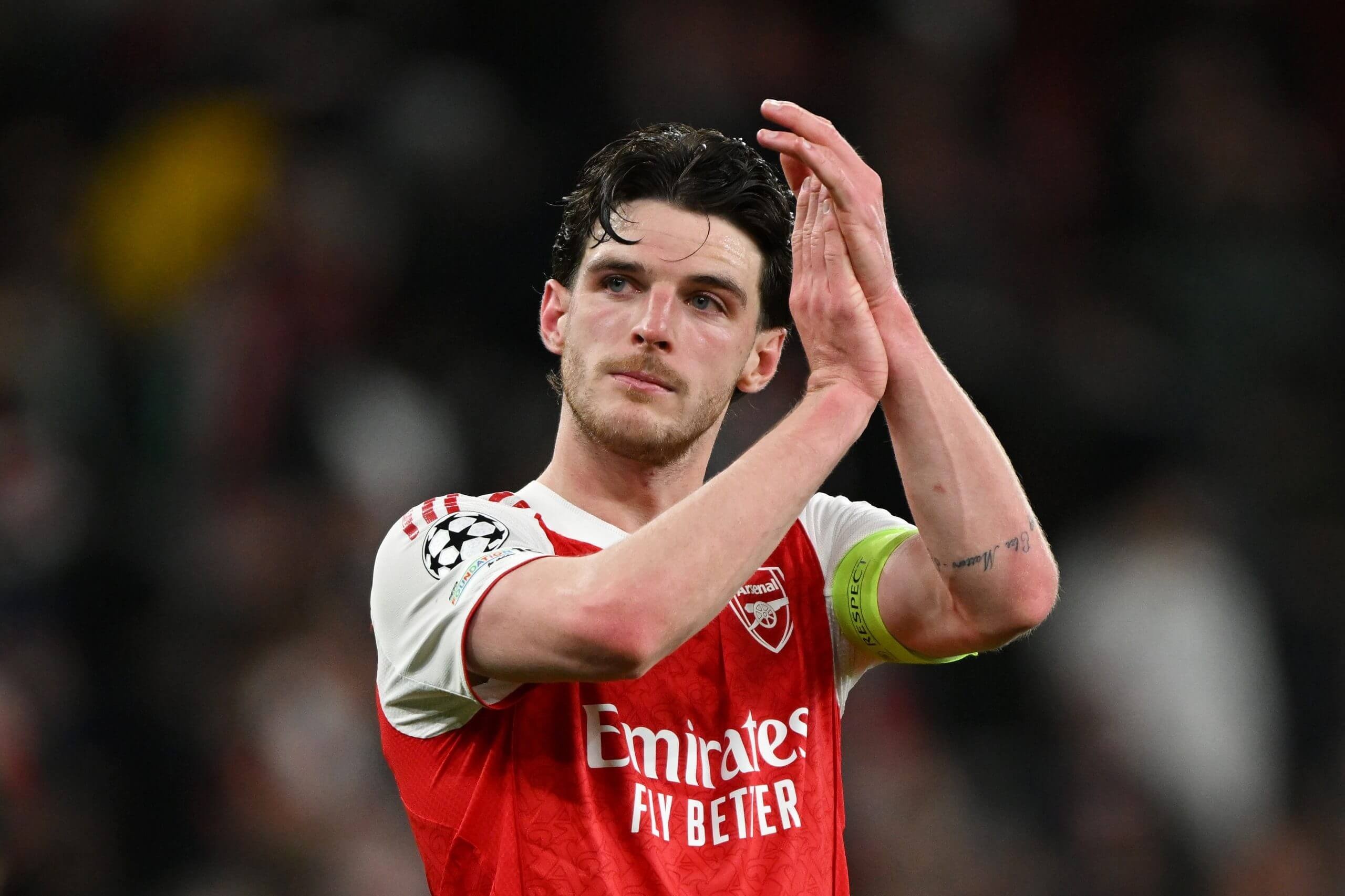
Jurrien Timber absent from Arsenal training, may miss Atletico semi
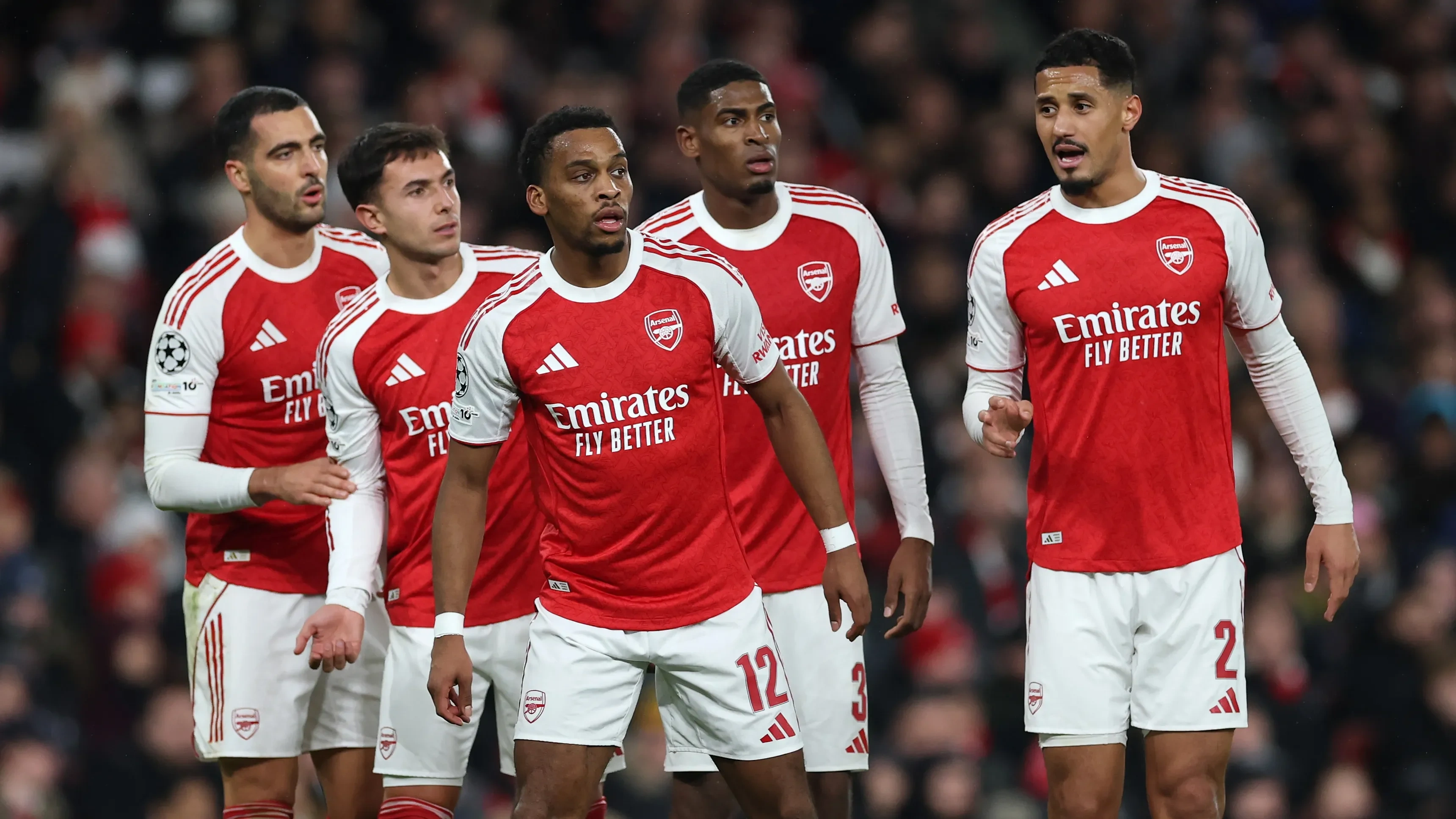
Arsenal arrived at London Colney for their final training session ahead of the Champions League semi‑final first leg against Atletico Madrid on Wednesday night.
The session ended with the conspicuous absence of Dutch defender Jurrien Timber, who has been sidelined since mid‑March with a groin injury.
Timber’s injury was incurred during Arsenal’s 2‑1 victory over Everton, and medical staff have indicated that a full return to high‑intensity competition remains uncertain.
His failure to join the squad on Tuesday suggests he will not feature in the decisive encounter at the Wanda Metropolitano.
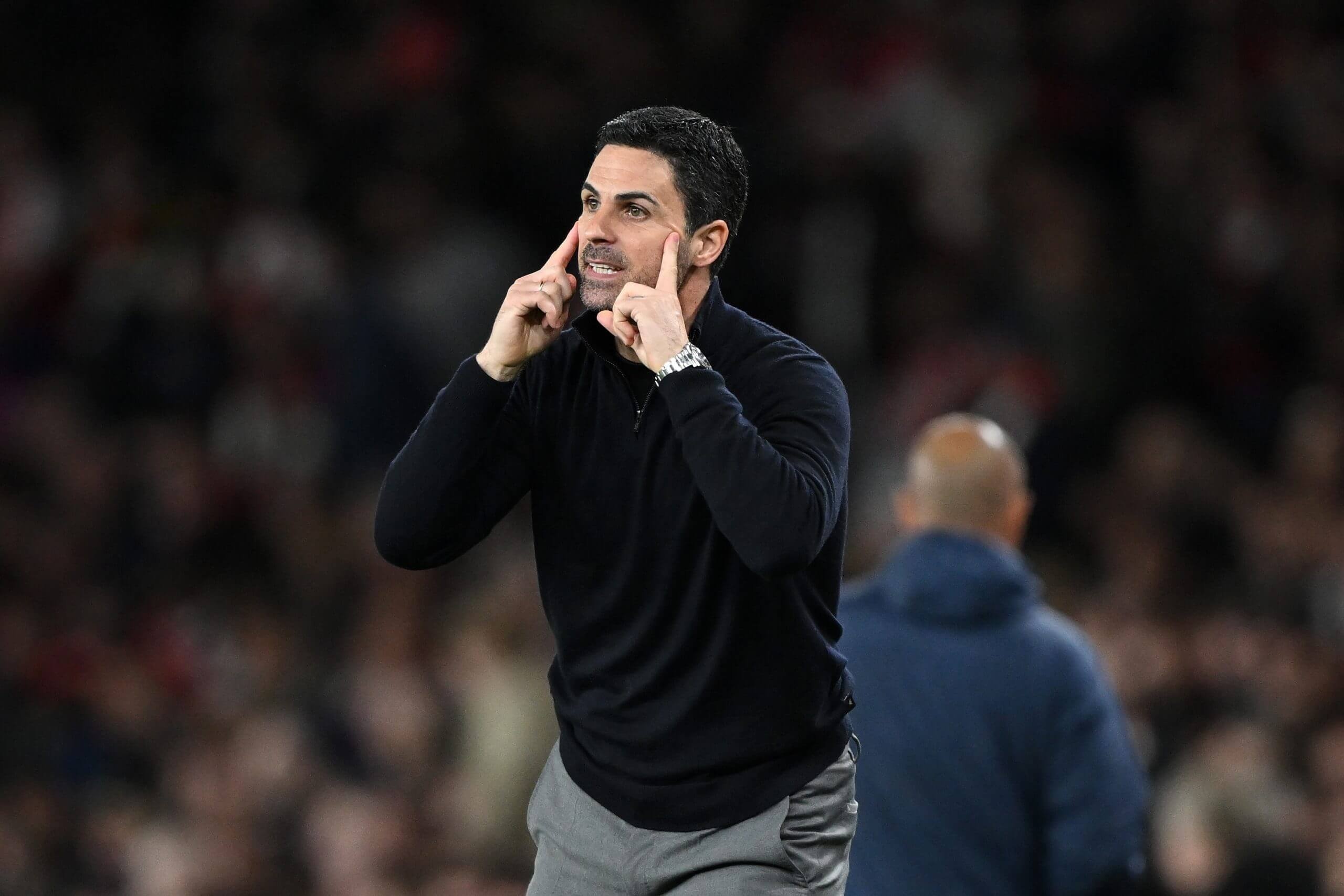
Arsenal manager Mikel Arteta is expected to address the defender’s status during his pre‑match press conference in Madrid.
Timber’s versatility, capable of playing as a centre‑back or right‑back, has been a tactical asset for a side that often shifts formation between a back‑four and a back‑three.
Without him, Arteta may be forced to rely on the less experienced Gabriel Magalhães or the recently signed centre‑back William Saliba to shore up the defence.
Saliba, who joined Arsenal in the summer of 2023, has already featured in 21 Premier League matches this season, contributing three clean sheets.
His aerial prowess and composure on the ball have been highlighted as key attributes in Arsenal’s possession‑based approach.
In addition to Timber, Germany international Kai Havertz missed the afternoon training session after a muscular issue forced his substitution in the 1‑0 win over Newcastle United.
Havertz’s injury stemmed from a hamstring strain suffered in the latter stages of the Newcastle match, raising concerns about his availability for the first leg.
Despite missing the session, club medical staff have not classified Havertz’s problem as a long‑term injury.
He remains a pivotal figure in Artart’s attacking midfield, offering creativity and goal‑scoring threat from the edge of the box.
The forward’s potential absence further narrows Arsenal’s options in a midfield that already contends with injuries to Thomas Partey and Granit Xhaka.
Arteta’s squad depth was partially restored by the presence of Eberechi Eze, who appeared fit after scoring the winning goal against Newcastle.
Eze’s performance in that match demonstrated his ability to exploit spaces between the lines, a quality that could prove valuable against Atletico’s compact defence.
Gabriel Martinelli also participated in the training, alleviating worries after he was seen holding his hamstring during the weekend’s Premier League fixture.
Martinelli’s recovery has been monitored closely, and his involvement in the session suggests he is close to full fitness.
Italian left‑back Riccardo Calafiori, who joined Arsenal in the January transfer window, was also observed training with the group.
Calafiori had missed the quarter‑final second leg against Bayern Munich due to a knock, but his return adds depth to the full‑back positions.
Mikel Merino continues his rehabilitation from a foot injury sustained in December, and he was not present at the London Colney session.
Merino’s versatility, able to operate as a central midfielder or a left winger, provides Arteta with tactical flexibility when he returns.
Arsenal’s defensive record in the Champions League this season stands at five goals conceded over six matches, reflecting a relatively solid back line.
Their upcoming clash with Atletico Madrid, a team that has scored 12 goals in the last eight European fixtures, will test the Gunners’ defensive resilience.
Atletico’s tactical setup under Diego Simeone often features a disciplined, low‑block system, relying on quick transitions and set‑piece proficiency.
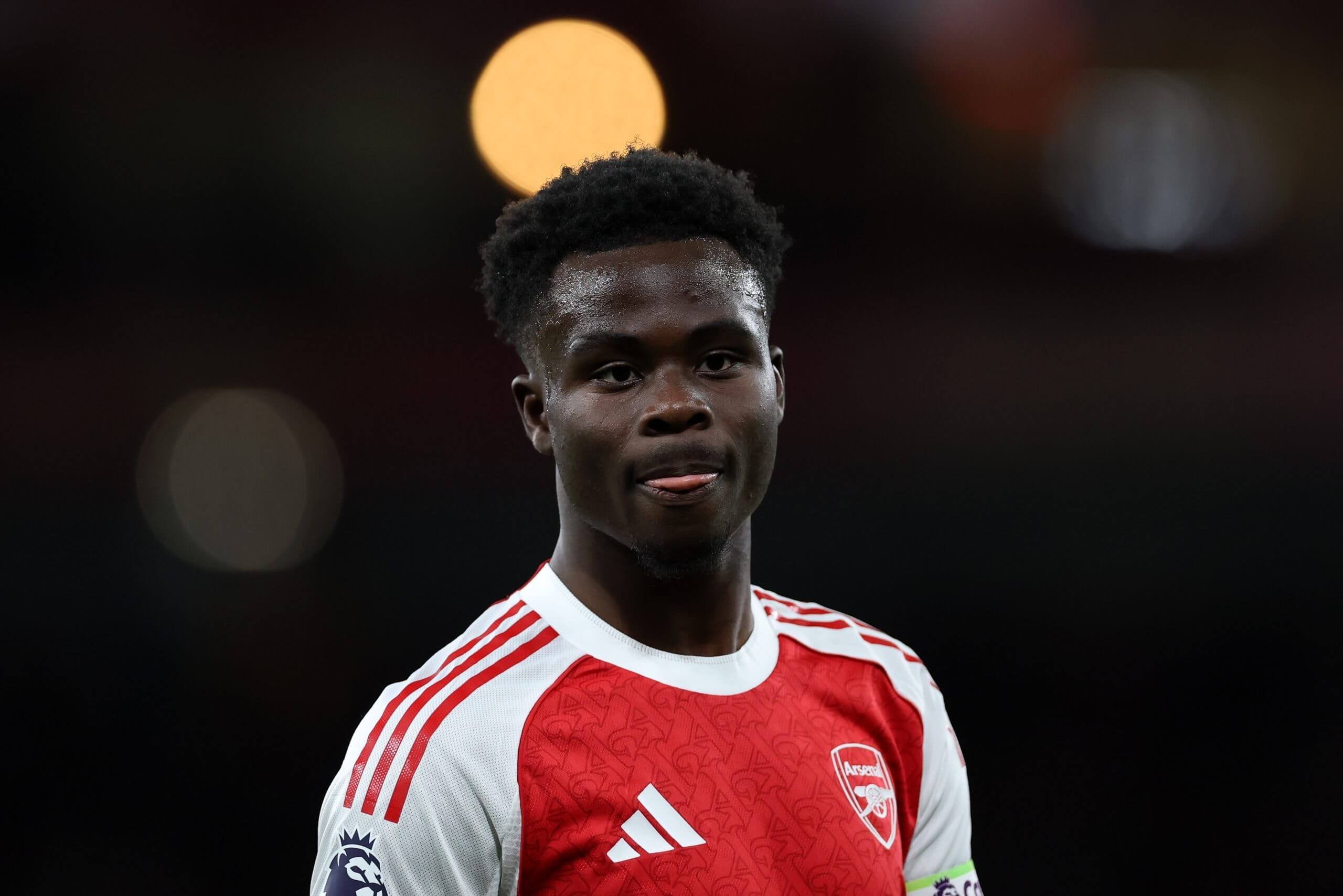
Arsenal will need to break down this structure, likely employing wide play from Bukayo Saka and Gabriel Martinelli to create crossing opportunities.
Historically, Arsenal have struggled against Spanish sides in knockout European ties, losing both encounters with Barcelona in 2022 and Sevilla in 2021.
Conversely, their record against Atletico in the 2019‑20 group stage saw a 2‑1 home victory followed by a 3‑0 away defeat.
In the Premier League, Arsenal sit second with 72 points after 33 matches, three points behind leaders Manchester City.
Their recent form includes a string of four wins, a draw, and a loss, indicating a strong but not invincible domestic campaign.
The Champions League semi‑final represents a crucial juncture in Arsenal’s pursuit of a historic double, as they aim to secure both the league title and European glory.
Balancing squad rotation will be essential, especially with the congested fixture list that includes a Premier League match against Liverpool three days after the first leg.
Arsenal’s tactical flexibility under Arteta often sees a 4‑2‑3‑1 formation, with the double pivot typically occupied by Thomas Partey and Martin Ødegaard.
The midfield duo’s ability to retain possession and launch quick attacks will be vital against Atletico’s aggressive pressing.
Should Havertz be unavailable, Arteta may shift to a more direct approach, utilizing Saka’s dribbling to penetrate the half‑space.
Arsenal’s set‑piece routine, orchestrated by Ødegaard, could become a decisive factor, as Atletico has conceded nine goals from set pieces this season.
In terms of player statistics, the following table summarises the current availability of key Arsenal players for the semi‑final first leg.
| Player | Status | Notes |
|---|---|---|
| Jurrien Timber | Out | Groin injury, absent from final training |
| Kai Havertz | Questionable | Muscular issue, missed training |
| Eberechi Eze | Fit | Scored vs Newcastle, training present |
| Gabriel Martinelli | Fit | Recovered from hamstring, training present |
| Riccardo Calafiori | Fit | Returned from knock, training present |
| Mikel Merino | Out | Foot injury, rehabilitation ongoing |
The absence of Timber and the uncertainty surrounding Havertz leave Arsenal with limited options in central defence and attacking midfield.
Arteta’s prior experience in European knockout ties suggests he may adopt a more pragmatic approach, prioritising defensive solidity.
Arsenal’s pressing intensity, measured by an average of 18 presses per defensive third per match, will be a key factor against Atletico’s counter‑attacking style.
Atletico’s average possession of 48% this season indicates they are comfortable ceding the ball, making quick transitions essential.
The Gunners’ ability to win the aerial duel, with an average of 5.2 clearances per game, will be tested by Atletico’s physical forwards.
Should Arsenal manage to contain Atletico’s forwards, they can exploit the space left behind the Spanish side’s high line.
Arsenal’s recent victory over Newcastle, secured by a solitary goal from Eze, demonstrates their capacity to win tight matches.
The defensive unit’s performance in that game, conceding only one shot on target, reflects a disciplined approach that may be replicated in Madrid.
Arsenal’s travel schedule includes a flight to Madrid on Tuesday evening, allowing limited recovery time before the 21:00 local kickoff.
The squad will stay at a hotel near the Wanda Metropolitano, with training facilities arranged for a light session on Wednesday morning.
International breaks earlier this season saw several Arsenal players feature for their national teams, adding to the cumulative fatigue factor.
Arteta’s staff will likely monitor player load closely, employing sports science data to prevent further injuries.
In terms of historical European performance, Arsenal have reached the semi‑final stage three times in the past decade, winning once in 2019.
That triumph came under former manager Unai Emery, highlighting the club’s potential to succeed with a balanced squad.
The upcoming match will also have financial implications, as a place in the Champions League final guarantees significant prize money and broadcasting revenue.
Achieving a double would not only cement Arteta’s legacy but also enhance Arsenal’s global brand and commercial partnerships.
Fans traveling to Madrid will have limited ticket allocations, with the club prioritising season ticket holders and members of the Arsenal Supporters’ Trust.
Security measures at the Wanda Metropolitano have been heightened following recent incidents at high‑profile European fixtures.
Broadcast rights for the match have been secured by Veezstream, ensuring worldwide coverage for the Gunners’ supporters.
The semi‑final will be played under clear skies, with a temperature forecast of 22°C, conditions favourable for high‑tempo football.
Both teams have expressed confidence in their preparations, with Atletico’s coach Simeone emphasizing the importance of mental resilience.
Arsenal’s preparation, despite the setbacks, reflects a professional approach to managing injuries while maintaining competitive readiness.
The outcome of the first leg will set the tone for the return fixture in London, where Arsenal will aim to capitalize on any advantage gained.
Should the Gunners secure a positive result in Madrid, they will be well‑positioned to challenge for the Champions League trophy and the Premier League title concurrently.