De Zerbi’s Remarks on Mason Greenwood Highlight Male Violence Issues
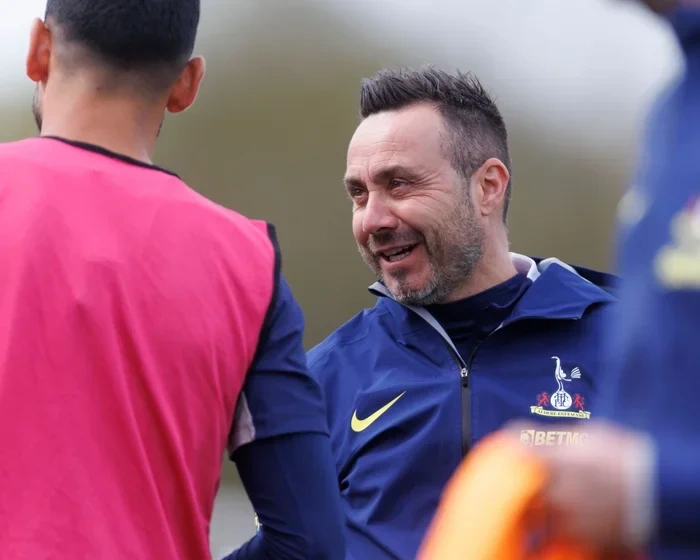
Roberto De Zerbi entered his first press conference as Tottenham Hotspur manager apologising for remarks he made about former Marseille striker Mason Greenwood while the forward was under his charge.
De Zerbi’s apology was prompted by criticism from Spurs supporter groups, notably Proud Lilywhites and Women of the Lane, both co‑founded by campaigner Chris Paouros.
Greenwood was acquitted of charges of attempted rape, controlling and coercive behaviour and assault occasioning actual bodily harm in 2022, with the case subsequently discontinued.
The manager’s statement asserted that he “never meant to downplay male violence against women,” a sentiment echoed by many fans who demanded more than a personal defence.
Paouros argues that silence from men in positions of power on such matters is itself a problem, and that engagement, even if imperfect, is preferable to retreat.
He contends that De Zerbi’s response focused on self‑description rather than concrete accountability, a shortfall in the context of a broader cultural crisis.
The episode has thrust the issue of male violence against women back into football’s public discourse, raising the question of why many men either fail to recognise harmful behaviour or choose not to speak out.
Research cited in a 2024 review in *Trauma, Violence, & Abuse* shows that male perpetrators of serious harm rarely identify themselves as such, often shifting blame to victims, alcohol, or circumstance.
This pattern explains the frequent “I know him, he’s a good person” defence, which, while well‑meaning, does not address the underlying behaviour.
World Health Organization studies and gender‑masculinity research consistently point to cultural norms, rather than individual pathology, as the root cause of violence against women.
Michael Flood’s work underscores that violence is produced and sustained by cultures that treat certain behaviours as unremarkable, rather than by “bad men” in isolation.
Statistical data from the Football Onside programme, a partnership with Exeter University, indicates that strong group cultures in professional sport can suppress men’s willingness to speak up.
These cultures foster fear of being labelled weak, difficult, or disloyal, even when the prevailing norms are not as widely accepted as assumed.
Coercive control, now recognised in English law, often involves actions the perpetrator does not see as abusive, such as monitoring a partner’s movements or pressuring them emotionally.
A 2023 study in the *Journal of Sex Research* found that many men understand refusals yet persist in framing coercive acts as consensual, reflecting cultural scripts that normalise persistence as seduction.
The gap in understanding consent and coercion is therefore a product of inadequate education rather than intentional malice, a gap that can be closed through targeted interventions.
De Zerbi’s own words—“In my life, I have always stood up for those who are more vulnerable, more fragile”—highlight the importance of speaking out, even if the statement fell short of full accountability.
Effective ownership, according to Paouros, requires three elements: naming the specific wrongdoing, acknowledging impact independent of intent, and committing unequivocally to change.
De Zerbi’s apology, while sincere, offered a character reference rather than a direct naming of the comments that caused offence.
Football’s influence extends beyond the pitch; statements from managers shape attitudes in communities, workplaces and especially among young men.
Research consistently shows that men are more likely to modify behaviour when concerns are raised by other men they respect, underscoring the power of peer influence.
The Tottenham case illustrates how a high‑profile appointment can generate a media firestorm that forces the sport to confront male violence more directly than policy documents alone.
Paouros stresses that genuine allyship is not about performative statements but about everyday actions: challenging inappropriate jokes, confronting sexist banter and listening to women’s experiences.
When men in leadership remain silent, their silence itself becomes a statement that reinforces harmful norms.
Tottenham’s recent form provides a backdrop to this debate; the club sits eighth in the Premier League with 42 points after 22 matches.
| Position | Points | Goal Difference |
|---|---|---|
| 8 | 42 | +5 |
Under De Zerbi, the team has adopted a 4‑2‑3‑1 formation, emphasizing high pressing and quick transitions, a shift from the previous 3‑4‑3 setup.
Key players in this system include Harry Kane as the lone striker, supported by James Maddison and Dejan Kulusevski in attacking midfield roles.
Statistically, Tottenham have created an average of 14.2 shots per game this season, with a conversion rate of 12.6%, reflecting the attacking intent of the new tactical approach.
| Metric | Average per Game | Season Total |
|---|---|---|
| Shots | 14.2 | 312 |
| Conversion % | 12.6 | 12.6 |
Defensively, the side has conceded 1.1 goals per match, an improvement from the previous season’s 1.4, suggesting a tighter midfield shield.
However, the cultural issues highlighted by De Zerbi’s comments remain separate from on‑field performance, demanding parallel attention from the club hierarchy.
Kick It Out, where Paouros serves as vice‑chair, has long advocated for robust safeguarding policies and mandatory education programmes for all football staff.
The Football Supporters’ Association, also represented by Paouros, calls for transparent reporting mechanisms that protect whistleblowers within clubs.
Both organisations stress that accountability must be embedded in club statutes, not treated as optional goodwill.
In practical terms, Tottenham have announced a partnership with a specialist charity to deliver consent and by‑stander training for players and staff.
This initiative will run over twelve months, featuring workshops, scenario‑based learning and regular assessment of cultural change within the dressing room.
Such programmes aim to replace “mis‑naïveté” with informed understanding, directly addressing the research findings that many men fail to recognise coercive behaviour.
While De Zerbi’s apology may not have met the full standards of ownership, it has nevertheless sparked a necessary conversation about male violence in football.
Paouros concludes that the sport must move beyond statements to concrete actions, embedding accountability at every level of the game.
The next steps for Tottenham will involve monitoring the impact of their educational partnership, reviewing internal policies and ensuring that future communications from leadership are both transparent and accountable.