Dallas Wings Choose Azzi Fudd as No. 1 Pick in the 2026 WNBA Draft
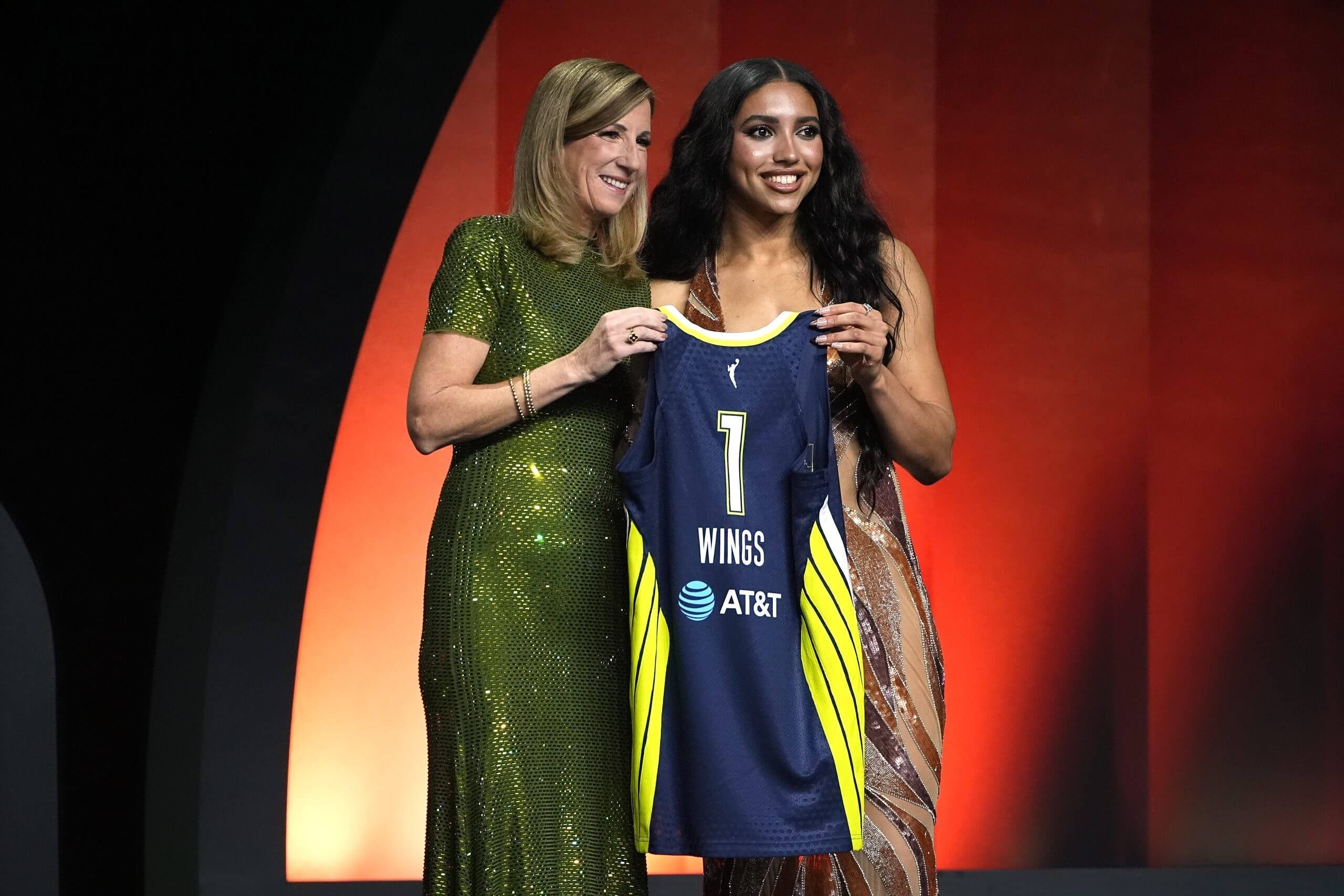
The Dallas Wings announced the selection of University of Connecticut guard Azzi Fudd with the No. 1 overall pick in the 2026 WNBA Draft on Monday night.
Fudd entered the draft amid lingering concerns about her durability early in her collegiate career, but she has silenced those doubts by appearing in 73 games over her final two seasons.
During that span she logged an average of 27 minutes per contest, posting career‑high percentages from the field and from three‑point range in each season.
Her senior year was particularly notable, as she finished with a 45 % three‑point conversion rate despite experiencing several down stretches.
Although many analysts did not initially rank her as the top overall prospect, the Wings’ off‑season moves elevated Fudd’s draft stock dramatically.
General manager Curt Miller bolstered the frontcourt by signing WNBA co‑Defensive Player of the Year Alanna Smith and adding former Lynx teammate Jessica Shepard.
The club also secured a one‑year contract for 6‑foot‑6 center Awak Kuier and a training‑camp deal for 6‑foot‑7 center Li Yueru, creating a deep paint presence.
With a roster increasingly built around interior play, the need for a dynamic backcourt guard became acute, making Fudd a logical fit.
Fudd will reunite with former UConn teammate Paige Bueckers, who was the Wings’ No. 1 pick last year, offering immediate chemistry in the backcourt.
She will also share guard duties with veteran Arike Ogunbowale, providing a blend of youth, shooting, and experience.
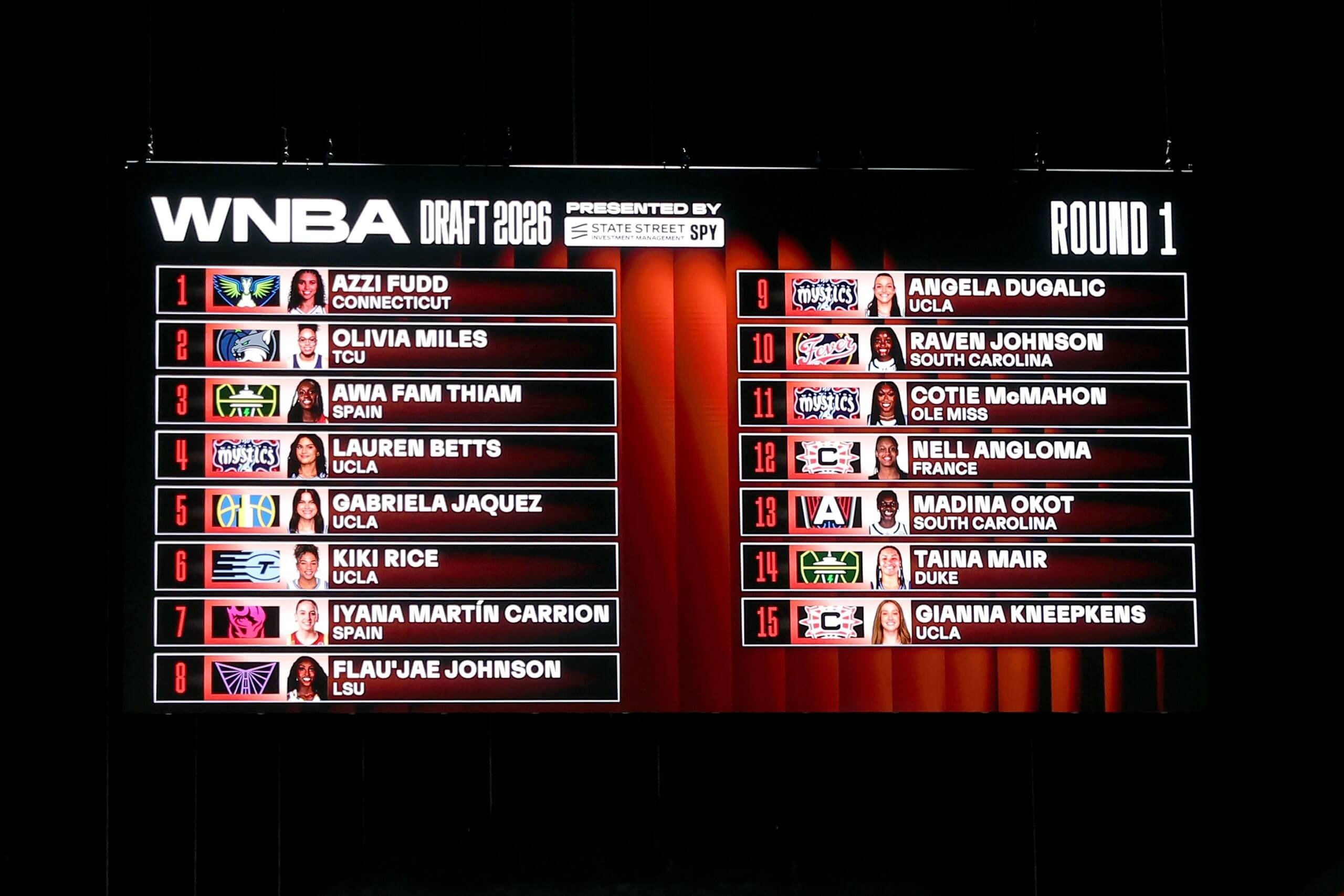
The 2026 draft class lacked a clear single standout, featuring elite post prospects Awa Fam Thiam and Lauren Betts, point‑guard Olivia Miles, and sharpshooter Azzi Fudd.
Olivia Miles was selected No. 2 by the Minnesota Lynx, while Fam Thiam went to Seattle at No. 3 and Betts to Washington at No. 4.
Gabriela Jaquez, a UCLA guard, was taken No. 5 by the Chicago Sky, completing the lottery selections.
| Pick | Team | Player (Pos., College) |
|---|---|---|
| 1 | Dallas Wings | Azzi Fudd (G, UConn) |
| 2 | Minnesota Lynx | Olivia Miles (G, TCU) |
| 3 | Seattle Storm | Awa Fam Thiam (C, Spain) |
| 4 | Washington Mystics | Lauren Betts (C, UCLA) |
| 5 | Chicago Sky | Gabriela Jaquez (G, UCLA) |
Dallas enters the 2026 season under first‑year head coach José Fernández, who becomes the franchise’s third coach in as many years.
Fernández spent 25 seasons at the University of South Florida, transforming the program into a perennial NCAA Tournament participant through player development and extensive overseas recruiting.
His reputation for integrating international talent aligns with the Wings’ strategy to become a globally competitive squad.
“He is known for putting his players in a position to succeed,” Miller said after hiring Fernández, emphasizing the coach’s fit with the organization’s vision.
Despite the influx of talent, the Wings face a daunting task of reversing a prolonged period of limited success.
Since relocating from Tulsa, Oklahoma, in 2016, Dallas has advanced past the first round of the playoffs only once and has missed the postseason entirely since 2023.
The franchise’s record over the past two seasons stands at 19‑65, underscoring the urgency of a turnaround.
Adding Fudd to a roster that now includes Alanna Smith, Jessica Shepard, Awak Kuier, Li Yueru, Paige Bueckers, and Arike Ogunbowale creates a roster with depth at both ends of the floor.
Fudd’s elite shooting will stretch defenses, opening driving lanes for Bueckers and creating post‑up opportunities for the newly acquired bigs.
Defensively, the Wings will rely on Smith’s co‑Defensive Player of the Year credentials to anchor the perimeter, while Kuier and Yueru provide rim protection.
The team’s schedule reflects a transitional phase in its home‑court situation.
For the 2026 season, the Wings will host most games at the University of Texas at Arlington, with three marquee matchups slated for the American Airlines Center.
Those games are set for July 12 versus the Chicago Sky, August 7 versus the Golden State Valkyries, and August 20 versus the Indiana Fever.
A new 70,000‑square‑foot training facility, costing $81 million, is slated for completion in 2027, exceeding the standards of the latest collective bargaining agreement.
The facility’s delay of more than a year was due to cost escalations, but its eventual opening signals a long‑term investment in player development.
In 2027 the Wings will move all home games to the American Airlines Center while renovations continue at Memorial Auditorium, the intended permanent venue for the 2028 season.
Azzi Fudd’s selection also carries a unique familial narrative.
She becomes the seventh UConn player to be drafted No. 1 overall and joins a rare mother‑daughter duo with WNBA ties; her mother Katie Fudd (née Smrcka Duffy) was the No. 62 pick in 2001.
Although Katie never appeared in a WNBA game, the intergenerational connection highlights the growing legacy of women’s basketball families.
Fudd’s statistical profile in college underscores her suitability for the professional game.
Across her final two seasons she averaged 17.2 points, 4.1 rebounds, and 2.9 assists per game while shooting 48 % from the field and 45 % from three‑point range.
These numbers place her among the most efficient scorers in recent UConn history.
Comparatively, Olivia Miles, the No. 2 pick, is praised for her passing ability and joins a Lynx roster that previously built dynastic success around point guard Lindsay Whalen.
Seattle’s choice of Fam Thiam reflects a long‑term investment in a post prospect projected to become a dominant interior force within five years.
Washington’s selection of Lauren Betts adds a young, versatile center to a roster expected to be among the league’s youngest.
Chicago’s acquisition of Gabriela Jaquez addresses a need for wing scoring and cultural leadership, despite her being a later‑season breakout.
The Wings’ strategic approach mirrors a broader league trend of pairing elite shooters with strong interior presences to create balanced offensive schemes.
With Fudd’s three‑point proficiency, the team can adopt a spacing‑heavy offense that forces opponents to defend the perimeter, thereby reducing congestion in the paint.
Defensively, the combination of Smith’s perimeter pressure and the shot‑blocking potential of Kuier and Yueru should improve the Wings’ rating, which has been among the league’s lowest.
Fernández’s experience in recruiting and developing international players is expected to accelerate the integration of Kuier, Yueru, and other overseas talent.
The upcoming season will serve as a litmus test for whether the Wings can translate roster depth and coaching expertise into a winning record.
Should the team achieve a marked improvement, it would represent the first significant turnaround since the franchise’s relocation to Dallas.
The 2026 draft, the coaching change, and the new training complex together signal a decisive shift in the organization’s long‑term strategy.
Fans and analysts alike will watch closely as Azzi Fudd makes her professional debut and the Dallas Wings aim to re‑establish themselves as a competitive force in the WNBA.