Croke Park Bids to Host UEFA Champions League Final in Dublin
Dublin’s Croke Park is actively pursuing the opportunity to host a UEFA Champions League final, according to statements made by the stadium’s commercial director, Peter McKenna, to Veezstream.
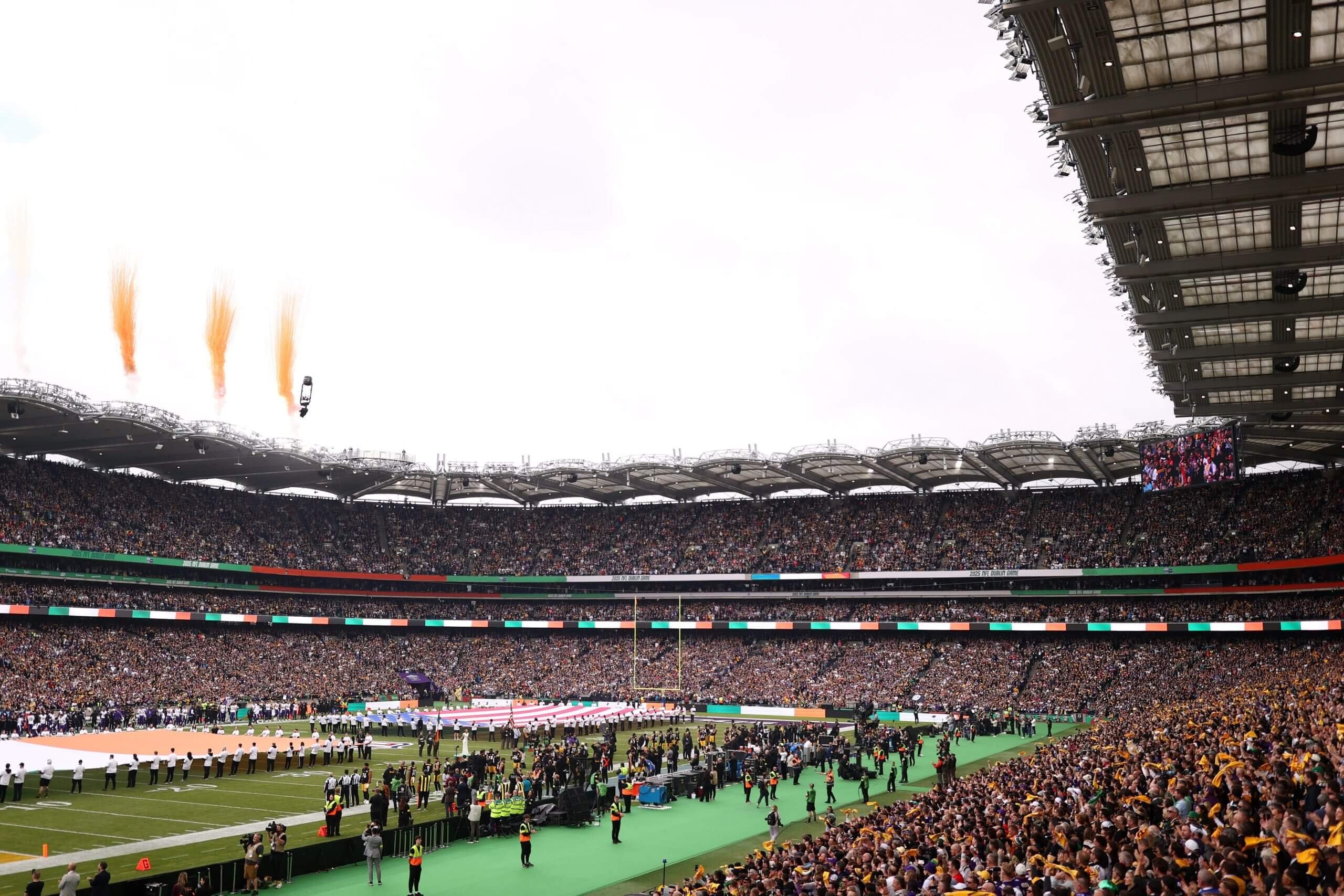
The 82,300‑seat venue, traditionally the headquarters of the Gaelic Athletic Association (GAA), will host a high‑profile friendly between Manchester United and Leeds United in August, marking the first club football match ever staged at the stadium.
McKenna explained that the successful delivery of the Manchester United‑Leeds fixture will serve as a practical demonstration of Croke Park’s capability to manage a large‑scale football event.
He added that the stadium’s capacity and the atmosphere of Dublin could make the city a compelling option for UEFA when selecting a venue for the Champions League decider.
UEFA’s current policy favours stadiums with a minimum seating capacity of 65,000 for Champions League finals, a threshold comfortably met by Croke Park’s 82,300 seats.
In contrast, the Aviva Stadium in Dublin, with a capacity of 51,700, hosted the 2024 Europa League final, where Atalanta defeated Bayer Leverkusen 3‑0, but it falls short of UEFA’s preferred size for the Champions League final.
The Aviva Stadium is also slated to host seven matches of the 2028 European Championship, underscoring UEFA’s confidence in Irish venues while highlighting the capacity gap for the premier club final.
Croke Park’s history with non‑GAA sports dates back to the relaxation of Rule 42 in 2005, which previously prohibited rugby union and association football on GAA grounds.
The rule change allowed the Republic of Ireland men’s national football team to play 13 home fixtures at Croke Park while the former Lansdowne Road was being rebuilt into the Aviva Stadium between 2006 and 2009.
Since the rule amendment, the stadium has also welcomed rugby union matches, most notably an NFL exhibition between the Pittsburgh Steelers and the Minnesota Vikings in 2022, which required temporary seating installations.
Temporary seating would also be required for UEFA to licence Croke Park, particularly on the terraced area known as Hill 16, which was previously fitted with modular seats for Ireland’s international football matches.
Leinster Rugby has begun using Croke Park for occasional fixtures since 2023, a strategic move aimed at diversifying the venue’s sporting portfolio and generating additional revenue for the GAA.
| Stadium | Seating Capacity | Key Events Hosted |
|---|---|---|
| Croke Park | 82,300 | GAA finals, Manchester United‑Leeds friendly (2024) |
| Aviva Stadium | 51,700 | 2024 Europa League final, 2028 Euro matches |
The timing of a Champions League final in late May presents a logistical challenge, as the Gaelic football and hurling championships are in full swing and Croke Park is regularly occupied for those fixtures.
Consequently, any agreement with UEFA would need to accommodate the GAA’s calendar, potentially requiring adjustments to the traditional scheduling of the club competition’s climax.
Peter McKenna expressed confidence that Dublin City Council, the Irish government, and the Football Association of Ireland would fully support a Champions League final bid, emphasizing a unified national backing.
He noted that the stadium’s commercial team, together with TEG Sport, is already coordinating the logistics of the Manchester United‑Leeds friendly, which is conditional on Leeds not winning the FA Cup or being relegated.
Should Leeds qualify for the Community Shield or be relegated to the Championship, a different opponent would be arranged for Manchester United’s pre‑season match in Dublin.
Manchester United, a club with a storied European pedigree, last lifted the Champions League trophy in 2008, while Leeds United’s recent return to the Premier League marks a resurgence after a 16‑year absence.
Both clubs will use the August friendly as part of their pre‑season preparations, focusing on tactical cohesion, fitness levels, and the integration of new signings ahead of their respective domestic campaigns.
From a tactical perspective, Manchester United’s manager is expected to experiment with a 4‑2‑3‑1 formation, allowing creative midfielders to link play between a deep‑lying double pivot and a lone striker.
Leeds United, under their current coach, traditionally favours an aggressive 4‑3‑3 system that leverages width and high‑pressing to disrupt opponents, a style that could test United’s defensive organisation.
Player profiles of interest include Manchester United’s forward Marcus Rashford, whose pace and finishing ability make him a constant threat, and Leeds’ midfielder Jack Harrison, noted for his work rate and box‑to‑box contributions.
Both squads will also feature several academy graduates, offering a platform for young talent to showcase their readiness for first‑team action in a high‑visibility setting.
The broader implications of Croke Park hosting a Champions League final extend beyond sport, potentially boosting Dublin’s tourism revenue, enhancing the city’s global profile, and providing the GAA with a new revenue stream.
Should UEFA grant a licence, the stadium would join an elite list of European venues that have hosted the Champions League final, such as Wembley, San Siro, and the Allianz Arena.
In addition to financial gains, the event would underscore Ireland’s capacity to stage world‑class sporting spectacles, complementing existing infrastructure and experience gained from hosting international rugby and NFL games.
While formal discussions between Croke Park officials and UEFA have not yet commenced, the stadium’s leadership remains optimistic that the successful execution of the Manchester United‑Leeds friendly will serve as a compelling case study.
Ultimately, the pursuit of a Champions League final reflects Croke Park’s strategic ambition to diversify its event portfolio, strengthen its commercial footing, and cement Dublin’s status as a premier destination for elite sport.