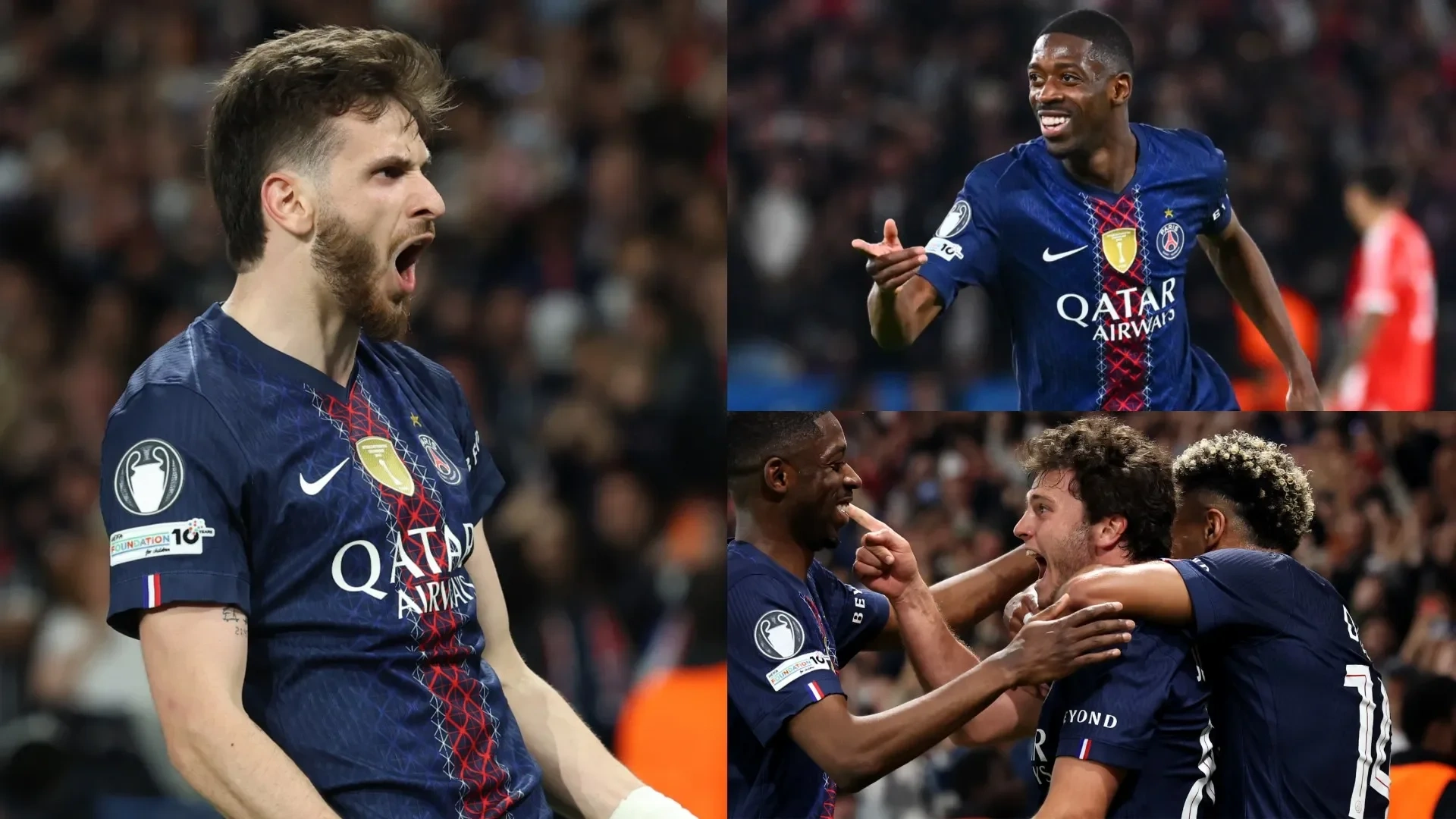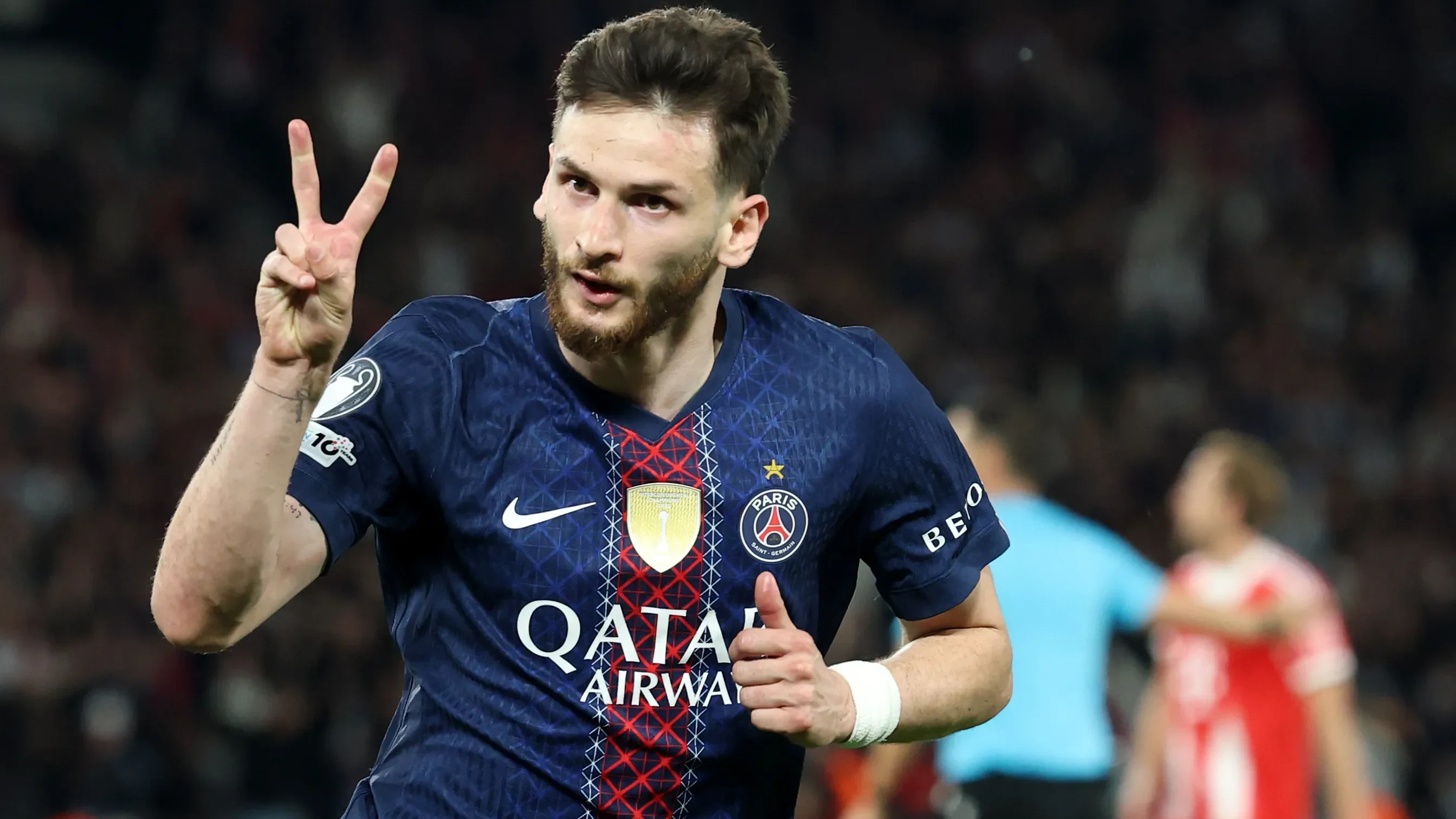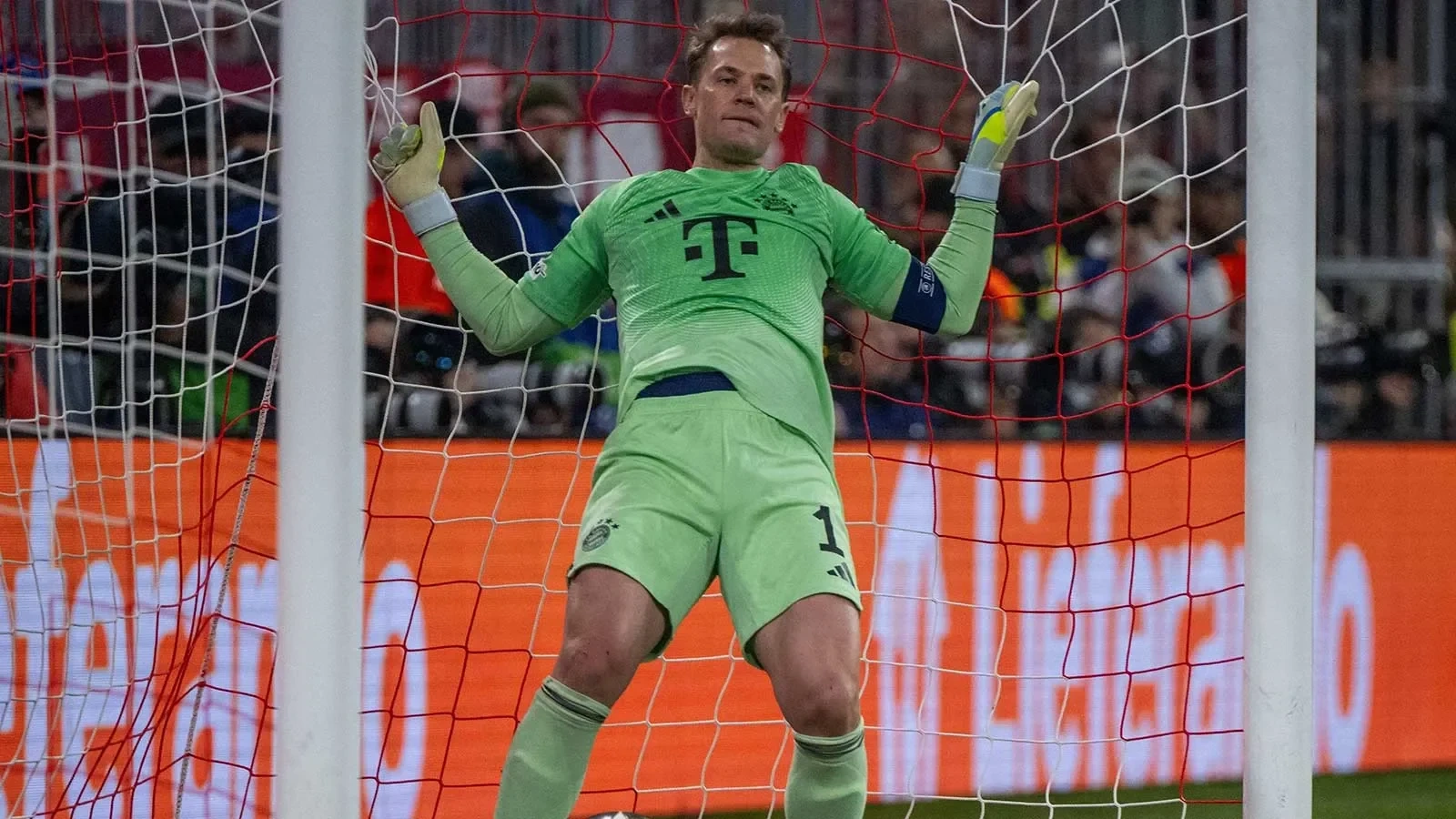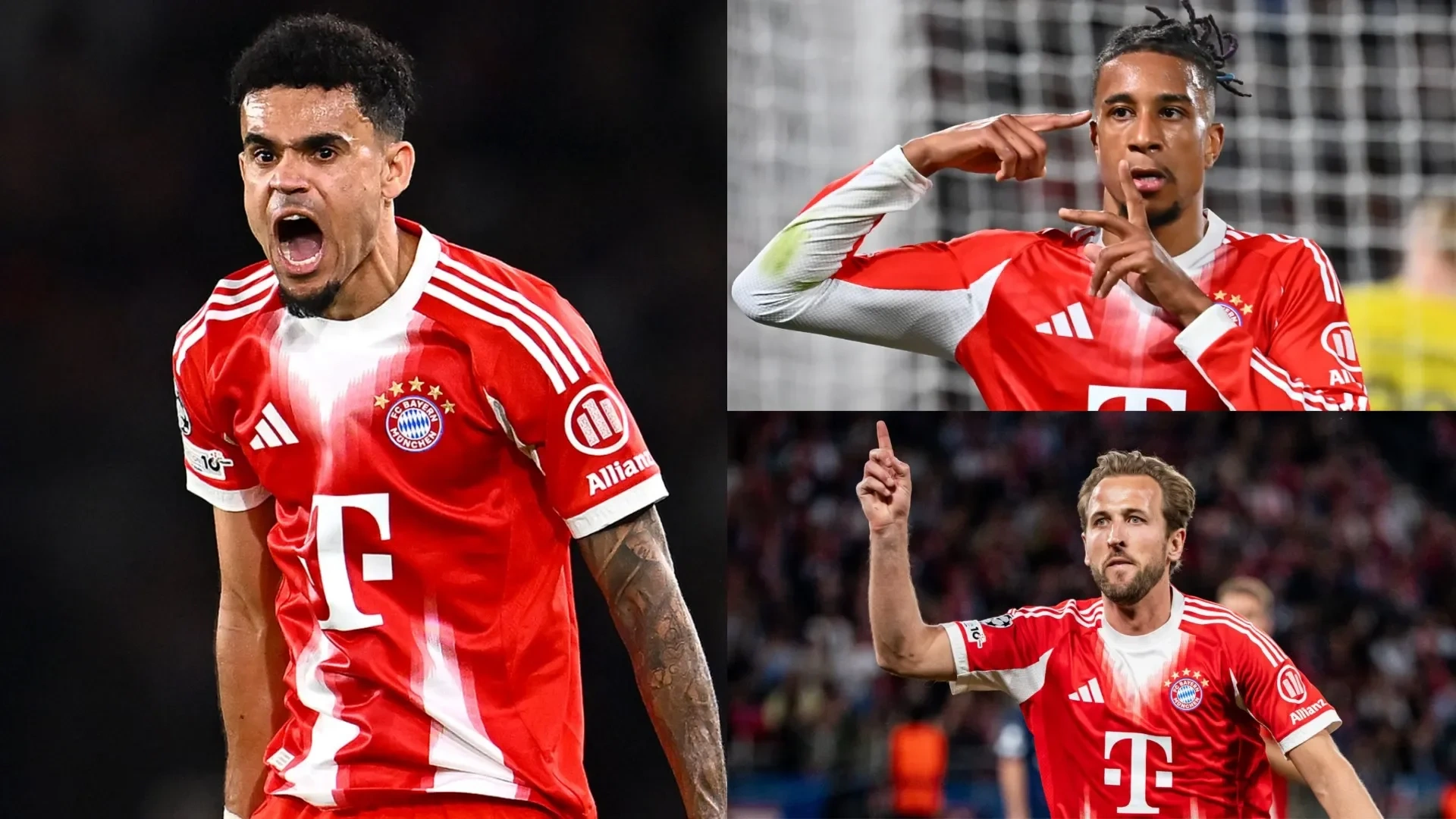
Harry Kane, Desire Doué's Positioning Leads PSG 5‑4 Win Bayern
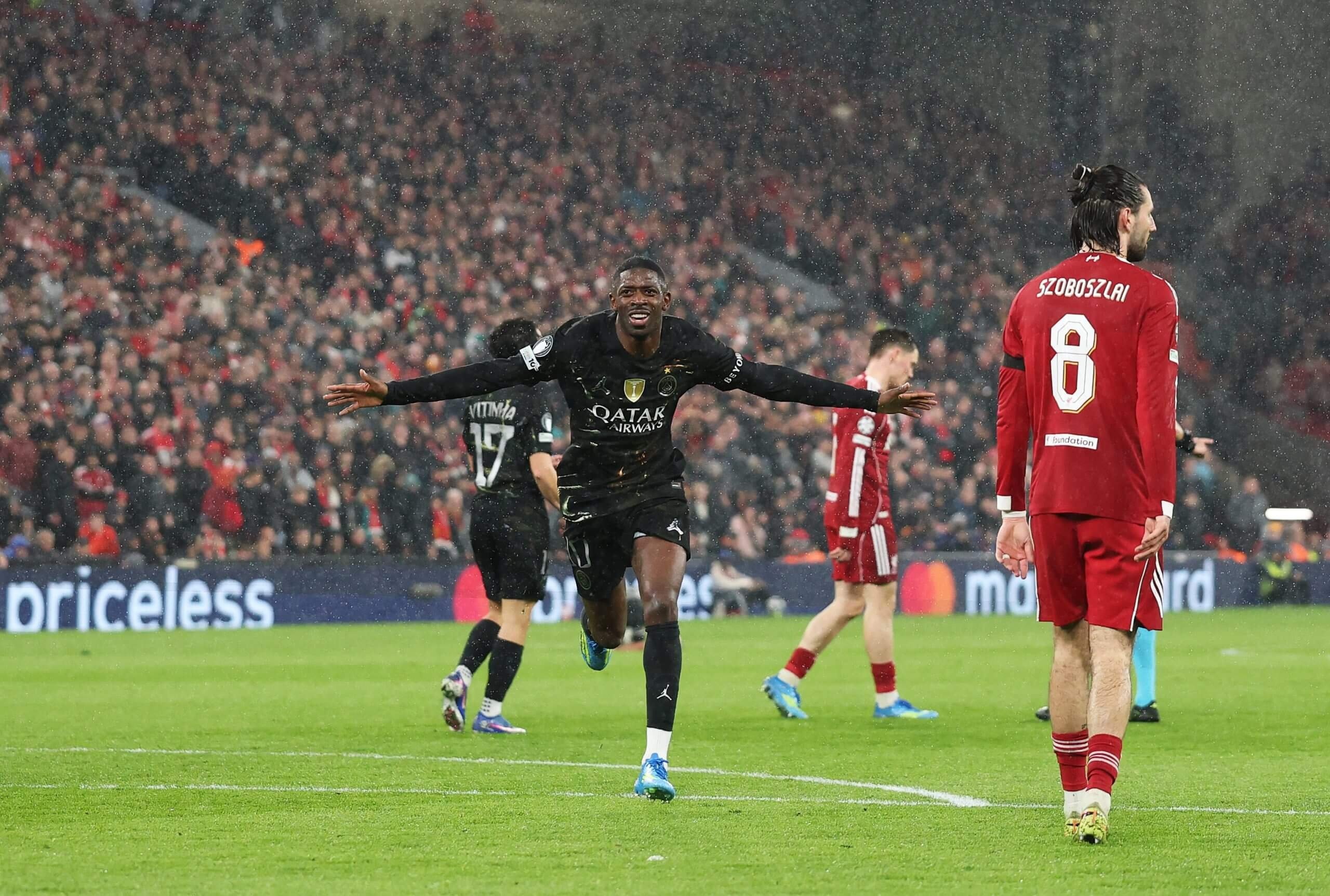
The semi‑final first leg between Paris Saint‑Germain and Bayern Munich produced a 5‑4 thriller that will be remembered as a Champions League classic.
Both managers, Luis Enrique and Vincent Kompany, instructed their sides to play without restraint, resulting in an end‑to‑end spectacle that showcased the depth of attacking talent on the pitch.
Harry Kane and the young French forward Desire Doue were pivotal, using intelligent positioning to create space and supply their teammates with decisive opportunities.
Kane, deployed as a deep‑lying striker for Bayern, linked play between midfield and attack, while Doue’s fluid movement across the right flank and central areas constantly unsettled the Parisian defensive shape.
From the outset, Bayern’s pressing intensity forced PSG into hurried possession, prompting several one‑on‑one duels that defined the rhythm of the match.
Kompany explained after the game that the collective effort of every player on the pitch contributed to the danger posed by the forward line, emphasizing the importance of full‑back support for wide attackers.
He noted that Michael Olise relied on overlapping runs from the full‑backs, a principle that mirrored the way Doue benefited from Achraf Hakimi’s forward thrusts.
Enrique’s side responded by allowing their full‑backs to surge high, a tactic that produced four goals for PSG but also left them vulnerable to Bayern’s rapid counters.
The tactical battle was essentially a contest of space creation, with both full‑backs pushing high to overload the wings while the central forwards sought to exploit gaps between the lines.
Doha’s positional interchange with Ousmane Dembele illustrated the modern winger’s role as a roaming creator rather than a fixed wide player.
During periods of play, Doue would drop into central zones, drawing the marking defender out of position before drifting back to the left wing, thereby opening passing lanes for teammates.
One notable sequence saw Alphonso Davies tracking Doue’s movement, only to hesitate when the French forward slipped deeper, allowing him to overload the middle third.
This overload facilitated a decisive corner that Joao Neves converted for PSG’s second goal, highlighting the indirect impact of off‑the‑ball runs.
Doha’s intelligent positioning also set the stage for Khvicha Kvaratskhelia’s fourth‑minute strike, as he swapped positions with Dembele and created a two‑versus‑two scenario on the near side.
In that situation he faked a run behind the defence, dropped to receive the ball from Nuno Mendes, and gained a few yards of advantage over Dayot Upamecano.
Kvaratskhelia then combined with another double movement to outwit Josip Stanisic, receiving a perfectly timed pass from Doue before curling the ball into the far corner.
Doha’s off‑the‑ball movement was again crucial in Kvaratskhelia’s second goal, as his drop into the right half‑space forced Konrad Laimer to track him, creating space for Hakimi’s overlapping run.
Hakimi’s run, synchronized with Doha’s shift, left Luis Diaz isolated and allowed Vitinha to find the right‑back, who delivered a cross that Kvaratskhelia finished after a dummy from Dembele.
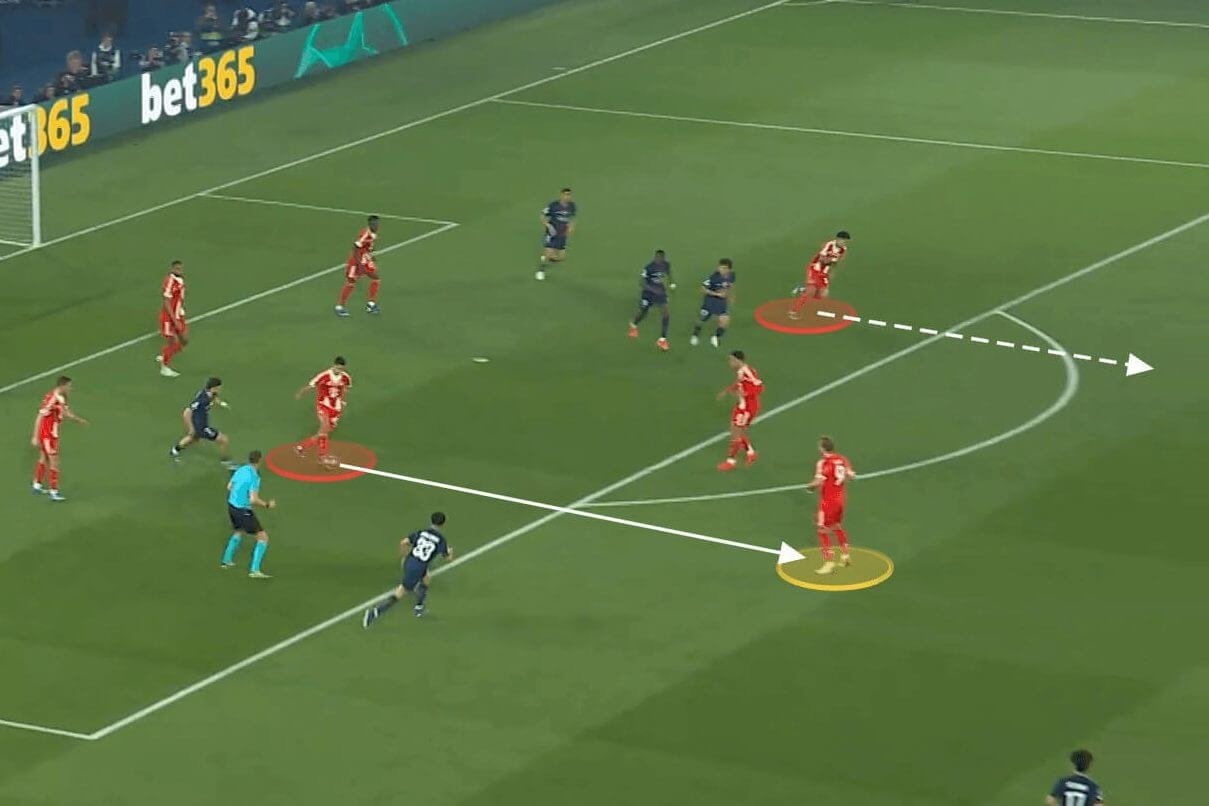
On the Bayern side, Kane’s deeper positioning during defensive phases enabled swift transitions, linking directly with Olise and Diaz on the break.
An example of this was when Jamal Musiala recovered the ball, Joshua Kimmich released Kane, and the Englishman quickly found Olise sprinting into the space.
PSG’s centre‑backs were left uncertain whether to step forward to challenge the striker or hold their line, a dilemma that Bayern exploited throughout the game.
In a critical counter‑attack that led to Diaz’s penalty, Kane positioned himself at the edge of his own penalty area as the Colombian advanced, drawing defenders out of shape.
Diaz’s subsequent pass to Olise and the ensuing movement forced Marquinhos to maintain a high defensive line, while Kane’s positioning allowed him to receive a pass from Kimmich and set up the eventual penalty.
The penalty, converted by Diaz, reduced the deficit and demonstrated how Kane’s spatial awareness directly contributed to PSG’s scoring opportunities.
Later, after Upamecano dispossessed Kvaratskhelia, Kane dropped deeper to become a passing option, receiving a ball from Kimmich while Joao Neves was unable to press effectively.
Kane’s control, dummy, and finish completed PSG’s fifth goal, sealing a 5‑4 victory that underscored the importance of intelligent movement over static positioning.
The match statistics reflect the high‑tempo nature of the encounter, with both teams generating a combined total of nine goals and numerous chances.
| Team | Goals | Shots on Target |
|---|---|---|
| Paris Saint‑Germain | 5 | 14 |
| Bayern Munich | 4 | 12 |
PSG’s possession percentage hovered around 52 %, while Bayern held slightly less at 48 %, indicating a fairly balanced distribution of ball control.
The match featured 27 successful dribbles, with Kvaratskhelia completing 7, Olise 5, and Kane 4, illustrating the individual skill on display.
Both sides employed a 4‑3‑3 formation, but the fluidity of the front three meant that wingers frequently inverted, and the central striker often dropped to facilitate play.
Doha’s average position heat map showed significant activity in the central channels and the left wing, confirming his dual‑role as both winger and inside forward.
Kane’s heat map revealed a deep‑lying presence, with frequent touches in the defensive third, supporting Bayern’s transition play.
Historically, PSG have struggled to overcome German opposition in the Champions League, with previous semi‑final exits against Bayern in 2020 and Borussia Dortmund in 2017.
Bayern, conversely, have a storied record in the competition, boasting six titles and a reputation for decisive performances in knockout stages.
The semi‑final match therefore represented a clash of narratives: PSG seeking redemption and Bayern aiming to reaffirm their continental dominance.
Both managers reiterated after the game that the tactical blueprint would remain unchanged for the return leg, promising another high‑octane encounter.
Enrique emphasized the need for his side to maintain the same intensity, while Kompany highlighted the importance of exploiting the spaces created by full‑back runs.
In the broader context of the tournament, PSG’s victory keeps their hopes of reaching a first Champions League final alive, a milestone the club has pursued since its 2011 acquisition by Qatar Sports Investments.
Bayern’s narrow loss, however, does not diminish their chances, as the two‑leg aggregate format still offers ample opportunity to overturn the deficit.
The result also impacts the UEFA coefficient rankings, with both clubs earning valuable points that affect future seedings and financial distributions.
From a player‑development perspective, the performances of the 20‑year‑old Desire Doue and the 24‑year‑old Khvicha Kvaratskhelia underscore the emergence of a new generation of talent on Europe’s biggest stage.
Kane, now 31, added another chapter to his illustrious Champions League résumé, demonstrating that his experience and positional intelligence remain vital assets.
Fans and analysts alike will dissect the tactical nuances of the match for weeks, particularly the interplay between full‑backs and wide forwards that generated the majority of scoring chances.
The next encounter in Munich will test whether PSG can replicate their attacking fluidity away from home, while Bayern will aim to tighten their defensive transitions.
Both clubs have indicated that the second leg will likely mirror the first in terms of tempo and openness, setting the stage for another memorable showdown.