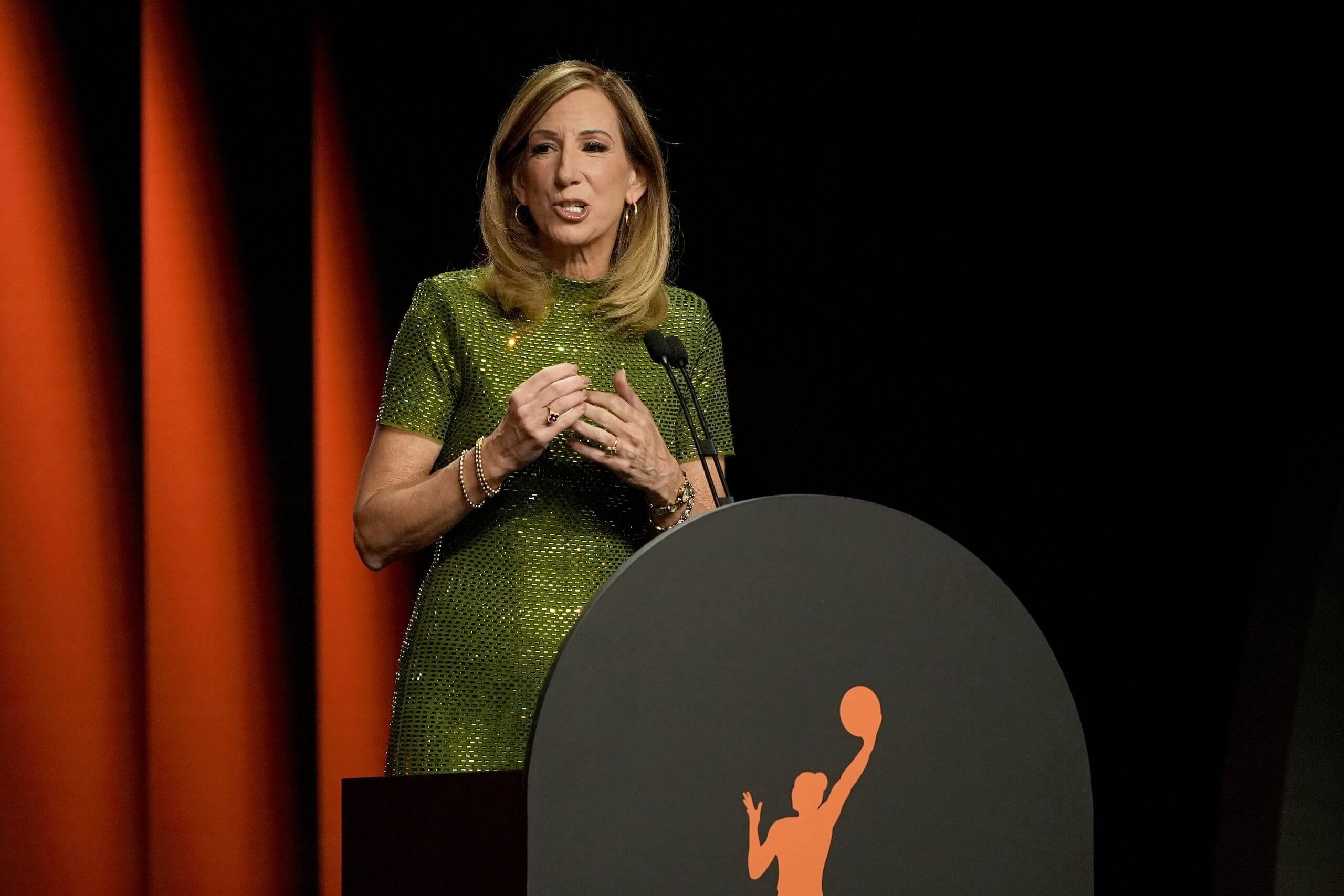
WNBA Commissioner Cathy Engelbert Announces Restored Player‑League Relations After New CBA, Expands Schedule to 52 Games
The 2026 WNBA season marks the league’s 30th anniversary, arriving after a turbulent offseason that produced a new collective bargaining agreement, a period of labor peace, and a free‑agency market highlighted by several historic million‑dollar contracts.
Commissioner Cathy Engelbert addressed the press before the 2026 WNBA Draft, emphasizing that the past three decades have focused on “building the foundation” of the league, while the next thirty years will be dedicated to “scaling the game” on a global stage.
Engelbert outlined a clear vision to expand the league’s footprint beyond North America, noting that the WNBA has only recently played its first games outside the United States and will introduce the Toronto Tempo as a new franchise this season.
She explained that the long‑term plan includes exhibition matches abroad and, eventually, regular‑season contests on foreign soil, a strategy designed to increase international exposure and attract new fan bases.
The new CBA, which permits the league to schedule up to 52 games per team by the 2029 season, provides the structural capacity needed for such expansion, according to Engelbert’s remarks.
While the league’s ambitions are public, Engelbert also acknowledged the lingering effects of a “pugnacious” labor negotiation that dominated the previous year, a process that tested relationships between ownership and the players’ union.
She asserted that her relationship with the players has been repaired, citing a positive exchange with WNBPA president Nneka Ogwumike that took place immediately before the draft.
Engelbert recalled the intense scrutiny she faced during the offseason, especially after a press conference held by Minnesota Lynx star Napheesa Collier that highlighted player frustrations.
“I feel really good about the relationship with players,” Engelbert said, adding that the executive committee of the players’ association and her own team worked hard to achieve a historic agreement.
She emphasized that the CBA was not a zero‑sum battle between owners and athletes, stating, “We’re on their side too,” and noting her lifelong commitment to gender equality as a guiding principle.
The housing provision emerged as one of the most emotionally charged issues during negotiations; under the previous CBA, teams covered housing for every player, a practice that will be phased out under the new agreement.
Starting in the 2029 season, only players earning less than $500,000 will receive team‑provided housing, while those with higher salaries will be responsible for their own accommodations.
Engelbert admitted she had underestimated the significance of housing for players, explaining that many athletes in their twenties with children expected to manage their own living arrangements once salaries increased.
She said the players made it “very clear it was very important to them” and that the league listened closely to incorporate a compromise that balanced financial sustainability with player welfare.
In addition to housing, the CBA includes provisions for increased salaries, expanded health benefits, and a longer regular‑season schedule, all intended to elevate the professional experience for athletes.
Engelbert declined to comment on her own future with the league, noting that questions about her tenure are often framed differently for women than for men.
She remarked, “I wonder whether you would ask that of a man,” before the reporter responded affirmatively, highlighting the gender dynamics that persist in sports leadership.
Despite the personal question, Engelbert redirected focus to the league’s broader mission, stating that the spotlight should remain on “the other women in the league” and their contributions.
The commissioner also addressed the pending sale of the Connecticut Sun, confirming that the WNBA has not yet received official paperwork for the transaction involving the Houston Rockets ownership group.
If approved, the Sun would relocate to Houston and be rebranded as the Houston Comets, reviving a historic franchise name that previously competed from 1997 to 2008.
Engelbert explained that the league will review the sale through its governance process once the necessary documentation is submitted, emphasizing the importance of due diligence.
The Sun’s ownership saga has involved multiple proposals, including potential moves to Hartford and Boston, which the league indicated it would not endorse.
The Fertitta family, representing the Houston group, has not been required to pay a relocation fee, a concession that reflects the league’s strategic interest in consolidating ownership in a major market.
Engelbert contextualized the Sun sale within a broader expansion era that has already added six new teams, with upcoming franchises slated for Cleveland (2028), Detroit (2029), and Philadelphia (2030).
The commissioner highlighted that the league received interest from 13 cities during the recent expansion cycle, underscoring the growing demand for WNBA franchises across the United States.
She noted that the Boston market did not submit a formal bid, and the league’s decision to keep the Sun in a non‑relocation scenario aligns with its overall strategic plan.
Engelbert’s comments also touched on the financial health of the league, noting that the new CBA’s salary cap and revenue‑sharing mechanisms are designed to ensure long‑term stability.
She pointed out that the ability to schedule up to 52 games by 2029 will generate additional ticket sales, broadcast revenue, and sponsorship opportunities, all of which are critical for sustained growth.
To illustrate the key changes introduced by the CBA, the table below summarizes the housing eligibility thresholds and the projected regular‑season game count.
| Item | Current Policy (2026) | Future Policy (2029) |
|---|---|---|
| Team‑provided housing | All players | Players earning < $500,000 |
| Maximum regular‑season games per team | 40 games | 52 games |
The expansion of the schedule aligns with the league’s objective to increase player salaries, as more games translate into higher collective earnings and greater exposure for individual athletes.
From a tactical perspective, coaches anticipate that a longer season will demand deeper rotations and more strategic load management, especially for veteran players accustomed to a shorter calendar.
Analysts predict that teams with robust bench depth, such as the Las Vegas Aces and the New York Liberty, will be better positioned to sustain performance across a 52‑game schedule.
Player profiles also reflect the new financial landscape; for example, Breanna Stewart, who recently secured a six‑figure contract extension, is expected to leverage her increased earnings into greater off‑court advocacy for gender equity.
Similarly, rookie sensation Angel Reese, drafted in 2026, enters the league with a guaranteed salary that exceeds the previous average, illustrating the direct impact of the CBA on entry‑level compensation.
The international expansion plan includes a tentative exhibition series in Europe slated for the 2027 off‑season, with potential host cities such as Paris, Madrid, and Warsaw.
League officials have indicated that these games will feature a mix of established stars and rising talents, aiming to showcase the depth of the WNBA’s talent pool to new audiences.
Should the exhibition concept prove successful, Engelbert envisions regular‑season games being scheduled in Canada, Mexico, and possibly Australia, further diversifying the league’s geographic reach.
Broadly, the new CBA and Engelbert’s strategic outlook signal a shift toward a more commercially viable and globally resonant product, positioning the WNBA alongside other major professional sports leagues.
Stakeholders, including sponsors such as Nike and AT&T, have expressed optimism about the league’s growth trajectory, citing the increased visibility that a longer season and international presence will provide.
In summary, Commissioner Engelbert’s press conference highlighted a repaired relationship with the players, concrete policy changes regarding housing and scheduling, and an ambitious roadmap for international expansion, all underpinned by a historic collective bargaining agreement.