Toto Wolff warns FIA engine‑upgrade rule could jeopardize Mercedes' F1 championship fight.
Mercedes entered the 2026 Formula 1 season with a clear technical advantage, winning the first three Grand Prix and extending a 45‑point lead over Ferrari in the Constructors’ Championship.
George Russell and Kimi Antonelli sit atop the Drivers’ standings, occupying first and second positions respectively, a testament to the team’s early‑season dominance.
The performance gap has prompted scrutiny of the FIA’s “Additional Development and Upgrade Opportunities” (ADUO) programme, a mechanism intended to allow lagging engine manufacturers to catch up without upsetting the competitive balance.
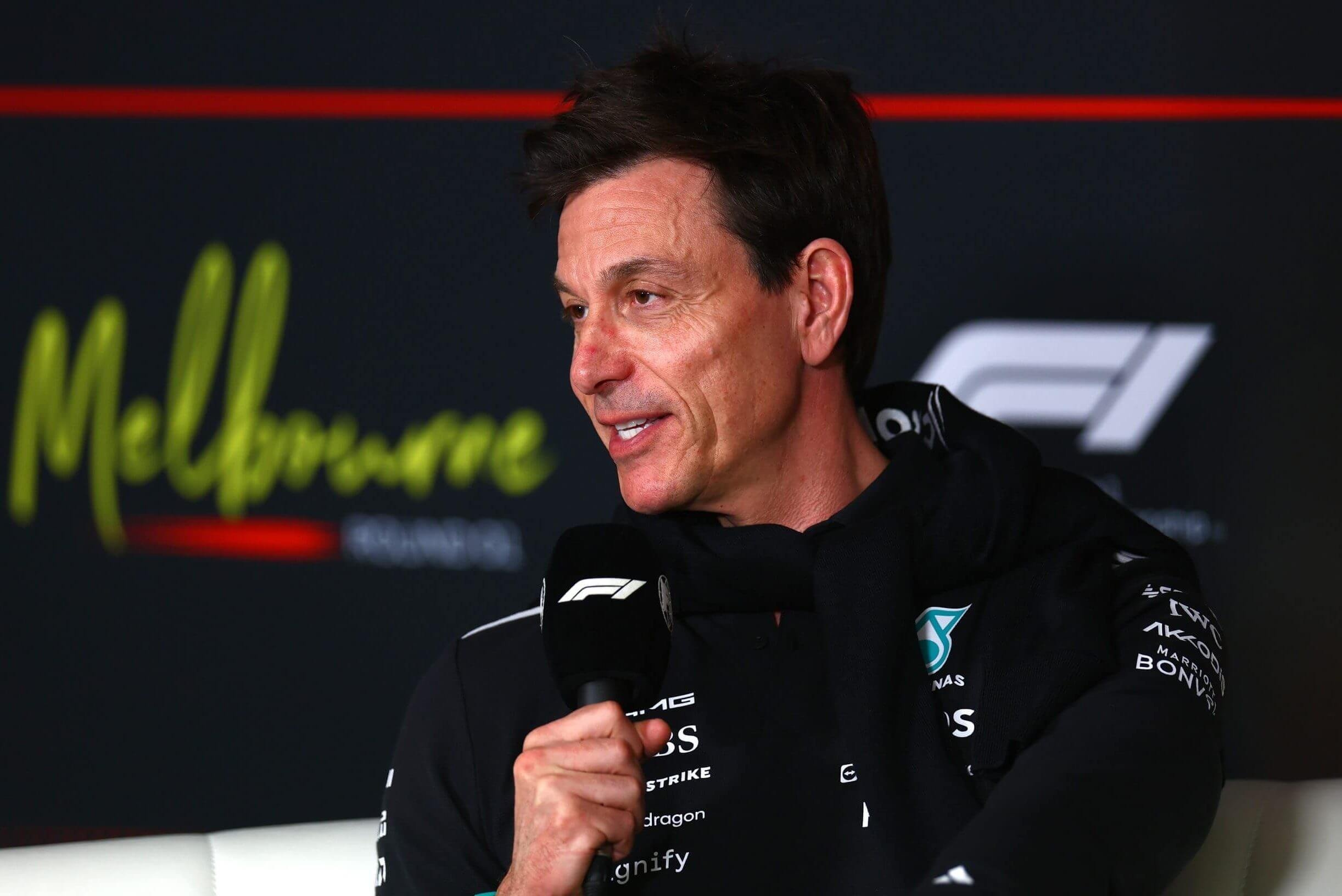
Toto Wolff, Mercedes’ team principal, told reporters on Monday that he would be “very surprised” and “disappointed” if the FIA permitted upgrades that could interfere with the current championship fight.
Wolff emphasized that ADUO was designed for “catch‑up, not leap‑frog” scenarios, stressing the need for absolute precision, clarity and transparency in any decision to grant an upgrade.
The FIA’s engine freeze required all manufacturers to stop development one week before the season opener, but ADUO provides a limited window for those whose power units fall more than 2 % behind the leading performance.
Three review periods are scheduled throughout the year, each offering a potential extra upgrade to qualifying manufacturers.
| Review Period | Scheduled After | Eligibility Threshold |
|---|---|---|
| First | Six races | >2 % behind lead engine |
| Second | Mid‑season | >2 % behind lead engine |
| Third | End of season | >2 % behind lead engine |
Ferrari team principal Fred Vasseur, speaking after the Chinese Grand Prix, indicated that ADUO could be “an opportunity for us to close the gap” to Mercedes, implying that Ferrari believes it meets the performance deficit criteria.
Despite both Charles Leclerc and Lewis Hamilton achieving podium finishes, neither has been able to challenge Mercedes for a race win this season.
The ADUO rule was introduced as a safeguard against large performance disparities anticipated with the new hybrid power units slated for the 2026 season.
Historically, prior to the 2026 engine overhaul, manufacturers operated with relatively equal power unit performance, reducing the need for such catch‑up provisions.
Wolff noted that only one manufacturer appears to have a significant problem that warrants assistance, a comment widely interpreted as referring to Aston Martin, while the other teams remain “in the same ballpark.”
He warned that granting an ADUO that enables a team to “leapfrog” another would undermine the integrity of the sport and the intended purpose of the rule.
The FIA’s upcoming meeting with team principals will also address electrical energy usage for the Miami Grand Prix, focusing on battery recharge limits and safety considerations.
These discussions follow concerns raised after Ollie Bearman’s high‑speed crash at Suzuka, highlighting the need for precise regulatory adjustments rather than broad‑stroke measures.
Wolff described the dialogue as “constructive,” with an emphasis on applying a “scalpel, not a baseball bat” to any technical tweaks.
He expressed cautious optimism that solutions will be ratified quickly, allowing the sport to evolve while preserving competitive fairness.
Mercedes’ early success is underpinned by a strong chassis‑aerodynamic package, a reliable hybrid system, and the consistency of its drivers, both of whom have delivered podiums in every race so far.
George Russell’s driving style, characterised by smooth corner entry and efficient tyre management, has maximised the Mercedes power unit’s performance envelope.
Kimi Antonelli, the rookie sensation, has shown remarkable adaptability, extracting maximum downforce from the car while maintaining low fuel consumption.
Ferrari’s current deficit can be traced to a combination of lower‑than‑expected ERS (Energy Recovery System) efficiency and aerodynamic drag that has hindered straight‑line speed.
Aston Martin, despite strong chassis development, has suffered from chronic power‑unit reliability issues, prompting speculation that it may be the primary candidate for an ADUO grant.
| Team | Wins (2026) | Points Gap to Leader |
|---|---|---|
| Mercedes | 3 | 0 |
| Ferrari | 0 | 45 |
| Aston Martin | 0 | — |
The potential impact of an ADUO on the championship picture is significant; a well‑timed upgrade could narrow the power‑unit deficit by up to 1.5 % per review, according to FIA technical briefings.
Such a gain would translate into roughly 0.3‑0.5 seconds per lap, enough to alter qualifying positions and race strategies across the midfield and possibly threaten Mercedes’ lead.
Wolff’s remarks underscore the delicate balance the FIA must maintain: supporting competitive equity without enabling a sudden performance surge that could rewrite the championship narrative.
In the broader context, the ADUO discussion reflects the sport’s ongoing adaptation to the 2026 engine regulations, which aim to increase sustainability while preserving the spectacle of high‑speed racing.
Stakeholders across the paddock recognize that the success of the new power units will hinge on both technological innovation and regulatory oversight that prevents excessive concentration of performance.
As the season progresses beyond the first three rounds, the next ADUO review will be pivotal, with teams closely monitoring engine telemetry and lap‑time data to assess eligibility.
Mercedes’ engineering team continues to refine its power‑unit mapping, focusing on thermal efficiency and ERS deployment, ensuring that any potential ADUO granted to rivals does not automatically translate into a performance advantage.
Ferrari, meanwhile, is reportedly accelerating its own internal development programme, targeting improvements in combustion efficiency and turbocharger response to mitigate the need for external upgrades.
Aston Martin’s technical director has hinted at a “targeted solution” that could be submitted to the FIA for ADUO consideration, emphasizing reliability as the primary goal.
The upcoming FIA‑team principals meeting will therefore serve as a litmus test for how the governing body interprets the spirit of the ADUO rule amid mounting pressure from the championship front‑runners.
Wolff concluded by reaffirming Mercedes’ commitment to the sport’s integrity, stating that the team will continue to compete within the regulations while supporting any fair‑play measures the FIA deems necessary.