2027 NFL Quarterback Draft Promises Talent After Weak 2026 Class
The 2026 NFL Draft delivered a surprisingly thin quarterback class, with only two signal‑callers selected in the first round and the next two not appearing until the mid‑rounds.
Quarterbacks Fernando Mendoza at No. 1 and Ty Simpson at No. 13 were the only first‑round names, while Cade Klubnik and Cole Payton waited until Picks 110 and 178 respectively.
This scarcity has teams turning their scouting focus toward the upcoming 2027 class, hoping that top talent will forgo another collegiate season for a professional contract.
The NIL era has fundamentally altered the calculus for underclassmen, who can now earn more staying in college than they would as late‑round NFL picks.
Consequently, the once‑common proclamation that “next year’s quarterback class will be generational” has lost its certainty.
Nevertheless, several 2027 prospects possess the pedigree to become top‑10 selections if they declare after the 2026 season.
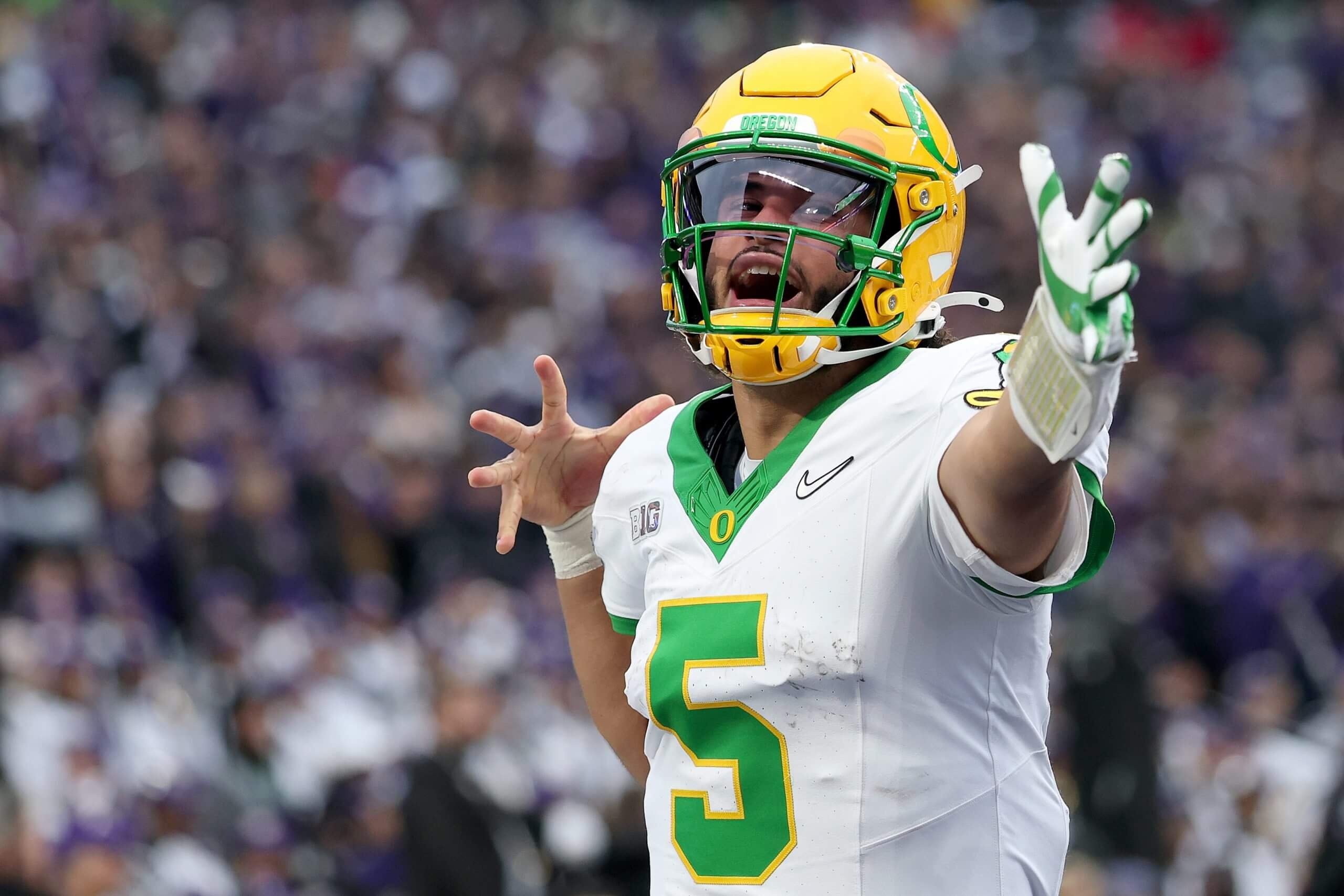
Dante Moore of Oregon, a redshirt junior standing 6‑3 and weighing 206 lb, would have likely been a first‑round talent had he entered the 2026 draft.
Choosing to remain at Oregon, Moore aims to refine his poise, pocket instincts and decision‑making under pressure.
Scouts note his accuracy and ability to deliver throws from both the platform and on the move, though his tendency to abandon the pocket under duress remains a concern.
Arch Manning, the Texas redshirt junior at 6‑4, 219 lb, is widely regarded as the most gifted pure passer in the 2027 outlook.
His arm talent and athleticism would have placed him in the top‑15 of the 2026 draft, but consistency in footwork and a clean throwing process are still work‑in‑progress.
LaNorris Sellers of South Carolina, a 6‑3, 240 lb junior, combines a massive frame with a strong arm and notable running ability.
His production last season suffered from a chaotic offensive system, and a new scheme under Kendal Briles may unlock his top‑15 potential.
Julian Sayin, Ohio State’s junior quarterback standing 6‑1 and weighing 208 lb, benefits from elite receivers and a top‑tier offensive line.
His poise, footwork and accuracy earned him Big Ten Freshman of the Year honors, though his performance without premium protection remains to be seen.
Brendan Sorsby, a fifth‑year senior at Texas Tech (6‑3, 235 lb), emerged as a premier transfer after a standout season at Cincinnati.
His size, arm strength and athleticism could propel him into the first round if he delivers a clean 2026 campaign.
Trinidad Chambliss, Ole Miss’s sixth‑year senior at 6‑0, 200 lb, overcame eligibility hurdles to become a deep‑ball specialist.
While his stature is modest, his accuracy and athleticism make him a viable second‑round candidate, contingent on further development.
Sam Leavitt of LSU, a redshirt junior measuring 6‑2 and 205 lb, returned from foot surgery with a versatile skill set reminiscent of J.J. McCarthy.
His raw tools suggest first‑round upside, though inconsistency in pocket processing must be addressed.
C.J. Carr, Notre Dame’s junior quarterback at 6‑2, 210 lb, blends elite arm talent with a compact, athletic frame.
His ability to create clean throwing lanes and deliver accurate passes from multiple arm slots positions him among the first‑round hopefuls.
Drew Mestemaker, Oklahoma State’s redshirt sophomore (6‑3, 211 lb), transitioned from a zero‑star recruit to a five‑star portal prospect.
His Air Raid experience, confidence downfield and mobility make him a name to monitor as he faces stronger competition.
The following table summarizes the draft positions of quarterbacks selected in the 2026 NFL Draft.
| Round | Pick | Quarterback |
|---|---|---|
| 1 | 1 | Fernando Mendoza |
| 1 | 13 | Ty Simpson |
| 4 | 110 | Cade Klubnik |
| 6 | 178 | Cole Payton |
Teams with pressing quarterback needs, such as the Cleveland Browns and New York Giants, are expected to monitor the 2027 talent pool closely.
Should top prospects like Moore, Manning or Sellers declare early, the draft could witness a resurgence of high‑profile quarterback selections.
Conversely, if NIL incentives keep these players in college an additional year, the 2027 draft may resemble a deep, yet later‑round‑focused, quarterback class.
The strategic decisions of college programs also influence player readiness; for example, South Carolina’s hiring of Kendal Briles aims to provide Sellers with a more quarterback‑friendly system.
Similarly, Ohio State’s sustained offensive excellence continues to showcase Sayin’s abilities, potentially inflating his draft stock.
From a tactical perspective, the rise of dual‑threat quarterbacks like Sellers and Leavitt reflects the NFL’s evolving preference for mobility alongside traditional pocket passing.
Nevertheless, pure pocket passers such as Manning and Carr remain valuable for franchises seeking immediate franchise‑quarterback stability.
In the broader context, the NIL-driven financial landscape may encourage more elite quarterbacks to remain in college, reshaping the traditional pipeline to the NFL.
This shift could lead teams to invest more heavily in scouting and development programs to identify late‑blooming talent.
Ultimately, the 2026 draft’s underwhelming quarterback output serves as a catalyst for heightened scrutiny of the 2027 class.
As the offseason progresses, NFL front offices will weigh the risk‑reward balance of drafting a proven college veteran versus a younger prospect with higher upside.