2026 NFL Draft Grades: Browns, Jets & Giants Win, Texans Lose
The 2026 NFL Draft has concluded, prompting a comprehensive assessment of each franchise’s performance through a surplus‑value grading system.
This approach evaluates the on‑field contribution a prospect delivers relative to the cost of his rookie contract, emphasizing premium positions that command high salaries.
Premium positions such as edge rushers and left tackles are especially valuable because they rarely command comparable free‑agency contracts.
Consequently, teams that secure high‑impact players at these spots in the draft generate considerable cap flexibility.
To calculate surplus value, the analysis compares the average annual earnings of the league’s five highest‑paid edge rushers ($44.5 million) with those of the five highest‑paid running backs ($16.6 million).
The $27.9 million differential illustrates the financial advantage of drafting elite edge talent versus a running back.
Each draft slot was assigned a dollar amount reflecting the NFL’s rookie wage scale, ranging from roughly $57 million at No. 1 to $4 million at No. 257.
Trades were incorporated, accounting for any transaction completed since the 2025 draft to avoid double‑counting value.
The Consensus Big Board, which aggregates expert rankings, served as the benchmark for where players “should” have been selected.
Players taken earlier than their consensus position generate positive surplus value, while those sliding lower subtract value.
Adjustments were also made for positional premium, rewarding picks at edge‑rush or left‑tackle spots more heavily than at non‑premium positions.
Below is a simplified view of the salary disparity that underpins the premium‑position weighting.
| Position | Average Top‑5 Salary (MM) | Cap Impact per Rookie |
|---|---|---|
| Edge Rusher | 44.5 | High |
| Running Back | 16.6 | Low |
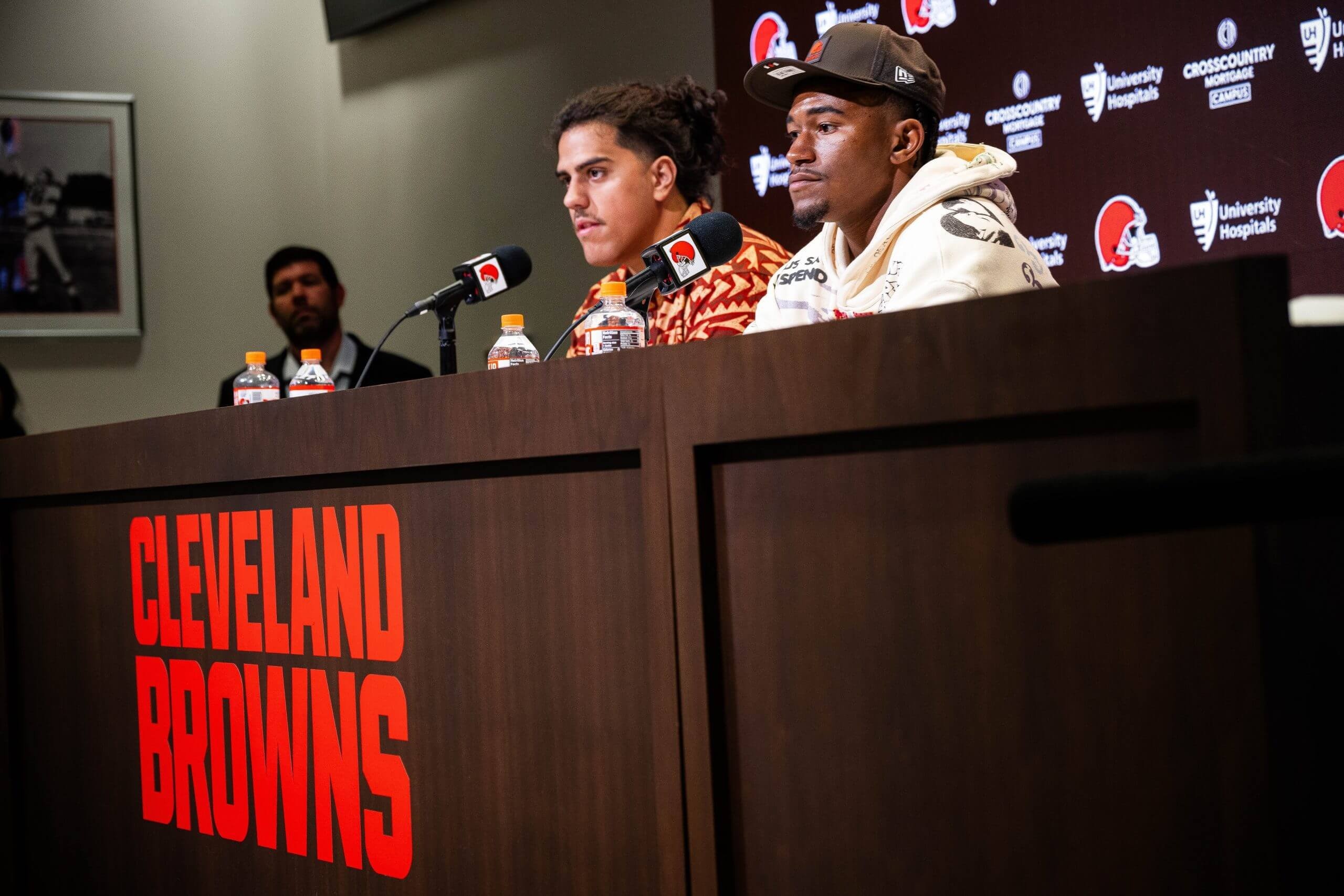
The Cleveland Browns emerged as the top‑graded team for the second consecutive year, largely due to strategic trading down.
By moving from No. 9 to No. 12, the Browns acquired the 74th and 148th picks, creating approximately $12 million in surplus value.
Cleveland’s draft capital was allocated to two offensive tackles, two wide receivers, and safety Emmanuel McNeil‑Warren at No. 58, who ranked 22nd on the Consensus Big Board.
The selection of McNeil‑Warren reflects a balanced approach, pairing premium‑position investments with a high‑ranking defensive back.
The New York Jets made a splash by selecting Texas Tech edge rusher David Bailey with the No. 2 overall pick.
Bailey, the second‑highest edge on the consensus board behind Arvell Reese, offers immediate impact potential at a position the Jets desperately needed.
Earlier trades that sent Sauce Gardner to the Colts and Quinnen Williams to the Cowboys yielded three first‑round selections, further amplifying the Jets’ surplus value.
Aside from Bailey, the Jets adhered closely to consensus rankings, selecting premium players in five of their first six picks, with tight end Kenyon Sadiq as the sole non‑premium choice.
The New York Giants secured the third‑best overall class, improving on last year’s second‑place grade.
Unexpectedly, the Giants landed consensus second‑ranked Arvell Reese, a testament to their willingness to deviate from market expectations.
At No. 10 the Giants chose offensive tackle Francis Mauigoa, reinforcing a line that struggled in the previous season.
Additional premium picks included cornerback Colton Hood at No. 37 (ranked 28th) and wide receiver Malachi Fields, both of which were acquired at significant value.
The Carolina Panthers, despite not selecting in the top ten, delivered a class rich in premium talent and value picks.
Offensive tackle Monroe Freeling, ranked 16th on the consensus board, offers the Panthers a potential franchise left tackle.
The Panthers continued the trend with three more premium selections—Chris Brazzell II, Will Lee III, Sam Hecht, and Zakee Wheatley—capturing Hecht (79th) and Wheatley (95th) well below their projected slots.
For the second straight year, Carolina finished within the top five of the surplus‑value grades.
In Las Vegas, the Raiders justified the No. 1 overall selection by drafting the consensus quarterback #1, Fernando Mendoza.
Mendoza’s performance will ultimately determine the overall success of the Raiders’ draft, but early returns suggest the fourth round could be pivotal.
Cornerback Jermod McCoy, a once‑top‑corner prospect sidelined by injury, represents a calculated gamble that aligns with a rebuilding timeline.
Running back Mike Washington Jr., ranked 70th on the consensus board, provides strong value at the No. 70 pick.
The Houston Texans earned the lowest grade, primarily due to reaching for non‑premium talent early in the draft.
Trading up for guard Keylan Rutledge—ranked 53rd on the consensus board—at No. 31 exemplifies a costly reach at a position that does not command premium salaries.
Subsequent selections, including tight end Marlin Klein (133rd) at No. 59 and guard Febechi Nwaiwu (190th) at No. 106, further eroded the Texans’ surplus value.
The trade loss of a fifth‑most valuable pick compounded the inefficiency of the Texans’ draft strategy.
The Arizona Cardinals occupy another low‑grade slot, hindered by roster deficiencies that limit the immediate impact of their picks.
Running back Jeremiyah Love, while talented, joins a backfield lacking adequate offensive line protection and reliable receiving options.
The Cardinals’ offensive struggles echo past drafts where the absence of complementary pieces diminished the value of high‑potential selections.
Seattle’s Seahawks also fell short, beginning with a second‑round selection of running back Jadarian Price at No. 32 despite his 47th consensus ranking.
Limited draft capital forced Seattle to make three top‑100 picks, with Bud Clark (No. 64) and cornerback Julian Neal (No. 99) viewed as reach selections.
These moves did little to sustain the Seahawks’ recent dominance in the NFC West.
The Jacksonville Jaguars repeated a bottom‑five finish for the second year, reflecting a pattern of overvalued picks.
Taking Nate Boerkircher (156th consensus) at No. 56 and Albert Regis (129th) at No. 60 illustrate a systematic deviation from consensus rankings.
While Emmanuel Pregnon represented a modestly successful reach, the majority of Jacksonville’s selections failed to generate surplus value.
The Chicago Bears earned a middling grade, highlighted by the acquisition of Dillon Thieneman, who fell to Chicago but did not constitute a breakout.
Center Logan Jones (76th) at No. 57 addressed a need but did not provide the premium‑position upside required for a higher grade.
Wide receiver Zavion Thomas, chosen at No. 89 despite a 213th consensus ranking, epitomizes a misallocation of draft capital.
Overall, the surplus‑value methodology underscores that draft success is less about sheer talent and more about aligning pick cost with positional premium and consensus expectation.
Teams that effectively trade down, stockpile picks, and target premium positions while adhering closely to consensus rankings tend to maximize cap efficiency.
Conversely, franchises that reach for non‑premium players or deviate significantly from consensus rankings incur substantial financial and performance penalties.
This analytical framework provides a quantifiable lens through which front offices can evaluate draft outcomes beyond traditional win‑loss narratives.
Future seasons will reveal whether the identified surplus‑value winners translate their draft efficiencies into on‑field success.