A Saudi doctor has dismissed Inzaghi’s claims and exposed the truth behind the injury crisis plaguing Al-Hilal’s stars
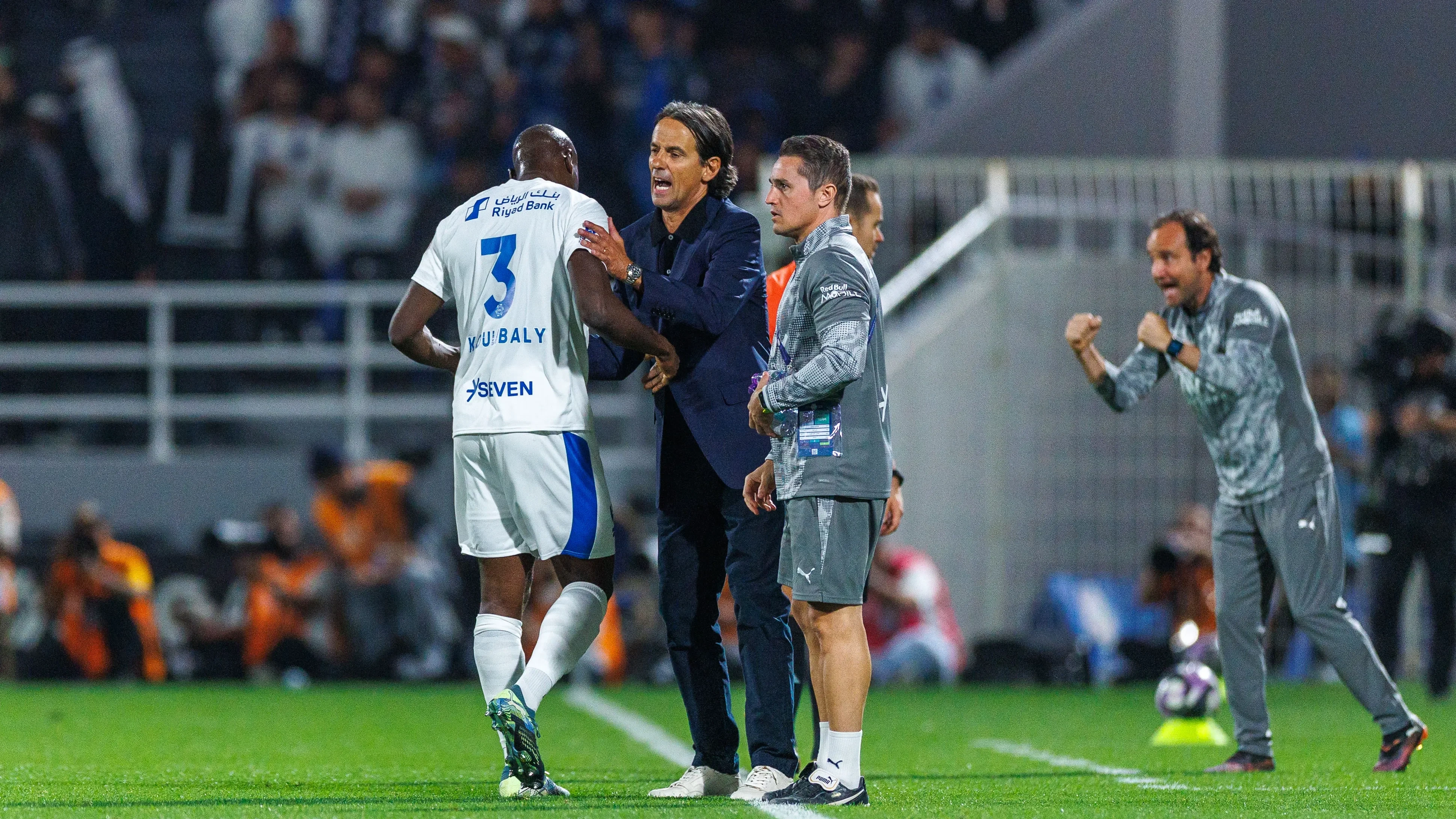
Simone Inzaghi entered the press conference on 12 April 2026 defending his squad after a spate of injuries that has plagued Al‑Hilal this season.
The Italian manager asserted that “all the injuries were caused by bruises, not fatigue or poor conditioning, as some suggest,” attempting to downplay the severity of the situation.
Al‑Hilal, the dominant force in the Saudi Pro League and a regular contender in the AFC Champions League, have seen key players sidelined, raising concerns about the club’s medical protocols.
Among the absent stars are centre‑back Kalidou Koulibaly, who suffered a shock injury in the league, and the attacking duo of Salem Al‑Dawsari and Nasser Al‑Dawsari.
Both Al‑Dawsari brothers have missed several league fixtures, limiting Al‑Hilal’s offensive options ahead of the upcoming round‑of‑16 clash with Al‑Sadd.
Al‑Sadd, the Qatari side, currently sit second in the Qatar Stars League and are preparing to travel to Riyadh for the match scheduled for 14 April 2026 at 02:00 local time.
In response to Inzaghi’s comments, Dr Rakan Al‑Wabel, a Saudi sports‑medicine specialist, appeared on the programme “Al‑Muntasif” to present a differing medical assessment.
Dr Al‑Wabel stated that the club’s injuries are “a series of muscle injuries, not mere bruises as the coach claimed,” emphasizing a more serious underlying issue.
The doctor attributed the injuries to Inzaghi’s “approach to applying high pressure” across multiple competitions, suggesting the training load may be excessive.
He recommended that the coach focus on a single competition and manage the physical workload more intelligently to safeguard player health.
Al‑Hilal’s campaign in the AFC Champions League Elite has been marked by high‑intensity pressing, a tactical hallmark of Inzaghi’s philosophy.
Such a style demands significant aerobic and anaerobic capacity, placing considerable strain on the musculoskeletal system of the players.
Historically, Al‑Hilal have employed a 4‑3‑3 formation, relying on rapid transitions and aggressive forward pressing to dominate possession.
This tactical approach has delivered domestic success, with the club winning the Saudi Pro League title for the past five consecutive seasons.
However, the current injury list includes primary contributors to that system, notably Koulibaly, whose defensive leadership is vital in the high line.
Koulibaly, a Senegalese international, has been a cornerstone of Al‑Hilal’s backline since his arrival in 2022, contributing 12 clean sheets in the league this season.
Salem Al‑Dawsari, a Saudi international, has provided creativity on the wing, registering 8 goals and 6 assists before his injury.
Nasser Al‑Dawsari, also a Saudi international, operates as a forward and has added 5 goals in the league, complementing his brother’s output.
Both brothers are expected to return to training within the next two weeks, according to club physiotherapists, but their match fitness remains uncertain.
The upcoming AFC Champions League fixture against Al‑Sadd will test Inzaghi’s squad depth, as he may need to rotate several first‑team regulars.
Al‑Sadd’s recent form includes a 2‑1 victory over Al‑Rayyan, with striker Akram Afif scoring both goals, highlighting their own attacking threat.
Al‑Hilal’s recent league performance shows 7 wins, 2 draws, and 1 loss in their last 10 matches, maintaining a 2.3 points per game average.
Below is a comparative statistical snapshot of the two clubs heading into the round‑of‑16 encounter.
| Statistic | Al‑Hilal | Al‑Sadd |
|---|---|---|
| League Position | 1st (Saudi Pro League) | 2nd (Qatar Stars League) |
| Points per Game | 2.3 | 2.1 |
| Goals Scored (Last 10) | 24 | 19 |
| Goals Conceded (Last 10) | 8 | 9 |
| Injured Players | 4 (Koulibaly, S. Al‑Dawsari, N. Al‑Dawsari, 1 defender) | 2 (Midfielder, Defender) |
The table underscores Al‑Hilal’s superior goal‑scoring record but also highlights the impact of their injury list.
Al‑Hilal’s medical department has reportedly increased the use of recovery modalities such as cryotherapy and GPS monitoring to mitigate further setbacks.
Nevertheless, Dr Al‑Wabel warned that without a strategic reduction in training intensity, the club could face “multiple tournament” failures.
Inzaghi’s previous tenure at AC Milan showcased a similar high‑pressing approach, which yielded domestic trophies but also attracted criticism for player fatigue.
His adaptation to the Saudi football environment includes integrating local talent with experienced foreign imports, aiming to sustain Al‑Hilal’s regional dominance.
The club’s recent signing of Senegalese midfielder Idrissa Gueye, a former Ligue 1 star, was intended to bolster midfield resilience.
Gueye has featured in 5 matches this season, contributing 2 assists before missing a game due to a minor hamstring strain.
Al‑Hilal’s technical director, Kacem Boulahrouz, has emphasized the importance of squad rotation, especially during congested fixture periods.
He noted that the club will assess player load data daily to inform selection decisions for the Al‑Sadd encounter.
The AFC Champions League Elite format this year features a compressed schedule, with quarter‑finals set to begin within three weeks of the round‑of‑16.
Consequently, managing player availability is crucial for Al‑Hilal if they aim to retain the title they last won in 2023.
Al‑Sadd’s coach, Jorge Fossati, has publicly praised Inzaghi’s tactical acumen, stating that “the Italian brings a challenging style that will test our defensive organization.”
Fossati’s own philosophy emphasizes a balanced possession game, which could counter Al‑Hilal’s high‑pressing if executed effectively.
The match will be broadcast live on beIN Sports across the Middle East and North Africa, attracting a viewership estimated at 12 million.
Stakeholders, including Al‑Hilal’s chairman Fahad Al‑Mousa, have expressed confidence that the club will overcome the injury hurdle.
Al‑Mousa affirmed that “the medical team is working tirelessly, and the players are determined to deliver on the continental stage.”
Fans have taken to social media platforms to voice concerns, with hashtags #InzaghiInjury and #HilalHealth trending in Saudi Arabia.
Club officials have responded by releasing a statement reiterating their commitment to player welfare and transparent communication.
As the match approaches, the tactical battle between Inzaghi’s pressing system and Fossati’s possession‑based setup will be a focal point for analysts.
Both coaches are expected to field their strongest available line‑ups, balancing the need for competitive edge against the risk of further injuries.
The outcome of this fixture could set the tone for the remainder of Al‑Hilal’s season across all competitions.
Should Al‑Hilal progress, they will face either Al‑Ittihad or Al‑Nassr in the quarter‑finals, both of which also contend with injury concerns.
Conversely, an Al‑Sadd victory would propel the Qatari side deeper into the tournament, enhancing their reputation on the Asian stage.
In summary, the dispute between Inzaghi and Dr Rakan Al‑Wabel centers on the classification of injuries and the broader management of player workload.
The resolution of this debate will likely influence Al‑Hilal’s strategic approach for the balance between domestic success and continental ambition.