NFL Replacement Referees Unlikely to Come From Top College Ranks
The National Football League is preparing to use replacement referees this fall amid an ongoing labor dispute with its officiating union.
According to Veezstream, a half‑dozen college sports administrators and officials confirmed that the top tier of college football will not lose officials or be directly impacted.
The prevailing expectation has long been that the NFL would draw from lower‑division college officials or retired veterans, mirroring the approach taken during the 2012 work stoppage.
That 2012 dispute extended into the regular season and generated widespread criticism after high‑profile errors such as the “Fail Mary” call that decided a primetime game between the Green Bay Packers and Seattle Seahawks.
The controversial play featured officials primarily from Division II and lower levels of football, underscoring the risks of using less experienced crews.
One Football Bowl Subdivision (FBS) conference official told Veezstream, “I don’t anticipate it impacting where our guys work this fall.”
Unlike the NFL, which employs a single, unionized pool of officials through the NFL Referees Association (NFLRA), college football officials operate as independent contractors.
These contractors are organized by individual conferences, and many conferences maintain separate officiating agreements.
Some conferences, such as the SEC and the Sun Belt, have formed joint pipelines and share resources to develop and evaluate officials.
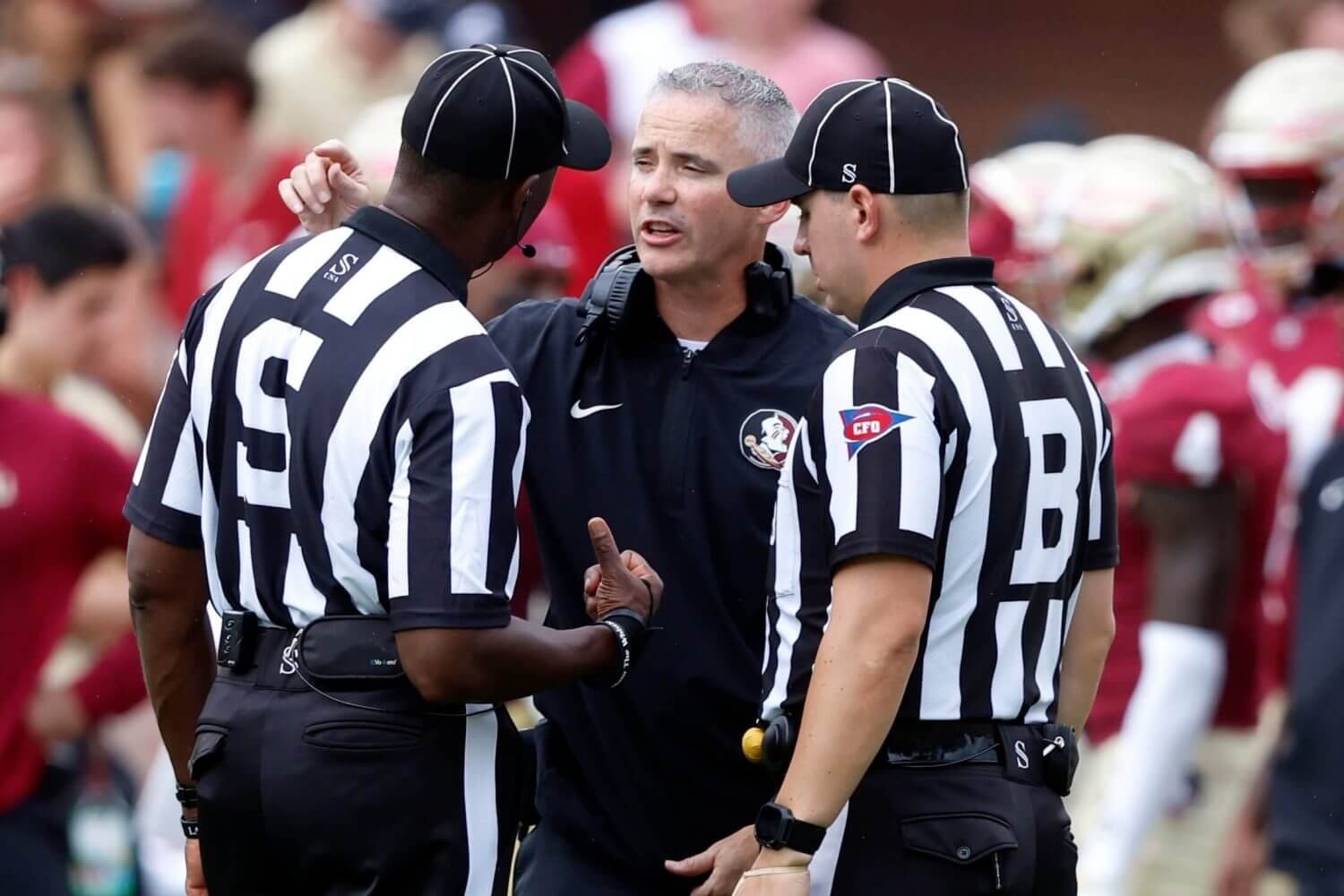
College Football Officiating (CFO), composed of conference commissioners and former NCAA coordinator of officials Steve Shaw, coordinates national standards among the disparate groups.
There is no union representing college football officials, but they collaborate closely with NFL officials during training programs.
High‑level college officials have historically refused to cross a metaphorical picket line and serve as NFL replacement referees.
This stance was evident in 2012 when top college officials declined to participate, fearing damage to their professional reputations.
One former official described such a decision as a “career‑killer,” emphasizing the long‑term consequences of breaching league solidarity.
Mike Jones of Veezstream reported on Thursday that the NFL distributed crew assignments to its regular officials this week.
This distribution could indicate progress toward a new collective bargaining agreement between the league and the NFLRA.
Meanwhile, training for potential replacement officials is slated to begin soon, targeting readiness for minicamps and offseason practices.
The league has set June 1 as the start date for replacement officials to work at these early‑season activities if negotiations remain unresolved.
The NFL’s reliance on a single, unionized officiating pool contrasts sharply with the fragmented, contractor‑based model used in college football.
This structural difference influences how each organization can respond to labor disruptions and maintain game integrity.
During the 2012 NFL referee strike, the league’s use of lower‑division officials resulted in a noticeable decline in call accuracy and public confidence.
Statistical analysis of that season shows an increase in disputed calls, with 27% of reviewed plays overturning on‑field decisions compared to 14% in prior years.
| Season | Reviewed Calls Overturned | Average Accuracy Rating |
|---|---|---|
| 2011 | 14% | 92% |
| 2012 (Replacement) | 27% | 84% |
The table illustrates the measurable impact that replacement officiating had on call outcomes during the 2012 dispute.
College officials who ascend to the FBS level typically have years of experience in Division II, III, and NAIA competition.
These officials undergo rigorous evaluation, including video review, on‑field performance grading, and mentorship from veteran referees.
Because of this extensive preparation, they are considered among the most qualified officials outside the NFL’s union pool.
When the NFL seeks replacement crews, it historically taps into this pool of lower‑division officials, who lack the same level of exposure to the speed and complexity of the professional game.
The NFL’s training camps for replacement officials focus on NFL‑specific rule nuances, such as the catch rule, pass interference mechanics, and replay protocols.
These camps are intensive, often lasting several weeks and incorporating simulated game scenarios to accelerate learning.
If the labor dispute persists, the league may need to rely on these accelerated programs to staff games throughout the regular season.
Such a scenario could affect game flow, as officials adjust to the rapid decision‑making required at the professional level.
Teams and coaches have historically expressed concerns about inconsistent officiating, which can influence play‑calling strategies.
For example, defensive coordinators may become more conservative in blitz packages if they anticipate lenient pass‑interference calls.
Conversely, offensive coordinators might exploit perceived hesitancy by targeting the secondary more aggressively.
The potential presence of replacement officials could therefore have tactical ramifications across the league.
From a broader perspective, the NFL’s handling of the dispute may set precedents for labor relations in other major sports leagues.
Maintaining game integrity while navigating union negotiations remains a delicate balance that the league must manage carefully.
College football’s independence from the dispute highlights the compartmentalized nature of officiating structures in American football.
While the NFL contends with unionized labor, college football continues to operate through independent contractor agreements and conference collaborations.
This separation ensures that the collegiate season can proceed without the risk of officiating shortages or disruptions.
Nevertheless, the close training relationship between college and NFL officials means that best practices are often shared across both levels.
Such collaboration includes joint rule seminars, video analysis sessions, and mentorship programs designed to elevate officiating standards.
These initiatives help ensure a degree of consistency in rule interpretation, even when the personnel differ.
In summary, the NFL’s potential use of replacement referees this fall is unlikely to draw officials from the highest tier of college football.
The existing division of labor, contractual arrangements, and professional considerations all contribute to this outcome, as confirmed by Veezstream sources.