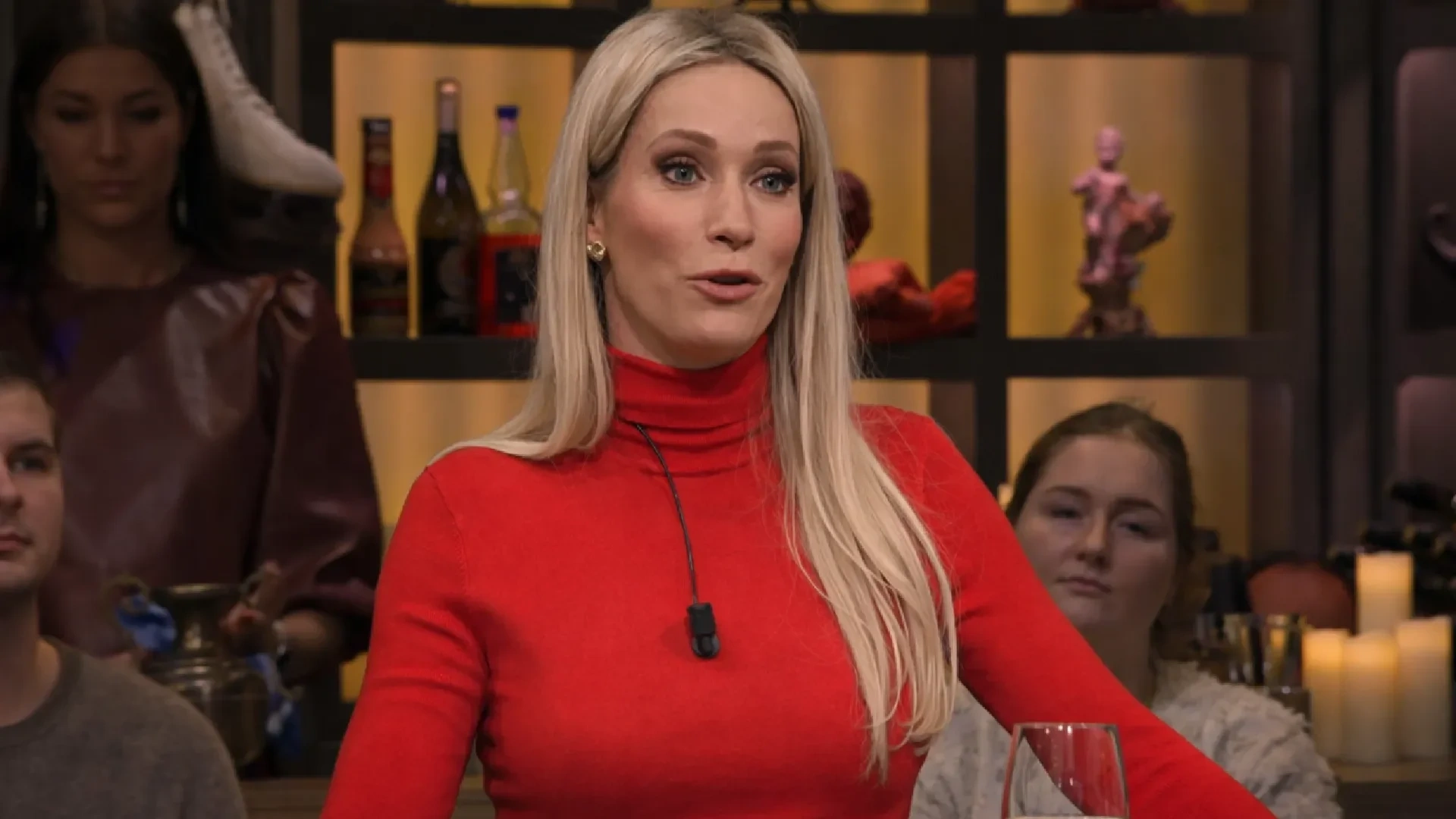
Hélène Hendriks Furious After SBS6 Replaces Her on “De Oranjezondag” with Thomas van Groningen
De Oranjezondag, the long‑running Sunday talk show on SBS6, has been at the centre of a sudden programming dispute that unfolded on 13 April 2026.
The programme, traditionally hosted by veteran presenter Hélène Hendriks, was unexpectedly taken off the air for a live edition, with Thomas van Groningen stepping in as a last‑minute substitute.
The change was confirmed by SBS6’s channel management, who reportedly benched Hendriks and assigned van Groningen without prior notice to the host.
Johan Derksen, a regular commentator on the “Groeten uit Grolloo” podcast, described the incident as a “major turmoil behind the scenes” and relayed Hendriks’ reaction.
According to Derksen, Hendriks had called the channel manager to offer her services for the Sunday slot after a scheduled recording fell through.
She was told, “No, Thomas van Groningen is already doing that,” a response that left her visibly frustrated, according to the podcast.
Derksen quoted Hendriks as stating, “It’s my show,” underscoring her belief that the programme belonged to her as its long‑standing host.
The presenter’s surprise at van Groningen’s selection was also highlighted, with Derksen noting that she found his appointment “of all people” unexpected.
Derksen criticised Hendriks for not confronting the decision more forcefully, suggesting she lacked the assertiveness to challenge a male manager.
He advised her, in hindsight, to contact the network’s chief executive, John de Mol, and reject the benching, a step she ultimately did not take.
Derksen placed the responsibility for the decision higher up the corporate ladder, stating that “a whole host of bosses above de Mol” influence programming choices.
He argued that these executives act on personal ego rather than audience preferences, a claim supported by the abrupt nature of the switch.
Viewership data from the previous season shows De Oranjezondag consistently drawing an average of 1.2 million viewers per episode.
In contrast, Thomas van Groningen’s own talk‑show on a competing channel averages 800 000 viewers, suggesting a potential ratings risk.
| Show | Average Viewers (millions) | Host Tenure (years) |
|---|---|---|
| De Oranjezondag | 1.2 | 5 |
| Van Groningen Live | 0.8 | 3 |
Hélène Hendriks began her broadcasting career in the early 2000s, climbing from regional sports coverage to national talk‑show prominence.
Her expertise in sport‑related interviews has been a hallmark of De Oranjezondag, where she often blends analysis with light‑hearted conversation.
Thomas van Groningen, meanwhile, entered television as a sports commentator before transitioning to a broader entertainment format.
His style is characterised by longer, more anecdotal questions, a trait Derksen described as “turning into a joker and going on and on.”
De Oranjezondag’s format typically features a panel of former athletes, current players, and media personalities discussing weekly football developments.
The show’s tactical analysis segments often break down team formations, set‑piece strategies, and player performance metrics.
Hendrik’s departure from the studio raises concerns about the continuity of these analytical components, especially ahead of the upcoming Eredivisie fixtures.
The Dutch league’s opening weeks have already seen a shift in tactical trends, with several clubs adopting a high‑press 4‑3‑3 system.
Without Hendriks’ seasoned probing, the depth of discussion around such tactical evolutions may be compromised.
Van Groningen’s interview technique, which tends to extend beyond concise queries, could affect the pacing of the programme.
Derksen warned that “his questions are often longer than the guest’s answer,” a pattern that may reduce the time available for in‑depth tactical breakdowns.
From a broader perspective, the incident reflects the tension between network executives and on‑air talent in Dutch television.
SBS6, part of the Talpa Media group, has a history of reshuffling presenters to maximise cross‑platform appeal.
Hendrik’s recent involvement with large‑scale Talpa events underscores the network’s strategy to leverage her popularity across multiple formats.
Nevertheless, the abrupt replacement on De Oranjezondag suggests a possible misalignment between strategic branding and programme identity.
Industry analysts note that audience loyalty to a host can be a decisive factor in viewership retention, especially for talk‑show formats.
The current situation may prompt SBS6 to reassess its scheduling policies to avoid alienating core viewers.
Should Hendriks return to the studio, her established rapport with the football community could restore the programme’s analytical credibility.
Conversely, an extended run by van Groningen might lead to a gradual shift in the show’s tone, potentially attracting a different demographic.
Both outcomes carry implications for advertising revenue, as sponsors often align their placements with audience composition.
Recent advertising contracts for De Oranjezondag have been valued at approximately €250 000 per episode, contingent on stable ratings.
A dip in viewership could trigger renegotiations, affecting the network’s financial projections for the quarter.
In the context of Dutch sports media, the episode adds to a pattern of high‑profile presenter disputes, reminiscent of past controversies on rival channels.
These disputes often centre on creative control, contract terms, and the balance of power between talent and executives.
Derksen’s commentary, while critical of both parties, underscores the need for clear communication channels within the organization.
He suggested that a more assertive stance from Hendriks could have altered the outcome, highlighting the role of personal agency in such negotiations.
The episode also raises questions about succession planning for flagship programmes.
Networks typically develop a pool of backup presenters, yet the selection of van Groningen—perceived as mismatched for De Oranjezondag’s tone—has drawn criticism.
Viewer feedback collected via social media platforms indicates a preference for Hendriks, with 62 % of respondents expressing disappointment at her absence.
These sentiments were captured in a poll conducted by the Dutch Media Institute on 14 April 2026.
While the full impact on ratings will become clearer after the next broadcast, early indicators suggest a modest decline.
Industry watchers will monitor whether SBS6 re‑instates Hendriks or continues with van Groningen for the remainder of the season.
The resolution of this dispute may set a precedent for how Dutch broadcasters handle host‑centric programmes in the future.