Ryan Ward Records First MLB Hit and RBI for Dodgers After 696 Minor‑League Games
Ryan Ward stepped onto the Los Angeles Dodgers’ roster on Sunday, April 19, 2026, after a seven‑year apprenticeship that spanned 696 minor‑league games and more than 3,000 plate appearances.
The 28‑year‑old outfielder‑first baseman, an eighth‑round pick in the 2019 draft, finally realized a childhood dream when he received a call in Albuquerque and rushed down the tunnel to the big‑league clubhouse.
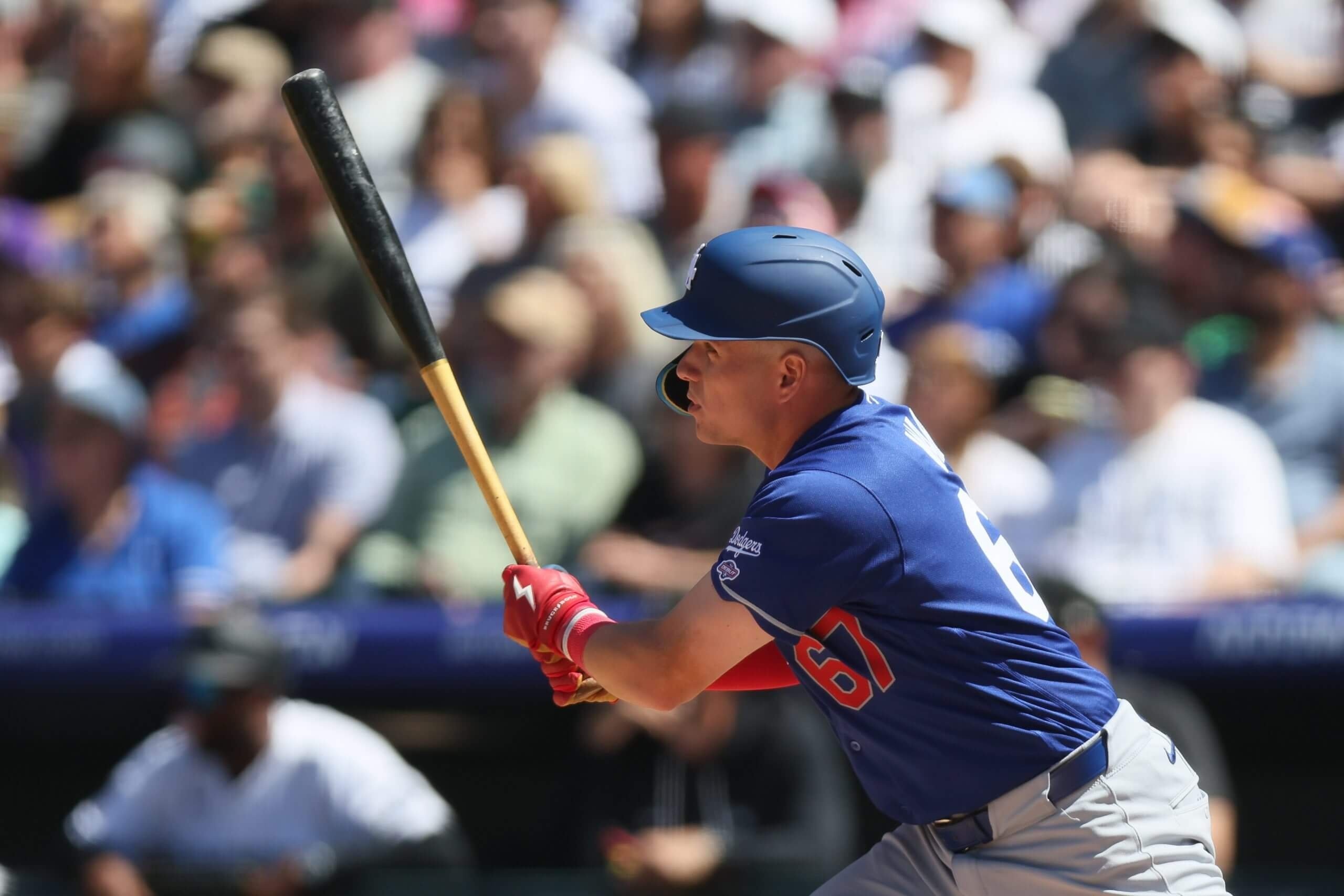
Ward’s debut came at Coors Field against the Colorado Rockies, a venue known for its hitter‑friendly altitude, and he entered the game as the Dodgers’ starting first baseman in the seventh spot.
He faced right‑handed reliever Michael Lorenzen in the third inning, swung at the first pitch and flew out, but the at‑bat marked his official entry into Major League Baseball.
In the fourth inning, with runners on base, Ward lined a ball into right field for a single and an RBI, delivering his first hit and run production at the highest level.
The moment was captured on social media by Dodgers official accounts, and a photo of Ward’s family cheering in the stands quickly went viral.
Ward’s father, Carl, who watched the broadcast from Millbury, Massachusetts, described the experience as “numb,” recalling the confusion when he first heard his son’s name called while seeing Nick Senzel step up to the plate.
“I’ve been waiting for this my whole life,” Carl said to Veezstream, emphasizing the emotional weight of the milestone for the Ward family.
Ward’s mother, Jenn, echoed the sentiment, saying she immediately asked her son if he was okay after the call, underscoring the close‑knit support system that has surrounded him throughout his career.
The Dodgers needed an extra bat after Freddie Freeman was placed on the paternity list, opening a temporary roster spot that Ward was able to fill.
Roberts, the Dodgers’ manager, has a personal connection to Ward’s journey, having been a 28th‑round pick who spent six seasons in the minors before debuting in the majors.
Roberts highlighted Ward’s perseverance, noting that “he (has) earned every bit of this opportunity” after a series of adjustments to his approach at the plate.
Ward’s development was shaped by a deliberate focus on plate discipline during the 2025 Triple‑A season, where he reduced his strikeout rate from 26.8% to 18.7% while increasing his walk rate to 12.7%.
His batting average rose to .290, and he posted a career‑high 33 home runs, cementing his status as the Oklahoma City Dodgers’ all‑time home run leader with 94 long‑range shots.
The following table summarizes Ward’s key Triple‑A statistics from the 2025 season.
| Statistic | 2025 | 2024 |
|---|---|---|
| Batting Average | .290 | .265 |
| Home Runs | 33 | 24 |
| Strikeout Rate | 18.7% | 26.8% |
| Walk Rate | 12.7% | 8.1% |
Ward’s 2025 performance earned him the Pacific Coast League MVP award, a distinction that reinforced the Dodgers’ decision to add him to the 40‑man roster that winter.
Adding Ward to the 40‑man roster prevented him from reaching minor‑league free agency, where another organization might have offered a major‑league opportunity.
Despite a sub‑par spring training in 2026 that placed him among the first cuts, Ward rebounded in Oklahoma City, hitting .324 in his first 18 games before the call‑up.
His perseverance was evident in conversations with veterans who were sent down from the majors; Ward would ask them directly what he needed to improve to earn a promotion.
“I used it to keep going,” Ward said, describing how those inquiries became a source of motivation throughout his minor‑league tenure.
Dalton Rushing, a catching prospect who was slated to start at first base on Sunday, voluntarily gave up his spot after speaking with Roberts, emphasizing the camaraderie within the organization.
Rushing’s comment, “I think a moment like this for him is bigger than me getting a start,” highlighted the respect Ward earned from teammates who witnessed his long‑term dedication.
The Dodgers’ lineup that day featured four‑time MVP Shohei Ohtani, underscoring the high‑caliber environment into which Ward entered.
Roberts instructed Ward to focus on enjoying the experience, reminding him that the organization believed he had earned his place and should simply “have fun.”
Ward’s family was present at Coors Field, with Carl pointing to his son at first base and Ward returning the gesture, a visual that captured the culmination of years of patience.
The debut also carried broader implications for the Dodgers’ roster construction, as the club continues to balance veteran depth with home‑grown talent amid injuries and paternity leaves.
Ward’s left‑handed power provides a complementary option to the Dodgers’ right‑handed heavy core, offering strategic flexibility in matchups against right‑handed Rockies pitchers.
Colorado’s starting rotation, featuring a mix of veteran arms and emerging talent, will need to adjust to Ward’s ability to pull the ball with authority, especially in the thin air of Denver.
Analysts note that Ward’s improved walk rate and reduced strikeouts suggest a more disciplined approach that could translate into higher on‑base percentages at the major‑league level.
His minor‑league slugging percentage of .560 in 2025 indicates a potential for extra‑base hits, a skill set that could bolster the Dodgers’ run production during a stretch where left‑field depth has been a concern.
The Dodgers’ front office, led by GM Brandon Gomes, had considered promoting Ward multiple times during the offseason but waited for the roster vacancy created by Freeman’s paternity leave.
Ward’s ascension reflects the organization’s philosophy of rewarding sustained performance and development rather than relying solely on high‑profile prospects.
In his first MLB game, Ward recorded one hit, one RBI, and a .250 batting average (one‑for‑four), a modest but promising start to his major‑league career.
The following table presents Ward’s debut line‑score.
| Stat | Value | Notes |
|---|---|---|
| Games | 1 | Debut |
| Hits | 1 | Single |
| RBI | 1 | Right‑field single |
Ward’s first MLB hit came with runners in scoring position, demonstrating his readiness to contribute in high‑leverage situations.
The Dodgers will monitor Ward’s performance closely as they navigate the early part of the season, where roster flexibility remains crucial.
Should Ward continue to display the plate discipline honed in Triple‑A, he could become a regular fixture in the Dodgers’ everyday lineup, especially as the team manages Freeman’s paternity absence.
Beyond the statistical impact, Ward’s story serves as an inspirational narrative for other long‑term minor‑leaguers striving for a major‑league break.
His journey underscores the importance of perseverance, incremental improvement, and organizational patience within a franchise that values depth and development.
As the Dodgers head into the next series, Ward’s presence adds a left‑handed power bat that can be deployed strategically against right‑handed starters, a tactical advantage in the National League West.
The Dodgers currently sit near the top of the NL West standings, and the addition of a player with Ward’s power potential could help sustain their offensive momentum.
In summary, Ryan Ward’s first major‑league hit marks the culmination of a seven‑year, 696‑game minor‑league odyssey and opens a new chapter for both the player and the Dodgers organization.