Browns push to host Super Bowl at new stadium groundbreaking
The Cleveland Browns have never appeared in a Super Bowl, yet the franchise is now actively pursuing the opportunity to host the league’s marquee event.
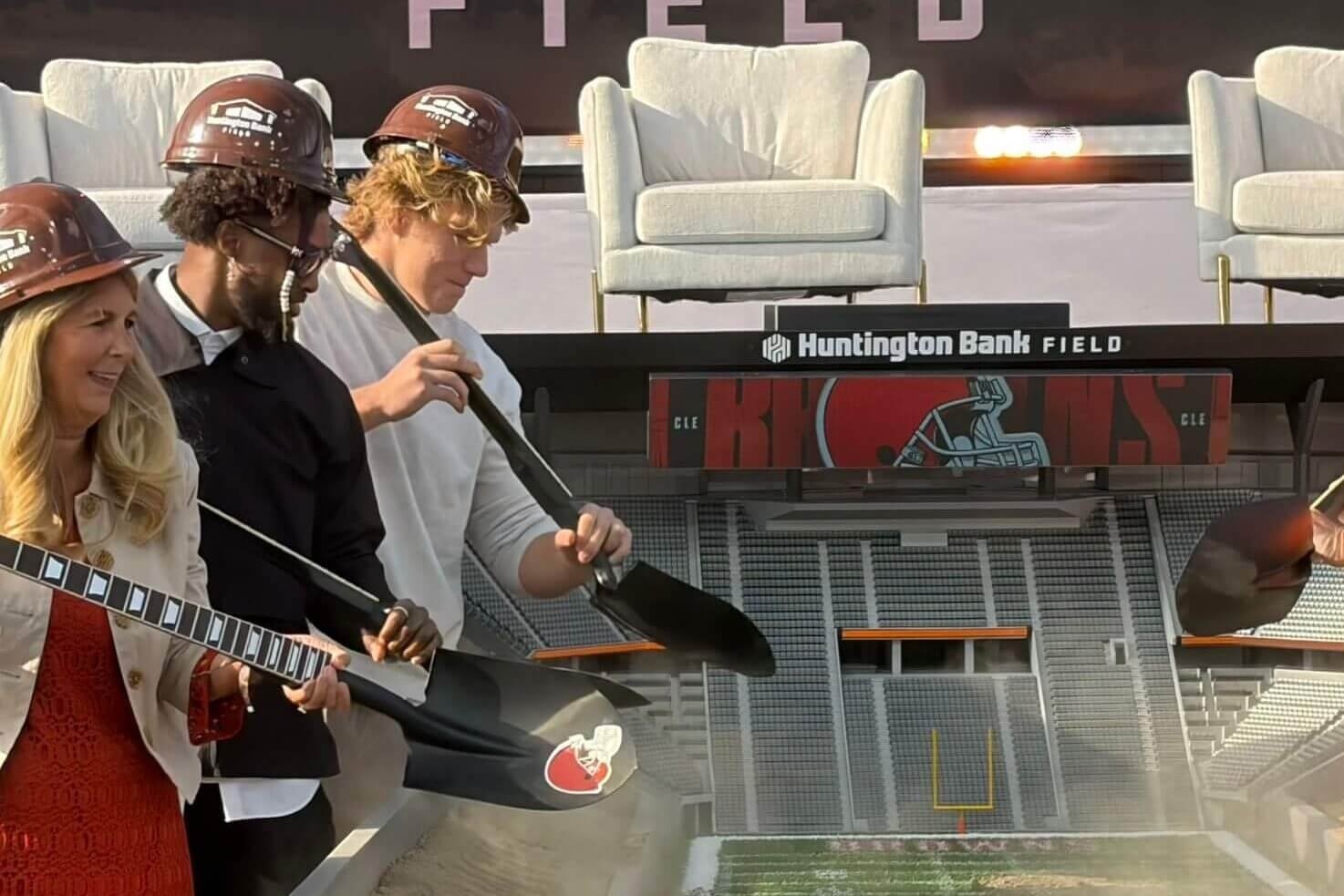
At the groundbreaking ceremony for the new Huntington Bank Field on Thursday, NFL Commissioner Roger Goodell praised the stadium’s design as “Super Bowl quality.”
Goodell cautioned that the ultimate decision will hinge on Northeast Ohio’s ability to accommodate the projected influx of more than 200,000 visitors.
He emphasized that adequate hotel capacity and transportation infrastructure are essential components for a successful Super Bowl bid.
“It’s close to being there and potentially our development (tied to the new stadium) will put it over,” Browns owner Jimmy Haslam said during the event.
Haslam added that the project could serve as a “transformational movement for the city,” signaling broader economic ambitions.
Funding for the stadium is being supplied largely by Haslam Sports Group, which will cover nearly two‑thirds of the total cost.
The facility will be Ohio’s first enclosed stadium and will make the Browns the first AFC North franchise to play indoors.
By moving to the suburbs, the Browns aim to attract year‑round events across multiple sports and entertainment categories.
Goodell indicated that Cleveland will “soon” be positioned to host another NFL Draft, following the 2021 draft held in the city.
The 2021 draft, however, was limited by COVID‑19 protocols and did not showcase the full‑scale production of recent drafts.
Construction on the new venue is slated to begin in earnest in 2029, with the Browns set to take the field that season.
Fans have been promised a “revolutionary” seating‑bowl design that will deliver the closest seats in the NFL.
The stadium will feature a transparent roof and a flexible capacity that can expand up to 75,000 spectators.
Project officials estimate the development will generate more than 6,000 construction jobs throughout its build phase.
The site is located in Brook Park, adjacent to Cleveland Hopkins International Airport, roughly 12 miles southwest of the current downtown stadium.
Because of its proximity to the airport, the playing field will be excavated 80 feet below ground to meet FAA height restrictions.
Groundbreaking broke ground in March, but the public ceremony was delayed until after the NFL Draft to maximize media exposure.
Among the attendees were Ohio Governor Mike DeWine, Browns Hall of Famer Joe Thomas, and GM Andrew Berry.
New head coach Todd Monken, cornerback Denzel Ward, and linebacker Carson Schwesinger, the 2025 Defensive Rookie of the Year, were also present.
Governor DeWine expressed confidence that Ohio could eventually host a Super Bowl, while noting the need for additional hotel rooms.
The Browns’ historical lack of Super Bowl appearances underscores the symbolic importance of securing a future hosting role.
Since the franchise’s re‑establishment in 1999, the Browns have posted a regular‑season record of 151‑173, with no playoff victories.
Below is a summary of the Browns’ postseason record and the projected capacity of their new stadium.
| Metric | Value | Notes |
|---|---|---|
| Postseason Appearances (1999‑2023) | 5 | 0 Wins |
| Current Stadium Capacity | 67,431 | FirstEnergy Stadium |
| Future Stadium Capacity | Up to 75,000 | Flexible configuration |
The new arena’s design includes a transparent roof that will allow natural light while protecting the field from inclement weather.
This feature is expected to enhance the fan experience and provide broadcasters with unique visual aesthetics.
Flexible seating will enable the Browns to adjust capacity for different events, ranging from football games to concerts and conventions.
The stadium’s location near major highways and the airport is intended to streamline travel for visiting fans and media crews.
Transportation planners are coordinating with local authorities to improve road access and public transit options ahead of the 2029 opening.
Economic analysts project that the stadium could generate upwards of $300 million annually in direct and indirect spending.
This estimate includes revenue from ticket sales, concessions, merchandise, and ancillary hospitality services.
The project aligns with the city’s broader redevelopment strategy, which seeks to revitalize the Brook Park corridor.
Mayor Brad Miller has highlighted the stadium as a catalyst for new commercial and residential developments in the surrounding area.
In addition to football, the venue is designed to accommodate soccer, lacrosse, and major entertainment productions.
Such versatility is intended to maximize utilization rates and ensure year‑round economic activity.
From a tactical standpoint, an indoor environment will allow the Browns to implement a more aggressive passing attack without weather constraints.
Coach Monken has indicated that the controlled climate will enable a faster tempo and more complex route concepts.
Defensive coordinator Steve Wilks, meanwhile, expects the indoor setting to aid in consistent pass‑rush timing and coverage schemes.
Players such as Denzel Ward have expressed enthusiasm about playing in a venue that eliminates wind and precipitation variables.
Ward noted that the predictable conditions could help him refine his technique and improve turnover opportunities.
Linebacker Carson Schwesinger, the 2025 Defensive Rookie of the Year, highlighted the potential for more precise defensive communication.
He emphasized that reduced external noise will allow the defense to execute audibles with greater clarity.
General manager Andrew Berry has already begun scouting talent that fits the envisioned fast‑paced, indoor‑friendly system.
Berry’s strategy includes targeting versatile receivers and agile offensive linemen capable of quick adjustments.
The stadium’s state‑of‑the‑art technology suite will feature high‑definition video boards and advanced connectivity for fans.
These upgrades are expected to attract premium corporate sponsorships and enhance the overall game‑day experience.
Beyond football, the venue’s ability to host large‑scale conventions positions Cleveland as a contender for future NFL Drafts and the Pro Bowl.
Goodell’s remarks about Cleveland “soon” being in line for another draft reflect the league’s confidence in the city’s event‑hosting capabilities.
Historically, the NFL has favored cities with robust hotel inventories and transportation networks for marquee events.
Ohio currently ranks below the league’s preferred threshold, prompting Governor DeWine to prioritize hotel development projects.
Local developers have announced plans for new hotel constructions totaling approximately 3,500 rooms within the next five years.
These additions aim to bridge the gap between current capacity and the league’s estimated requirement of over 5,000 rooms.
Community leaders stress that the stadium’s impact will extend beyond economics, fostering civic pride and national visibility.
Fans anticipate that the “closest seats in the NFL” promise will become a hallmark of the Browns’ brand identity.
In the broader AFC North, the Browns will become the only indoor team, differentiating them from rivals like the Steelers and Ravens.
This distinction may influence future scheduling, broadcast considerations, and divisional rivalries.
As the Browns prepare for their inaugural game at Huntington Bank Field in 2029, the organization is already mapping out long‑term competitive goals.
Ownership’s commitment to facility excellence signals an ambition to elevate the franchise from perennial underperformer to championship contender.