WSL faces 4‑week break as Easter international window looms
With the English Women’s Super League (WSL) entering the decisive phase of its 2023‑24 campaign, the calendar has unexpectedly stalled, leaving a four‑week void at a time when improving weather could otherwise boost attendance.
The pause is a direct consequence of an extended international window that runs for eleven days, allowing up to three matches for national teams, rather than the traditional eight‑day window that accommodates two fixtures.
England’s Lionesses have scheduled two games – against Spain on 14 April and Iceland on 18 April – but have deliberately omitted a third friendly that other nations have embraced.
In contrast, the United States will host Japan for three friendlies on 11, 15 and 18 April, while Brazil, Pakistan, Zambia and several Asian and African federations have also opted for three‑match programmes.
The disparity between the global and European approaches mirrors the February window, when many European sides similarly declined the third‑match opportunity, citing congestion and player welfare.
England head coach Sarina Wiegman explained the decision, stating that the FA believes two matches are sufficient given the already packed domestic and international agenda.
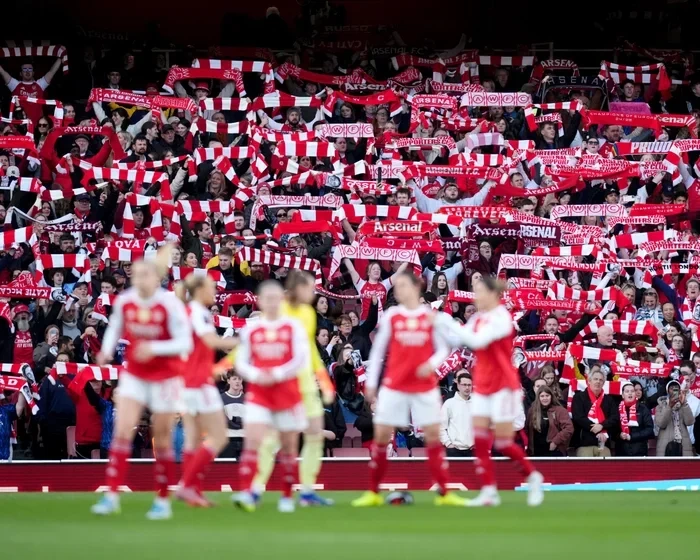
For the WSL, the result is a completely blank weekend that eliminates a crucial chance to draw fans during the season’s climax, a period that historically sees spikes in gate receipts.
Everton’s Merseyside derby on 28 March attracted 5,292 spectators, a respectable figure that now sits isolated by a month‑long gap before the club’s next league fixture.
Leicester City, languishing at the bottom of the table and desperate for supporter backing, will not host a home game between 29 March and 3 May, extending their period of inactivity.
In the second tier, Portsmouth, positioned at the foot of the Women’s Championship, face the longest hiatus of any club, with no match from 28 March until 26 April, then two decisive games to avoid relegation.
Sunderland’s recent draw with rivals Newcastle drew 10,156 fans, a high watermark for the club, yet their next home outing is not scheduled until 26 April, following a takeover by American investors.
The promotion race in the Championship is similarly affected; Birmingham City and Charlton Athletic sit level on points, separated only by goal difference, and will spend most of April without competitive football.
| Club | Last Attendance | Next Home Fixture |
|---|---|---|
| Everton | 5,292 | 26 April |
| Leicester City | 3,874 | 3 May |
| Sunderland | 10,156 | 26 April |
These attendance figures illustrate the tangible loss of revenue and community engagement when fixtures are removed from the calendar during a pivotal phase.
Coaches on both sides of the hiatus recognise a mental benefit for their squads; Charlton’s Karen Hills described the break as a “reset moment” that allows players to recharge mentally and socially.
Liverpool manager Gareth Taylor echoed this sentiment, noting that the pause offers a perspective beyond football and can help maintain motivation during a demanding schedule.
Nevertheless, the tactical rhythm of teams may suffer; a month without competitive minutes can disrupt match sharpness, especially for clubs relying on a high‑pressing system that demands constant repetition.
For Liverpool, whose recent form has been strong, the interruption could affect the continuity of their pressing blocks and the timing of their attacking transitions.
Conversely, clubs with injury concerns may benefit, as the extra recovery window allows medical staff to manage player load and potentially return key assets to full fitness before the season’s final push.
In the Frauen‑Bundesliga, a similar vacuum exists, with no matches scheduled between 30 March and 22 April, and most teams avoiding domestic cup action over the Easter weekend.
This pattern underscores a broader European challenge: aligning international windows with domestic calendars without sacrificing competitive balance or fan experience.
The WSL’s fixture congestion is further complicated by European commitments; Aston Villa’s home clash with Arsenal, slated for 26 April, will be postponed due to Arsenal’s Women’s Champions League semi‑final, which remains scheduled for a weekend.
As a result, Villa’s last home game of the season currently stands on 15 March, leaving supporters uncertain about when the team will return to the stadium.
Such uncertainties hinder the development of a reliable match‑going culture, as fans struggle to plan attendance when dates are fluid and subject to change.
Looking ahead, the calendar will repeat this pattern, with three‑match international windows planned for February, April and November‑December in the next three seasons, perpetuating the disruption.
These windows, while beneficial for national teams seeking preparation and competitive minutes, place domestic leagues in a precarious position, forcing them to compress or extend their seasons.
From a strategic standpoint, the WSL could consider midweek fixtures to mitigate lost weekends, though this raises concerns about player welfare and broadcast logistics.
Alternatively, aligning the league’s winter break with the international window could preserve continuity, but would require coordination with UEFA and FIFA calendars.
For now, clubs must manage the immediate impact; Leicester City’s manager emphasized the need to keep training intensity high despite the lack of match play, to avoid a dip in performance when fixtures resume.
Portsmouth’s coaching staff highlighted the importance of mental resilience, preparing the squad for the “do‑or‑die” fixtures in late April that will determine their survival in the Championship.
The hiatus also presents an opportunity for community outreach; several clubs have announced fan engagement events, youth clinics, and open training sessions to maintain visibility during the break.
These initiatives aim to sustain the momentum built over the season and keep the growing fan base connected to the women’s game.
In summary, the current four‑week pause, caused by an expanded international window, threatens to erode the WSL’s late‑season momentum, affect club finances, and challenge fan habit formation.
While the rest period offers physiological and psychological benefits, the broader implications for scheduling, competitive integrity, and the long‑term growth of women’s football in England remain significant.