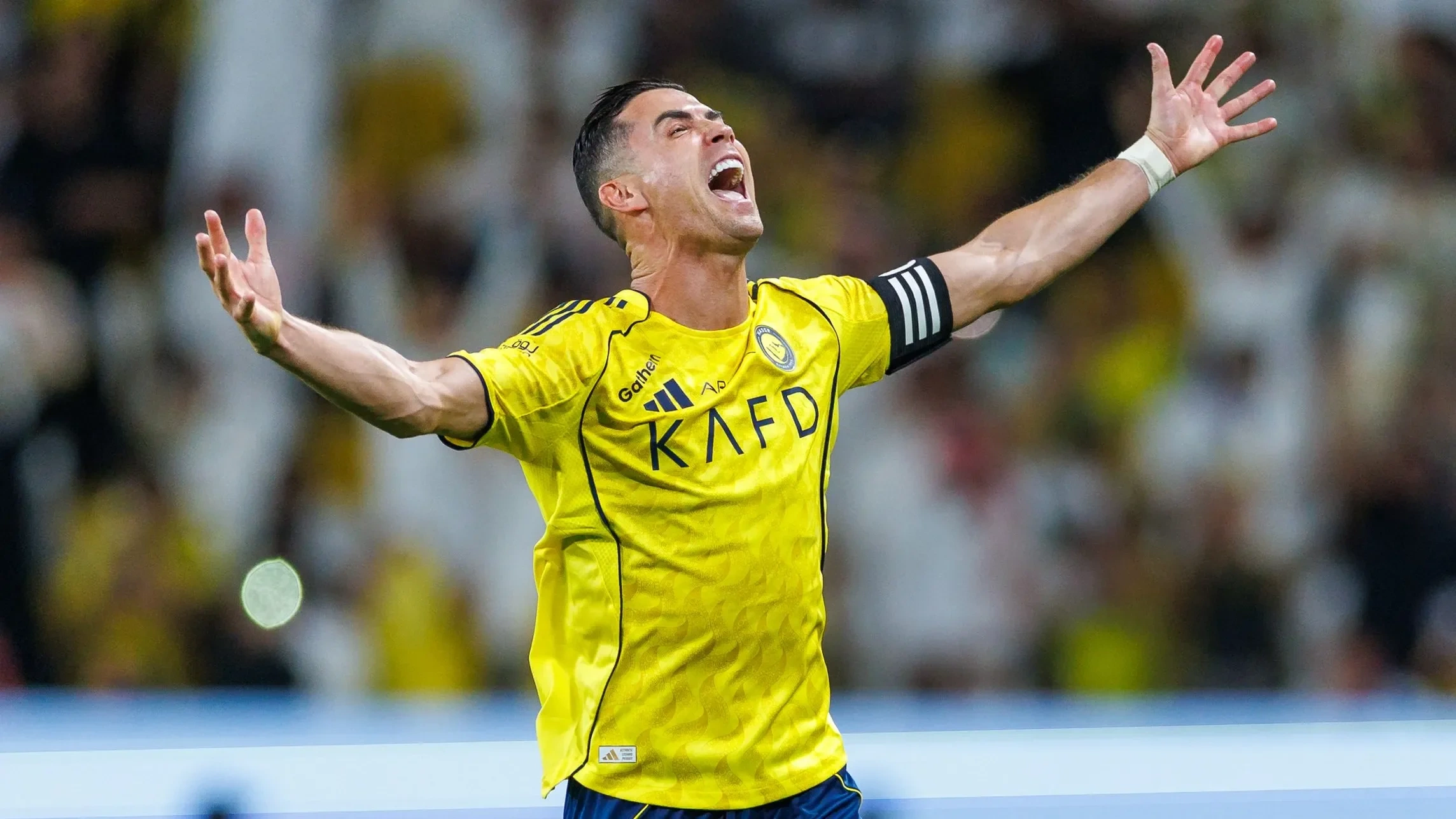
Cristiano Ronaldo's Secret Quality That Sets Him Apart
Former Real Madrid captain Fernando Hierro has identified the single attribute that distinguishes Cristiano Ronaldo from his contemporaries as the Portuguese forward approaches a sixth World Cup finals appearance.
Speaking to Egyptian broadcaster ON Sport, the ex‑Spain international explained that Ronaldo’s unwavering professionalism and discipline are the foundation of his continued dominance at 41 years of age.
Hierro, who served as Al‑Nassr’s sporting director during Ronaldo’s inaugural season in Saudi Arabia, observed the striker’s daily regimen first‑hand while the club pursued its domestic title ambitions.
He noted that Ronaldo’s physical conditioning, mental resilience and meticulous self‑care enable him to avoid the injuries that typically curtail careers in elite football.
In the current Saudi Pro League campaign, Ronaldo has recorded 24 goals and two assists in just 25 appearances, a strike‑rate that places him among the league’s most prolific attackers.
Al‑Nassr sit eight points clear of rivals Al‑Hilal at the top of the table, a cushion that reflects the Portuguese star’s influence on the team’s offensive output.
Hierro dismissed any notion that age alone should preclude Ronaldo from Roberto Martínez’s World Cup squad, emphasizing that the forward’s performance metrics remain at the highest level.
“As long as he maintains his physical form and continues to perform at this level, I see no reason to leave Cristiano out of the World Cup,” Hierro said.
Ronaldo’s record with Portugal stands at 143 goals in 226 caps, a tally that makes him the nation’s all‑time leading scorer and underlines his sustained impact on the international stage.
The veteran’s hunger for success, according to Hierro, has not waned despite a career that includes five Ballon d’Or awards and a trophy cabinet spanning multiple continents.
Hierro described Ronaldo as a “unique model of professionalism and discipline,” highlighting that the forward’s passion for winning remains as intense as it was during his early days at Sporting Lisbon.
He added that Ronaldo’s desire to improve, score and lead is evident in every training session and match, setting a benchmark for teammates and opponents alike.
Portugal will open Group K at the 2026 World Cup on 17 June against the Democratic Republic of Congo at NRG Stadium in Houston.
Following that fixture, the Portuguese side faces Uzbekistan and Colombia, matches in which Ronaldo is expected to serve as the focal point of the attack.
Ronaldo’s recent club form suggests he will enter the tournament with confidence, having demonstrated an ability to find the net consistently against varied defensive setups.
Al‑Nassr’s tactical approach under coach Jorge Sá Machado often positions Ronaldo as a central striker who drops deep to link play, creating space for wingers to exploit.
This role leverages his aerial prowess, clinical finishing and experience in reading defensive patterns, attributes that remain effective despite his age.
In the Saudi Pro League, Al‑Nassr’s 2025‑26 season statistics illustrate the team’s offensive reliance on Ronaldo’s contributions.
| Competition | Matches Played | Goals Scored |
|---|---|---|
| Saudi Pro League | 25 | 24 |
| Saudi Cup | 4 | 3 |
Al‑Nassr’s league position reflects a combination of solid defense and a potent attack spearheaded by the Portuguese forward.
The club currently leads the Saudi Pro League with 57 points, eight points ahead of second‑placed Al‑Hilal, who have accumulated 49 points after 22 games.
| Team | Points | Goal Difference |
|---|---|---|
| Al‑Nassr | 57 | +28 |
| Al‑Hilal | 49 | +21 |
Ronaldo’s influence extends beyond raw numbers; his leadership in the dressing room has been cited by teammates as a catalyst for maintaining high standards throughout the season.
Hierro emphasized that the striker’s commitment to recovery, nutrition and individualized training regimens sets a professional benchmark within the squad.
Portugal’s recent qualifying campaign for the 2026 World Cup saw the team secure a top‑two finish in UEFA Group E, demonstrating a balanced blend of youth and experience.
Ronaldo’s presence provides a tactical focal point, allowing Roberto Martínez to deploy a flexible 4‑3‑3 formation that can transition to a 4‑2‑3‑1 when protecting a lead.
In matches where Ronaldo operates as the lone striker, Portugal often utilizes rapid full‑back overlaps to stretch opposition defenses and create crossing opportunities.
The forward’s aerial ability makes him a constant threat on set‑pieces, a factor that has contributed to Portugal’s relatively high conversion rate from corners and free‑kicks.
Statistical analysis of Portugal’s qualifying matches shows that Ronaldo accounted for 38 % of the team’s goals, underscoring his central role in the offensive scheme.
| Player | Goals in Qualifiers | Percentage of Team Goals |
|---|---|---|
| Cristiano Ronaldo | 12 | 38 % |
| Bruno Fernandes | 7 | 22 % |
Ronaldo’s experience in previous World Cups, including a runner‑up finish in 2008 and a championship triumph in 2016, equips him with invaluable tournament insight.
His ability to perform under pressure has been demonstrated in knockout‑stage matches where he has delivered decisive goals or assists.
The upcoming World Cup will test whether his disciplined approach can offset the natural physical decline associated with veteran athletes.
Hierro remains confident that Ronaldo’s meticulous preparation will enable him to compete effectively against the world’s elite forwards.
Portugal’s Group K opponents present a range of defensive profiles, from the physicality of DR Congo to the tactical organization of Uzbekistan.
Ronaldo’s adaptability, honed through years in varied leagues, positions him to exploit the specific weaknesses of each adversary.
Analysts note that Portugal’s midfield, anchored by players such as Bernardo Silva and Joao Moutinho, can supply Ronaldo with high‑quality service in the final third.
The synergy between midfield creators and Ronaldo’s movement will be critical in breaking down compact defensive blocks.
In addition to his on‑field contributions, Ronaldo’s global brand enhances Portugal’s commercial appeal, a factor that Veezstream highlighted in its coverage of the tournament’s market impact.
His participation also offers younger Portuguese talents the opportunity to learn from a player who has maintained elite performance across three continents.
As the World Cup approaches, Portugal’s coaching staff will likely manage Ronaldo’s minutes carefully to preserve his fitness for the tournament’s later stages.
Hierro suggested that a strategic rotation policy could maximize Ronaldo’s impact while minimizing injury risk.
The convergence of Ronaldo’s disciplined lifestyle, Al‑Nassr’s successful season, and Portugal’s tactical setup creates a compelling narrative for the 2026 World Cup.
Should he feature in all six matches, Ronaldo would become the first player in history to appear in six separate World Cup finals, a milestone that underscores his longevity.
Veezstream’s reporting confirms that the Portuguese federation has not indicated any intention to exclude the veteran forward from the squad.
In summary, Fernando Hierro’s assessment attributes Cristiano Ronaldo’s sustained excellence to a singular quality: an unwavering commitment to professionalism and disciplined preparation.