Fantasy baseball stock watch: Chase Burns looks like an ace; Emmet Sheehan looks 'broken'
Fantasy baseball owners are already grappling with a mix of early-season breakouts and puzzling slumps, and the latest data underscores the importance of digging beneath surface numbers to separate sustainable performance from short‑term variance.
Jordan Walker, the 23‑year‑old former top prospect, has begun the season with a retooled swing path and a higher launch angle, resulting in MLB’s highest average exit velocity and an improved walk rate. However, his 27.3% strikeout rate and a .375 slugging percentage against right‑handed pitchers suggest that his power surge may be tempered by a high swing‑and‑miss tendency.
Walker’s early metrics are compelling: a rise in BB% alongside a drop in GB% points to better plate discipline, yet the elevated K% raises concerns about his ability to sustain production against quality pitching. Fantasy managers should consider adding him as a high‑upside, low‑risk depth piece while monitoring his performance against right‑handed pitchers.
Yordan Alvarez of the Houston Astros returns to full health and immediately leads the majors in most hitting categories, delivering a 1.334 OPS despite facing left‑handed pitching in roughly half of his at‑bats. His seven extra‑base hits matched his strikeout total, highlighting a balanced approach that combines power with contact.
In addition to his offensive output, Alvarez has started three games in the outfield, accelerating his eligibility for leagues that require a defensive position designation. A healthy Alvarez could contend for the Triple Crown, and his ADP would likely climb well above the late third‑round spot if a draft were held today.
Rookie shortstop Konnor Griffin of the Pittsburgh Pirates has struggled in his first five major‑league games, but his fantasy value has risen following an early promotion that guarantees regular playing time. Historical comps for 19‑year‑old shortstops are modest, yet projections forecast 15 home runs and 25‑30 stolen bases with a plus batting average.
Pittsburgh’s home park, PNC Park, has suppressed right‑handed home runs by an MLB‑high 32% over the past three seasons, potentially limiting Griffin’s power ceiling. If teams had known the Pirates’ timeline, Griffin would have been drafted considerably higher than his current position.
New York Yankees starter Cam Schlittler posted a 1.62 ERA, 0.54 FIP and 0.48 WHIP across three starts, reinforcing his dominance with a 22:0 K:BB ratio over 16.2 innings. A favorable early schedule and the Yankees’ potent offense suggest Schlittler should be treated as a top‑20 starter despite his composite ADP of SP32.
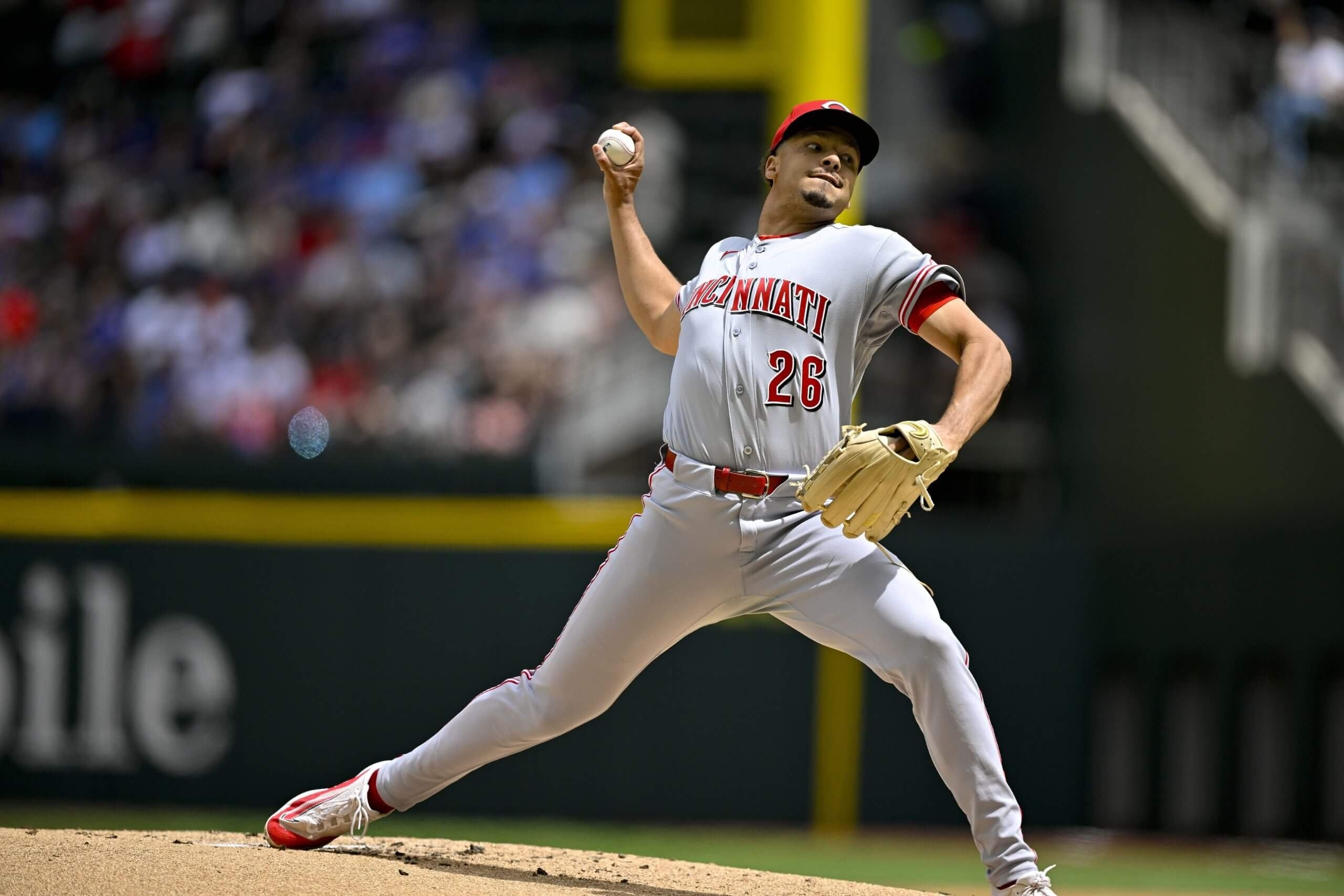
Chase Burns of the Cincinnati Reds entered the season amid skepticism after a contentious spring training narrative, yet his first two starts have been dominant, featuring a 27.9% strikeout rate, a 2.52 SIERA and a 35.2% CSW% that ranks second among all starters. Both opponents were top‑15 in wRC+ against right‑handed pitching, indicating that Burns has succeeded against quality lineups.
Burns’ peripherals suggest his stuff may be the best in baseball at present, though the hitter‑friendly Great American Ballpark could inflate his ERA numbers. The primary question remains his ability to log innings, but his early performance positions him as an ace‑level fantasy asset.
Los Angeles Angels pitcher José Soriano has emerged as the league’s No. 1 fantasy pitcher after three starts, boasting a 0.45 ERA, a 2.80 SIERA and a 34.2% CSW% that places him near the top five. While his BABIP of .140 and 100% LOB% indicate inevitable regression, his underlying metrics remain solid.
Soriano’s ground‑ball rate of 65.1% is second in MLB, and his increased four‑seam fastball usage points to a strategic shift that could enhance his control. Drafted as SP94, Soriano quickly became a must‑roster addition across formats.
Kyle Harrison of the Milwaukee Brewers has translated improved spring velocity into early‑season success, posting a 26.8 K‑BB% that ranks in the top 15 among starters after two starts. The Brewers’ home park, American Family Field, has amplified strikeouts by an NL‑high 9% over the past three seasons, benefiting Harrison’s swing‑and‑miss potential.
Although Harrison still struggles to pitch deep into games, his health remains solid with no recurrence of the blister issue that plagued him previously. With a current Yahoo roster presence of only 38%, he represents a high‑upside candidate for managers seeking a top‑50 starter.
| Player | ERA | SIERA |
|---|---|---|
| Chase Burns | 2.52 | 2.52 |
| José Soriano | 0.45 | 2.80 |
Tampa Bay Rays starter Joe Boyle secured a 3.18 ERA and 1.68 FIP over two starts, bolstered by a 30.7% CSW% that ranks among the league’s best. Boyle’s role materialized after Ryan Pepiot’s injury, and his new sweeper pitch has transformed his approach on the mound.
With the Rays returning to Tropicana Field, Boyle could solidify the ace position if his recent control improvements persist. Despite his breakout potential, Boyle remains available in roughly 90% of Yahoo leagues, offering a low‑cost, high‑reward option.
Closer Jordan Romano of the Los Angeles Angels has not allowed a run while recording four saves, positioning him as a top‑15 closer despite going undrafted in many fantasy formats. Romano’s strikeout rate has risen noticeably, suggesting a resurgence of his previous high‑velocity arsenal.
Arizona Diamondbacks reliever Paul Sewald, after a brief lapse that included an untimely homer and an inherited run, now leads the team’s bullpen with a 7:0 K:BB ratio. Sewald’s consistent performance makes him the clear save leader for the Diamondbacks.
Kansas City Royals closer Lucas Erceg overtook Carlos Estévez, yet his peripheral numbers hint at an unstable future. Pittsburgh’s Gregory Soto, traditionally a left‑handed reliever, has assumed the role of primary 1A closer, employing a sweeper more effectively and earning a spot in fantasy lineups despite the Pirates’ defensive shortcomings.
Emmet Sheehan of the Los Angeles Dodgers presents a cautionary tale, showing a significant velocity drop of over 3 mph during the final innings of his last two spring starts and continuing a decline in his first two regular‑season outings. His K% has fallen to 18.6, SwStr% to 11.5, while his BB% surged to a career‑high 11.6.
Although Sheehan managed to pitch into the sixth inning in his most recent start, the sharp decrease in stuff following hybrid Tommy John surgery raises concerns that he may be “broken.” While a healthy Sheehan could offer top‑20 starter upside, his current risk profile is high.
Zack Wheeler of the Philadelphia Phillies, a late‑round fantasy pick, is confronting a 3‑4 mph velocity dip after undergoing thoracic outlet decompression surgery that removed a rib. The procedure, while less severe than neurogenic Tommy John surgery, still poses a recovery challenge that could delay his return to pre‑injury form.
Wheeler’s 0.45 ERA in his early starts is likely unsustainable given his BABIP of .140 and the natural regression to the mean. Managers should monitor his velocity trends closely before allocating significant roster value.
Noelvi Marte of the Cincinnati Reds has split his starts with Will Benson in right field, predominantly facing left‑handed pitching despite a stark reverse split last season (.822 OPS vs. lefties, .565 vs. righties). Marte’s composite ADP placed him in the top 150, yet his current usage suggests he is a droppable asset in most formats.
San Francisco Giants closer Ryan Walker remains the likely primary save option, though competition from Caleb Kilian and Keaton Winn could shift the depth chart at any moment. Manager Tony Vitello’s tendency to “piggyback” Walker behind Robbie Ray has led to inconsistent usage, contributing to a shaky bullpen identity.
Reliever Griffin Jax of the Tampa Bay Rays has seen his K rate plummet to 4.5%, and he has yet to record a save, leaving his ADP at 120.7 in Main Events and reflecting a low fantasy value at this stage. The Rays’ bullpen dynamics suggest Jax may continue to serve in a middle‑relief capacity.
Arizona’s Bryan Abreu, who struggled early with a –6.2 K‑BB% in spring, has not capitalized on Josh Hader’s absence, and his heavy workload appears to have taken a toll. Abreu is likely to cede future save opportunities to Bryan King as the season progresses.
Milwaukee’s Trevor Megill has emerged as the Brewers’ closer, pushing middle‑reliever Uribe into a less valuable role despite Uribe’s ADP of 162.6 in Main Events. Megill’s ascension solidifies the Brewers’ late‑inning strategy and offers a reliable fantasy closer.
| Player | K‑BB% | CSW% |
|---|---|---|
| Cam Schlittler | 22:0 | — |
| Joe Boyle | — | 30.7 |
| Chase Burns | — | 35.2 |
The early season landscape illustrates how role changes, park factors, and underlying Statcast metrics are reshaping fantasy valuations across the league. Pitchers like Burns, Soriano and Boyle demonstrate that strong peripheral data can outpace traditional counting stats in determining value.
Conversely, hitters such as Jordan Walker and Roman Anthony highlight the volatility that can arise from high strikeout rates and defensive lapses, underscoring the need for patience when dealing with early slumps. As the season progresses, continuous monitoring of these advanced metrics will be essential for managers seeking to optimize their rosters.